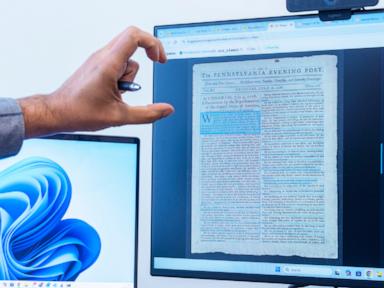
Institutions housing historical records face a mounting crisis of scale. The Smithsonian Institution holds millions of documents, objects, and fragments from the American Revolution, yet a vast portion of this material remains siloed within individual collections, unlinked and largely inaccessible to researchers. Archivists struggle simply to catalogue incoming material, let alone cross-reference it against disparate holdings nationwide. Manual curation cannot keep pace with the sheer volume of paper, textiles, and artifacts generated during the late eighteenth century.
Enter machine learning systems designed to process text and metadata at scale. Curators deploy natural language processing models to scan handwritten letters, military rosters, and supply manifests from the revolutionary era. These algorithms identify recurring names, locations, and supply chains that connect seemingly unrelated documents. When a manifest from a Boston merchant mentions a shipment of gunpowder, software can instantly cross-reference that entry with pension
Dust And Data How Algorithms Are Rewriting The American Revolution
technology, news
History has a filing cabinet problem. For centuries, the institutions tasked with guarding our collective memory have drowned in paper. Millions of manuscripts, tax receipts, uniform requisitions, and tattered letters from the founding era sit in climate-controlled vaults, untouched by human eyes for generations because reading them requires an army of specialists who simply do not exist.
The Smithsonian Institution is changing that dynamic through automated text recognition and machine learning tools designed to piece together the fragmented paper trail of the American Revolution. Instead of waiting decades for historians to transcribe every dispatch from valley forge or every shipping manifest out of Boston harbor, the institution is deploying computational models to scan, index, and link disparate documents at scale.
This is not a story about artificial intelligence magically solving historical puzzles. It is a grueling, messy confrontation between messy eighteenth-century handwriting and probabilistic mathematics.
The Mechanics Of The Paper War
To understand why computational assistance became necessary, look at the sheer scale of the archive. The papers of George Washington, Benjamin Franklin, and thousands of obscure quartermasters, privates, and loyalists are scattered across dozens of repositories. A single muster roll from a Massachusetts regiment might mention a dozen names, an inventory of muskets, and a location that shifted three times before the ink dried.
Historically, connecting these dots meant index cards, cross-referencing ledger books, and a lifetime of specialized archival labor. When a researcher wanted to track the supply chain of gunpowder from French ports to colonial militias, they traced paper trails manually.
Machine learning changes this by treating handwriting not as art to be admired, but as data to be parsed. Optical character recognition engines, augmented by specialized neural networks trained on historical scripts, convert faded iron gall ink into searchable text. But eighteenth-century penmanship is notorious. Spelling was idiosyncratic, abbreviations were standard practice, and paper degraded unevenly.
When an algorithm encounters a hastily scrawled entry by a tired clerk in 1777, it does not read words the way a human scholar does. It calculates probabilities. It weighs pixel densities against millions of known letterforms from the period.
The Danger Of False Positives In The Archive
Every computational shortcut introduces risk. Algorithms hallucinate patterns where none exist. They misread a capital S as an L, turning a loyalist named Smith into a phantom named Limth, distorting census data or military rosters for generations of future researchers.
This is where the human element remains non-negotiable. The Smithsonian model relies heavily on crowdsourced transcription alongside automated ingestion. Thousands of digital volunteers examine the flagged anomalies, correcting the machine's blind spots. Without this friction between automated pattern recognition and human editorial judgment, the archive would quickly become polluted with systematic errors that look authoritative precisely because they were generated by a computer.
Consider the challenge of entity resolution. If a document mentions "Col. Smith" at Morristown and another mentions "Colonel J. Smith" in New York, a naive database treats them as separate entities unless a human or a well-trained relational model can deduce whether they represent the same officer at different points in a campaign. The machine provides the candidate matches; the historian must verify the context.
Moving Beyond The Great Man Theory
The deeper impact of algorithmic archiving goes beyond mere speed. For generations, historical narratives of the American Revolution focused heavily on the elite actors who left behind neat, leather-bound diaries. The generals, the politicians, the wealthy merchants.
Computational tools dismantle this hierarchy by making the bureaucratic detritus accessible. When every quartermaster receipt and runaway slave advertisement is indexed and searchable, the perspective shifts. Researchers can track bread prices in Philadelphia alongside troop movements in the Carolinas. They can trace the economic footprint of camp followers, enslaved laborers, and foreign mercenaries whose stories were buried in the margins of official correspondence.
The technology acts as a leveling mechanism for the archive. It transforms a collection of isolated paper relics into a dynamic network of social, economic, and military data.
The Unfinished Ledger
We are only at the beginning of this transition. The software still stumbles over water-damaged pages, marginalia scrawled upside down, and documents written in multiple languages by writers whose literacy levels varied wildly.
The promise of automated historical research is real, but it remains tethered to the physical reality of the documents themselves. No algorithm can rescue a manuscript that has crumbled to dust or recover a letter burned in a domestic hearth two centuries ago. What technology can do is force open the doors of the vault, allowing us to see the American Revolution not as a mythic bronze statue, but as a chaotic, paper-choked bureaucratic scramble that somehow birthed a republic.