The Algorithm is an Unpaid Babysitter
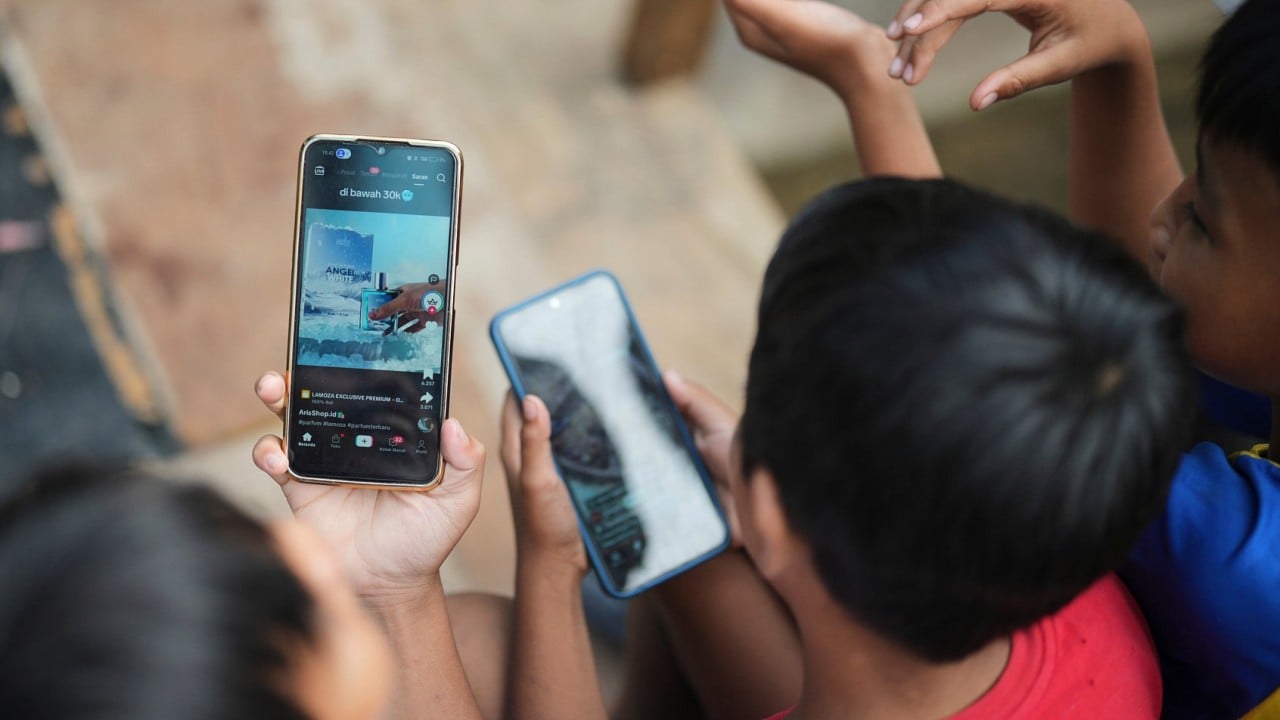
Siti sits in a small, humid living room in the suburbs of Jakarta, her eyes fixed on her fourteen-year-old son, Budi. He hasn't looked up from his glowing screen in three hours. He isn't just scrolling through dance videos or laughing at memes anymore. He is participating in a high-stakes, live-streamed auction for limited-edition sneakers, his thumb hovering over a "Buy Now" button fueled by a digital wallet Siti barely understands.
This is the new frontline of Indonesian childhood.
The Indonesian government recently looked at this scene—multiplied by millions of households across the archipelago—and decided to pull the plug. They aren't just banning social media for those under sixteen; they are aggressively expanding that wall to include e-commerce. To an outsider, it sounds like overreach. To a parent watching their child disappear into a predatory digital marketplace, it feels like a rescue mission.
We have spent years worrying about what our children see online. We worried about body image, cyberbullying, and radicalization. But while we were watching the front door, the back door swung open. The digital world stopped being a playground and started being a storefront.
The Gamification of Greed
Imagine a traditional marketplace. You have the smell of clove cigarettes, the damp heat, and the loud, rhythmic bartering of vendors. If a twelve-year-old tried to negotiate a high-interest credit line for a designer jacket in the physical world, a dozen adults would intervene. The community would see the absurdity.
Online, that child is invisible. Or rather, they are seen only as a data point with a high propensity for "conversion."
Social commerce—the blending of social media feeds with instant, one-click shopping—has turned dopamine hits into financial transactions. For a teenager, the line between "entertainment" and "consumption" has been erased. When a popular influencer goes live to sell skincare products, it isn't an advertisement. It’s a hang-out. It’s a community. It’s a lifestyle that can be purchased for the low price of 50,000 Rupiah.
The government’s expansion of the ban recognizes a terrifying psychological truth: the prefrontal cortex of a fifteen-year-old is not equipped to fight a billion-dollar algorithm designed to exploit impulsive behavior. When you combine the social pressure of "fitting in" with the frictionless ease of digital payments, you aren't raising a citizen. You are harvesting a consumer.
The Invisible Debt
The stakes aren't just about a few wasted allowances. In Indonesia, the rise of "Buy Now, Pay Later" (BNPL) services has created a silent epidemic of youth debt.
Hypothetically, consider a girl named Maya. She’s fifteen. She wants the ring light she saw in a viral tutorial. The app tells her she doesn’t need the money today. She only needs a few thousand Rupiah a month. It’s a micro-transaction. It’s a cup of coffee. But Maya doesn’t have a job. She has a series of micro-debts that begin to stack like a house of cards.
By the time she’s eighteen, before she has ever signed a lease or applied for a student loan, her credit worthiness is already poisoned.
This isn't a metaphor. It is a systemic siphon, draining the future mobility of a generation before they even enter the workforce. The Indonesian Ministry of Communication and Informatics isn't just banning an app; they are trying to prevent the permanent financial scarring of Gen Alpha.
A Culture Under Siege
There is a specific kind of grief in seeing a culture’s communal spaces replaced by digital silos. Indonesia has always been a place of high social cohesion. The warung—the small, family-run corner store—was a place of social interaction.
Digital e-commerce platforms, particularly those integrated into social media, have disrupted this. They offer "efficiency," but they extract a hidden tax on the social fabric. When children spend their formative years in an ecosystem where every interaction is a potential transaction, their ability to form non-commercial relationships begins to wither.
Critics argue that a ban is a blunt instrument. They say we should focus on "digital literacy."
But let’s be honest. Digital literacy is a water pistol in a wildfire. You cannot expect a child to "out-think" a neural network that has been trained on the behavioral data of half the planet. You cannot "educate" away the biological urge to belong, which these platforms weaponize to sell cheap plastic goods and fast fashion.
The Great Disconnect
The ban is an admission of failure, and that’s why it’s so uncomfortable. It is an admission that we, as a global society, allowed the digital landscape to become too hostile for the young.
We allowed the "seamless" experience—that word tech executives love so much—to become a trap. A seam is a boundary. A seam is a place where you stop and think. By making the transition from watching a video to buying a product "seamless," the industry removed the moment of reflection where a child might ask: Do I actually need this? Can I actually afford this?
Indonesia is drawing the seam back in permanent ink.
The pushback from tech giants is predictable. They talk about "innovation" and "economic growth." They point to the thousands of small sellers who use these platforms to reach customers. And they aren't entirely wrong. The digital economy has been a lifeline for many.
But at what cost?
If the price of economic growth is the psychological and financial exploitation of everyone under the age of sixteen, then that growth is predatory. It is a form of eating the seed corn. You might have a bumper crop today, but you are ensuring a famine tomorrow.
The Ghost in the Machine
Walking through a mall in Jakarta, you see the physical manifestation of this struggle. You see kids sitting together, but they are miles apart, each locked into a personalized feed. One is watching a gaming stream. Another is bidding on a "mystery box" that may or may not contain a counterfeit gadget.
The air is thick with the sound of notifications.
These notifications are the heartbeat of the new economy. They are designed to trigger cortisol. Your friend just bought this. Only 2 left in stock. Sale ends in 04:59. It is a state of constant, low-level panic. For an adult, it’s annoying. For a child, it’s a neurological hijack.
By extending the ban to e-commerce, Indonesia is attempting to create a "protected zone" for childhood. It is a bold, perhaps desperate, attempt to re-establish the boundaries of the home. It is a statement that a child’s attention is not a commodity to be traded on a digital exchange.
The Risk of the Underground
Of course, any prohibition creates a black market. Children are resourceful. They will use VPNs. They will use their older cousins' accounts. They will find the cracks in the wall.
The government knows this. But the goal of a ban isn't necessarily to achieve 100% compliance. It is to change the default. It is to move the "marketplace" from the pocket of every teenager back into the light of the public square, where it can be moderated by actual humans rather than indifferent code.
It is an attempt to give Budi his eyes back. To make him look up from the screen and see his mother sitting across the room. To make him realize that the "limited-edition" plastic in the digital cart is worth far less than the quiet, un-monetized minutes of a Saturday afternoon.
The world is watching. Other nations, currently paralyzed by the lobbying power of Big Tech, are looking at Indonesia as a test case. They are asking if it is actually possible to de-commodify childhood in the 21st century.
The answer isn't in the policy papers or the economic forecasts. It’s in the silence that follows when the glowing screen finally goes dark.
Siti watches as Budi’s phone vibrates. A notification flashes: Flash Sale! Don't miss out!
He reaches for it, then stops. He looks at the blank wall, then at his mother. For a second, the algorithm loses its grip.
That second is what the ban is fighting for.