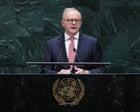
International bodies function primarily as signaling environments rather than legislative parliaments. When delegations vacate the United Nations General Assembly hall during an address, the action is rarely a spontaneous emotional reaction. Instead, it represents a calculated diplomatic intervention designed to maximize domestic political utility while imposing minimal structural cost on bilateral relations. Deconstructing the mechanics of diplomatic walkouts reveals a precise taxonomy of international protest, shifting the focus from performative theater to institutional leverage.
The Cost Benefit Matrix of Floor Protests
Participation in multilateral forums requires states to balance the utility of formal engagement against the reputational costs of association. Walking out of an address delivered by a head of state introduces a middle tier of diplomatic friction somewhere between a formal diplomatic note of censure and a complete severing of ties.
The economic and structural cost of this maneuver is near zero. A delegation forfeits no voting rights, incurs no trade sanctions, and violates no procedural rules of the assembly. Yet, the signaling return is immediate. By physically exiting the room, state representatives create a visual binary for international media: compliance versus non-compliance, legitimacy versus condemnation. This spatial rejection functions as a low-cost, high-visibility disruption of the speaker's narrative control.
The effectiveness of this tactic depends entirely on collective synchronization. A single nation exiting the chamber registers as an isolated grievance. Conversely, a coordinated mass departure by regional blocs transforms the action into a collective indictment, amplifying the domestic political value for the participating delegations.
The Domestic Audience Mechanism
International gestures of this scale are optimized for consumption within the domestic jurisdiction of the protesting states. Foreign policy is frequently an extension of domestic coalition management. When political leaders face internal pressure regarding their stance on protracted foreign conflicts, visible defiance on a global stage provides quantifiable evidence of moral alignment with domestic constituents.
This creates an internal feedback loop across distinct political tiers:
- State executives utilize the walkout to satisfy domestic advocacy groups demanding tangible opposition to controversial policies.
- Legislative bodies reference the UN action to justify subsequent domestic policy shifts, such as arms export restrictions or diplomatic downgrades.
- State-controlled or domestic media amplify the spatial rejection as a validation of national sovereignty and ethical leadership.
The primary target audience is rarely the speaker on the podium. Benjamin Netanyahu's address at the United Nations General Assembly, which routinely triggers coordinated walkouts by various regional blocs and opposing delegations, underscores this dynamic. The speaker anticipates the disruption and adjusts rhetoric to address domestic constituencies back home, framing international ostracization as external validation of existential defense. The physical departure of diplomats thus serves both sides of the political equation: protesters signal resistance to domestic voters, while the speaker uses the hostility to solidify internal national unity.
Structural Limitations of Spatial Diplomacy
Despite its visibility, spatial protest suffers from diminishing marginal returns. Because walkouts incur no tangible policy penalties, target governments quickly learn to absorb the reputational hit without altering strategic calculations. The functional impact on military operations, intelligence sharing, or economic sanctions remains entirely neutral.
Furthermore, over-utilization of the tactic risks institutional degradation. If diplomatic floors become routine sites of theatrical abandonment, the normative weight of the assembly diminishes. Multilateral institutions rely on the premise of constrained dialogue; converting the floor into an arena for non-engagement transforms the UN from a negotiation table into an echo chamber of polarized monologues.
Strategic Outlook
As multilateral consensus fractures along multipolar lines, spatial protest will likely shift from sporadic staging to institutionalized boycotts. States will increasingly bypass floor debates entirely, signaling disapproval through pre-speech announcements or targeted non-attendance rather than theatrical mid-address departures. The future of diplomatic friction lies less in physical movement within the chamber and more in the pre-emptive fragmentation of international legitimacy frameworks.