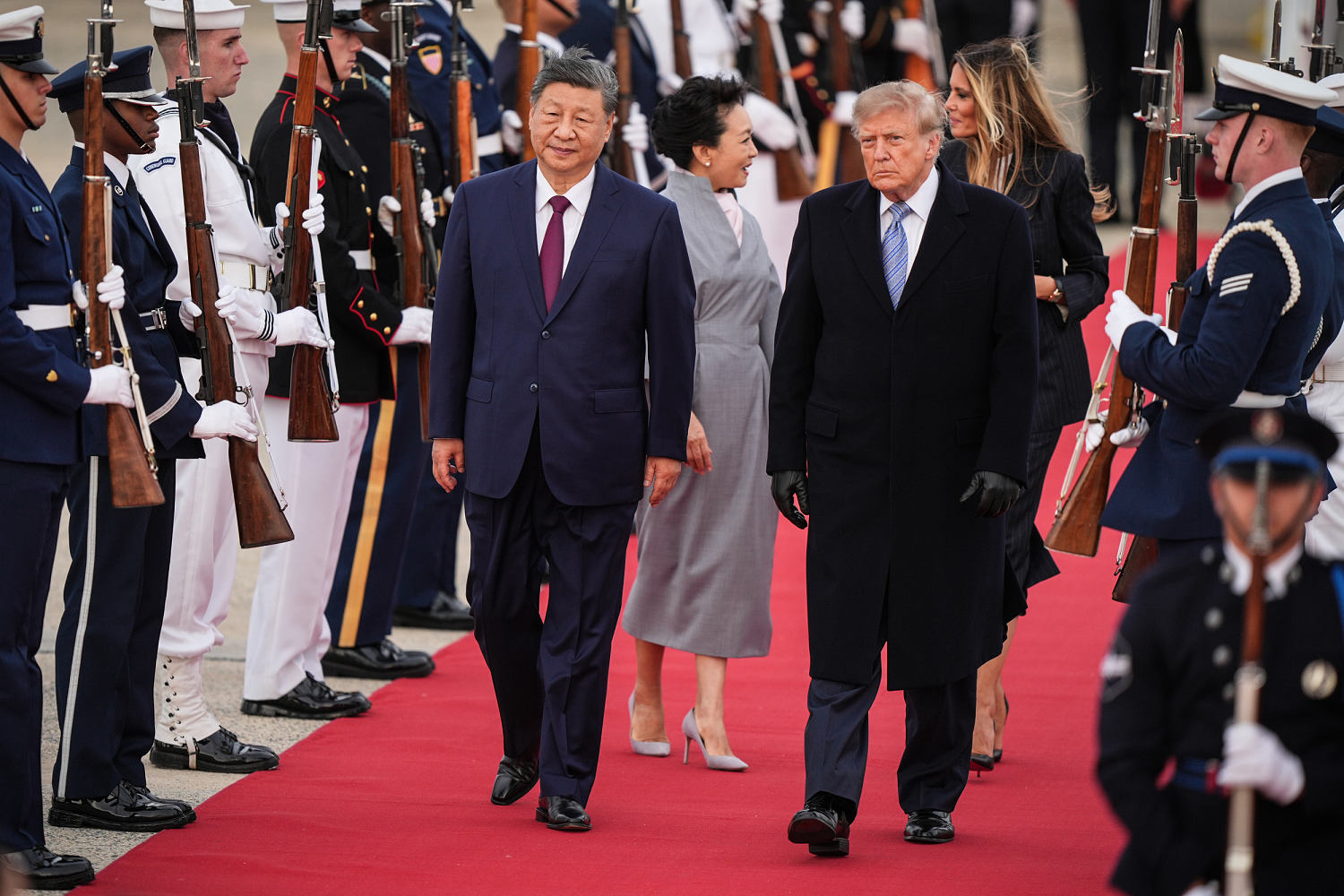
High-level bilateral summits between the United States and China operate under a severe analytical paradox. Observers routinely mistake the absence of immediate legal treaties or sweeping structural breakthroughs for policy failure, while discounting the compounding value of institutional signaling, deterrent communication, and friction reduction. When a presidential administration hosts a visiting head of state for an engagement characterized by intense ceremony, domestic political theater, and rigid protocol, the interaction must be evaluated through the lens of strategic stability rather than transactional legislative output. The surface-layer optics—red carpets, state dinners, and meticulously choreographed press appearances—serve a precise functional purpose: they establish mutual baseline recognition between competing hegemonic actors without requiring either side to concede core sovereignty or economic leverage.
Deconstructing the mechanics of such summits requires mapping three distinct operational layers. The first layer is signaling architecture, wherein public statements and diplomatic posture communicate red lines to domestic and allied audiences. The second layer is bureaucratic containment, where working-level delegations use the political cover of the summit to freeze escalating retaliatory measures in trade, technology export controls, and maritime posture. The third layer is systemic friction management, focusing on crisis communication channels that prevent localized tactical escalation in zones like the Taiwan Strait or the South China Sea from converting into strategic conflict.
The Cost Function of Bilateral Optics
The critique that a summit is low on substance fundamentally misunderstands the prevailing structural equilibrium between Washington and Beijing. Both capitals operate under profound domestic political constraints that preclude grand bargains. In the United States, bipartisan consensus on strategic competition with China creates a ceiling on cooperative concessions; any administration that appears overly accommodating faces severe legislative blowback and electoral vulnerability. In Beijing, the economic imperatives of reversing domestic property sector decline and managing industrial overcapacity collide with an uncompromising commitment to state-directed economic nationalism and national security centralization.
When structural conditions prohibit major treaty ratification, the primary utility of a summit shifts from integration to risk mitigation. The cost function of failing to meet involves an unmitigated escalation loop, where economic decoupling, military close-encounters, and supply chain fragmentation proceed unchecked by high-level political anchors. By convening face-to-face, both executives absorb short-term domestic political costs for the sake of long-term systemic predictability. The pageantry acts as diplomatic insulation, allowing leaders to claim adherence to national strength while quietly instructing military and economic bureaucracies to restore baseline communication protocols.
Divergent Economic Rationales and Structural Bottlenecks
Economic statecraft between the two nations has transitioned from mutual interdependence to managed vulnerability. The traditional model of globalization—characterized by frictionless capital flows, integrated supply chains, and multinational corporate lobbying for bilateral stability—has been permanently replaced by national security industrial policies. Washington deploys targeted export controls, investment screening mechanisms, and domestic subsidies to protect foundational technologies such as advanced semiconductors, artificial intelligence computing hardware, and biotechnology. Beijing counters with indigenous substitution mandates, rare earth export controls, and regulatory scrutiny on foreign corporate entities operating within its borders.
This divergence creates a persistent structural bottleneck during summit negotiations. American negotiators prioritize market access, intellectual property protection, and relief from non-market industrial overcapacity that threatens Western manufacturing bases. Chinese delegations view these demands as an asymmetric attempt to cap their technological ascension and preserve Western unipolar dominance. Consequently, trade discussions during high-level visits inevitably devolve into parallel monologues unless reframed around narrow operational safety valves, such as joint macroeconomic stability communications or anti-money laundering coordination.
Geopolitical Deterrence and Crisis Management Frameworks
Beyond commercial disputes, the core security architecture of the bilateral relationship rests on military-to-military communication channels. The primary hazard of modern great power competition is not deliberate war, but inadvertent escalation driven by miscalculation, ambiguous operational doctrines, or tactical accidents in contested maritime and airspace domains.
A successful summit outcome is measured not by whether military friction points disappear, but by whether operational commanders possess reliable escalation ladders and deconfliction protocols. When theater commanders can bypass diplomatic delays and establish direct dialogue during tactical crises, the probability of structural catastrophe diminishes significantly. The pageantry of the summit provides the political mandate necessary for risk-averse military bureaucracies to resume these operational dialogues.
Strategic Trajectory and Institutional Adaptation
The structural antagonism defining relations between Washington and Beijing is permanent, structural, and institutionalized. It will not be resolved by executive charm, diplomatic breakthroughs, or transactional horse-trading. The ongoing competition spans technological standards, monetary architecture, regional alliance networks, and ideological legitimacy.
Future engagements must be judged not by the volume of joint communiques signed, but by the resilience of the guardrails established to contain competition beneath the threshold of kinetic conflict. Intelligence sharing on transnational threats, macroeconomic coordination during global liquidity shocks, and the institutionalization of maritime encounter protocols represent the utilitarian limits of bilateral diplomacy under structural rivalry.