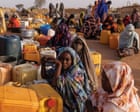
The headlines are screaming again. 2025 has supposedly set a "grim record" for internal displacement. The usual suspects—international NGOs, legacy media outlets, and career bureaucrats—are wringing their hands over the Internal Displacement Monitoring Centre (IDMC) data. They see a world on fire. They see a humanitarian catastrophe that is spiraling out of control.
They are looking at the data upside down. If you liked this article, you might want to check out: this related article.
If you believe the standard narrative, internal displacement is a pure metric of failure. The logic is lazy: more people moving within their borders equals more chaos. But this obsession with "record highs" ignores the mechanical reality of the modern world. We aren’t seeing a surge in global cruelty; we are seeing the radical transparency of the digital age and the byproduct of a more mobile, informed global citizenry.
The "crisis" isn't that people are moving. The crisis is our inability to view migration as a market signal. For another angle on this story, check out the latest update from TIME.
The Data Integrity Trap
Most people quoting these "record" numbers couldn't tell you the difference between a stock and a flow if their funding depended on it. In fact, their funding usually depends on not knowing the difference.
The 2025 figures are bloated by two factors that the mainstream refuses to acknowledge. First, our ability to track movement has reached a level of granular precision that makes historical comparisons a joke. Ten years ago, if a village in the Sudano-Sahelian region moved twenty miles to avoid a skirmish, they didn't exist to the UN. Today, they have cheap smartphones, 4G pings, and satellite imagery tracking their every tent pole.
We aren't necessarily seeing more displacement; we are finally seeing the displacement that was always there. We are counting the "invisible" millions for the first time. To call this a "new record" of violence is intellectually dishonest. It’s a record of surveillance.
Second, the definition of "conflict-driven" displacement has become so broad it’s functionally useless. If a family moves because a local gang is extorting their business, that’s now coded similarly to a full-scale civil war. By blurring the lines between systemic warfare and localized criminality, NGOs can keep their "emergency" status—and their donor checks—perpetually active.
The Mobility Premium
Stop viewing displacement as a tragedy and start viewing it as an exit strategy.
In the old world, when violence arrived, you died. You stayed in your ancestral village because you had no information about where else to go and no means to get there. Internal displacement is, in many ways, a luxury of the modern era. It represents the ability of a population to recognize a threat and execute a logistical maneuver to survive it.
I’ve spent years looking at how capital flows in high-risk environments. The most resilient populations aren't the ones that stay and fight; they are the ones that move, regroup, and rebuild. Displacement is a survival mechanism that works. The fact that more people are successfully displacing rather than dying in situ is a massive win for human agency.
The Misunderstood "Burden"
The "lazy consensus" argues that displaced persons are a drain on the host city’s economy. This is a fundamental misunderstanding of urban economics. Look at the history of cities like Goma or Dhaka. These hubs didn't grow through organic birth rates; they grew through the "shocks" of displacement.
Displaced populations are the ultimate self-starters. They have already survived the worst-case scenario. They bring labor, they bring a desperate hunger for stability, and they bring trade networks that span hundreds of miles. The cities that thrive in the next decade will be the ones that stop building "camps" and start building economic integration zones.
The Tech Paradox: Why 2025 is Different
The competitor articles love to blame "new technologies of war" for the displacement surge. They talk about drones and cyber-warfare. They’re wrong. Technology isn't driving people out; it’s giving them the map to leave.
Information is the greatest disruptor of the status quo. In 2025, a farmer in a contested zone has more intelligence on troop movements than a general did in 1990. They see the Telegram alerts. They check the WhatsApp groups. They make a calculated, data-driven decision to move before the first shot is fired.
This is Preemptive Displacement. It’s a strategic withdrawal. Yet, the IDMC and the UN treat it like a mindless stampede. When we label every move as a "crisis," we strip the actors of their logic. We treat them as victims of gravity rather than agents of their own safety.
Stop Trying to "Fix" Displacement
The global policy "fix" for displacement is always the same: "Return to Origin." It’s an obsession with the map of yesterday.
Imagine a scenario where a tech company sees a 40% churn in its user base. Does the CEO demand those users return to the old, broken interface? No. They look at where those users went and try to understand the new demand.
Governments and NGOs are the CEOs of a failing product. They want to force people back to unstable, economically dead rural areas because it looks better on a spreadsheet. It "restores the status quo." But the status quo was exactly what caused the vulnerability in the first place.
We need to stop funding "returns" and start funding portable identities. If a person is internally displaced, their biggest hurdle isn't a lack of a roof; it's the loss of their legal and financial existence.
- Digital Sovereignty: Why is a person's right to work tied to a physical office in a city that’s currently under siege?
- Asset Liquidity: We need blockchain-based land registries that allow displaced farmers to collateralize their abandoned assets to start over elsewhere.
- Micro-Infrastructure: Stop building massive, permanent camps that become slums. Invest in modular, rapidly deployable urban kits that can be integrated into existing city grids.
The Brutal Truth About Stability
Stability is a stagnant pond. It’s where bad ideas go to rot. The "record displacement" of 2025 is a massive, painful, and messy reorganization of human capital. It is the world’s most vulnerable people saying, "The current borders and power structures don't protect me, so I’m changing my geography."
If you are a business leader or a policy maker, you shouldn't be mourning the death of the old map. You should be looking at where these millions are landing. Those locations are the new economic frontiers. The "displaced" are the pioneers of the 21st century, whether they want to be or not.
The humanitarian industry wants you to feel guilty so you’ll keep the status quo funded. They want you to see a "record high" and think the world is ending. It’s not. The world is moving.
The numbers are high because the cost of staying still has finally become higher than the cost of moving. People are finally choosing the road over the grave. If that’s a crisis, your definition of progress is broken.
Build for the people on the move, or get out of the way.
The era of sedentary stability is over. Welcome to the age of the permanent pivot.