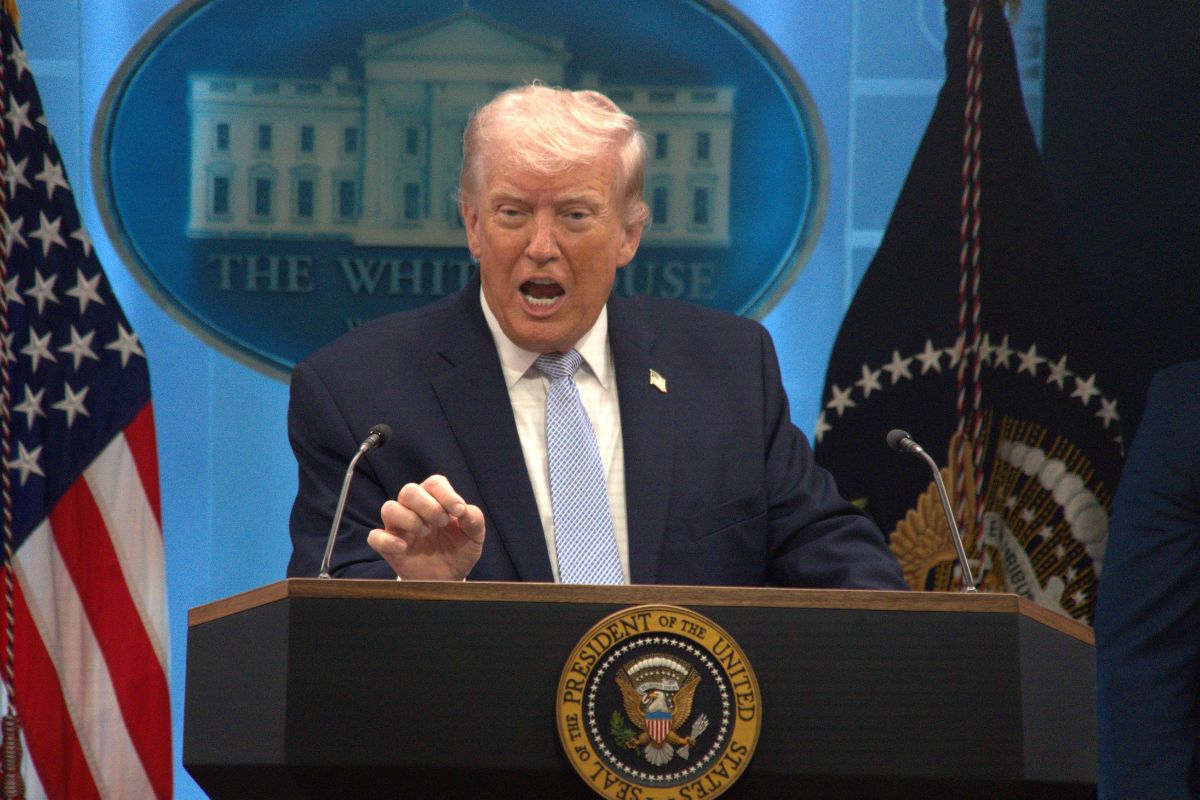
Donald Trump says it doesn’t matter if Iran returns to the negotiating table. He’s lying. Not because he lacks leverage, but because the very premise of "returning" is a relic of a geopolitical era that died a decade ago.
The media loves the narrative of the tough-talking negotiator walking away from the deal. It makes for great headlines. It suggests a binary choice: either they bow to the pressure, or we freeze them out. This is a fundamental misunderstanding of how modern shadow economies and energy markets actually function. By framing the collapse of talks as a sign of American indifference, we ignore the reality that a disconnected Iran is often more dangerous to global market stability than a nuclear-armed one.
The Myth of Isolation
Mainstream analysis suggests that "Maximum Pressure" works by starving a regime into submission. History proves otherwise. When you cut a nation off from the global financial grid, you don't destroy their economy; you simply force it underground.
I’ve watched analysts track tankers for years. They see the "ghost fleet" and assume it's a sign of desperation. It’s not. It’s a sophisticated, decentralized infrastructure that bypasses the US dollar entirely. When Trump claims he doesn't care if they come back, he is ignoring the fact that every day Iran operates outside the SWIFT system, it builds the blueprint for other nations to do the same. We aren't just isolating Iran; we are inadvertently stress-testing a global economy that doesn't need us.
The "lazy consensus" is that US sanctions are a dial you can turn up or down to get a specific result. In reality, they are more like a chemical reaction. Once you hit a certain threshold of pressure, the target transforms. Iran isn't the same country it was in 2015. It has spent years hardening its internal supply chains and deepening ties with Beijing and Moscow.
The Leverage Trap
Trump’s stance relies on the idea of "leverage." He believes that by walking away, he increases the value of his eventual return. This is classic real estate logic applied to a zero-sum game of survival.
In a boardroom, walking away works. The other party has a fiduciary duty to make a deal. In Tehran, the "other party" is a revolutionary guard whose entire identity is built on resistance. When Trump shows "tevar" (attitude), he isn't scaring them; he's validating their internal propaganda.
The true cost of this indifference isn't a nuclear weapon—it's the permanent loss of Western influence over Central Asian trade routes. While we debate whether or not to take a phone call from a mid-level diplomat, the International North-South Transport Corridor (INSTC) is being paved. This isn't about "stability." This is about who owns the plumbing of the 21st century.
Energy Markets and the Great Pretend
Let's look at the numbers the pundits ignore. The global oil market is currently a theater of the absurd. We pretend Iranian oil isn't hitting the market, yet global supply remains surprisingly resilient despite "strict" enforcement.
The "we don't care" rhetoric serves a specific domestic purpose: it keeps oil prices predictable by signaling that no sudden policy shifts are coming. If Trump actually cared about stopping Iranian exports, he would have to sanction the Chinese refineries buying the crude. He won't do that. Sanctioning Chinese banks over Iranian oil would trigger a global recession faster than any regional conflict.
So, we get the theater. We get the tweets. We get the bold claims of indifference. It’s a performance designed to mask a terrifying reality: the US has run out of non-military cards to play.
The Cost of the Vacuum
When a superpower vacates the room, the air doesn't just sit there. It gets filled.
- Information Black Holes: By ending dialogue, we lose the granular intelligence that comes from diplomatic friction.
- Accelerated Proliferation: Without a path back to the table, the "breakout time" for enrichment becomes a moot point. If there is no deal to be had, there is no reason to stop.
- Regional Arms Races: Our allies in Riyadh and Abu Dhabi don't see Trump’s indifference as strength. They see it as a signal to start their own indigenous weapons programs.
Imagine a scenario where the US successfully ignores Iran for four years. The result isn't a collapsed regime. It’s a nuclear-capable state that has spent half a decade integrating its banking system with the BRICS+ bloc. By the time we "care" again, the dollar won't be the weapon it is today.
Stop Asking if the Deal is Dead
The question shouldn't be "Will they come back?" The question is "Why would they?"
If you are a hardliner in Tehran, the current status quo is a win. You have proven you can survive the worst the West can throw at you. You have redirected your trade eastward. You have maintained your proxy networks.
Trump’s "I don't care" attitude is the ultimate gift to the IRGC. It provides them with the one thing they need most: time. Time to finish the centrifuges. Time to solidify the trade routes. Time to wait out the American election cycle.
The "fresh perspective" that the media misses is that Trump’s stance isn't a strategy; it's a surrender disguised as a flex. He is ceding the most volatile region on earth because the political cost of a "bad deal" is higher than the long-term cost of a nuclear-armed rival.
We are watching the managed decline of American hegemony in the Middle East, narrated by a man who claims he’s winning. The bravado is the shroud.
Stop looking at the podium. Look at the map. The map shows a world that is learning how to live without American permission. Every time we walk away from a table, we leave behind a chair that someone else is more than happy to sit in.
The next time you hear that it "doesn't matter" if Iran negotiates, remember that in geopolitics, silence is never empty. It is always an invitation for an enemy to speak louder.