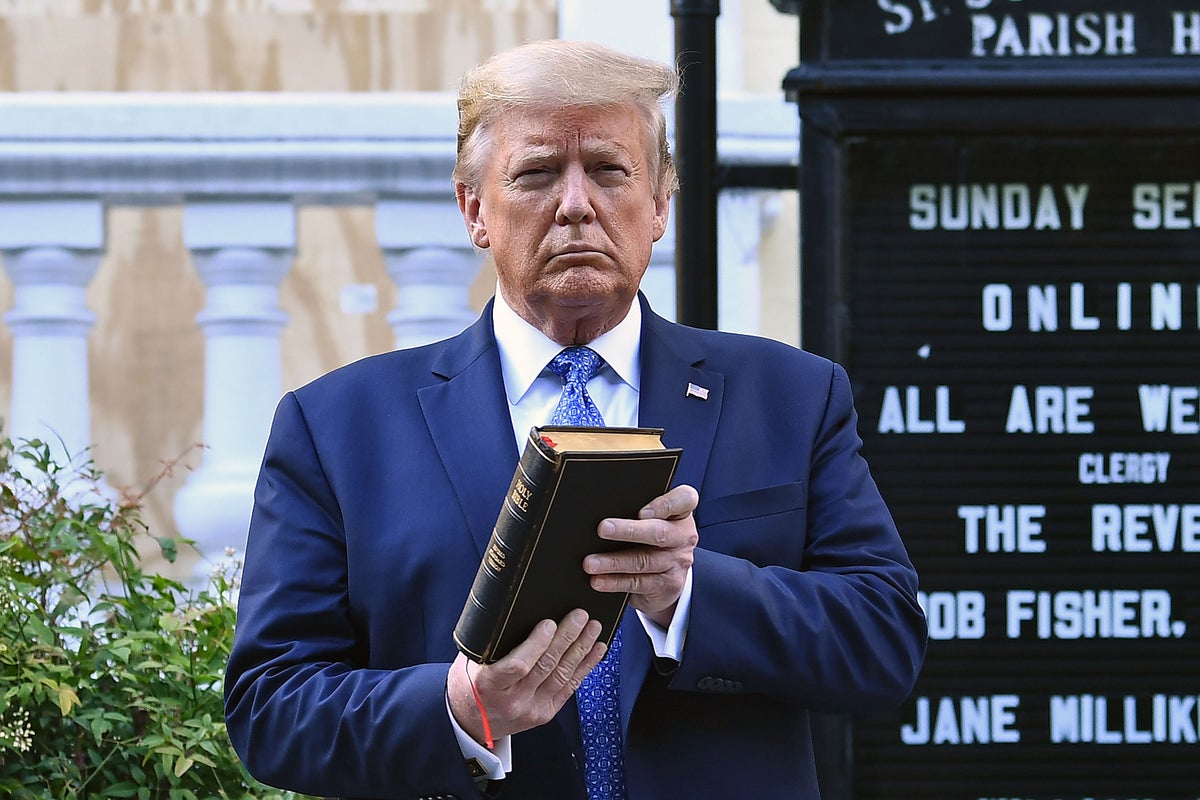
Donald Trump loves a good stage. He knows how to pick a backdrop that screams authority. When he stood in front of the Lincoln Memorial or held a Bible at St. John’s Church, he wasn’t just posing for a photo. He was signaling to a specific base of voters who see the United States through a very particular lens. At the heart of this signaling is one specific Bible verse that has become a lightning rod for political and religious debate. You’ve heard it before. It’s 2 Chronicles 7 14.
The verse says, "If my people, which are called by my name, shall humble themselves, and pray, and seek my face, and turn from their wicked ways; then will I hear from heaven, and will forgive their sin, and will heal their land."
On the surface, it sounds like a beautiful call to prayer and repentance. It’s a message of hope. But when a politician reads it, the meaning shifts. It stops being just a devotional and starts being a political manifesto. This isn't just about faith. It’s about who "the people" are and what it means to "heal the land." If you think this is just another Sunday school lesson, you’re missing the point. This verse is the cornerstone of a movement that wants to reshape the American identity.
The Problem with Nationalizing an Ancient Promise
Context matters. If you ignore it, you can make the Bible say almost anything. 2 Chronicles 7 14 wasn’t written to the United States in the 21st century. It was part of a specific conversation between God and King Solomon after the dedication of the temple in Jerusalem. God was talking to the ancient Israelites about their specific covenant.
When Trump or any other political figure applies this directly to America, they’re doing something called "covenantal displacement." They're treating the U.S. like a New Israel. This is the bedrock of American Exceptionalism. It suggests that if we just pray hard enough or vote the right way, God is contractually obligated to fix our economy, our borders, and our culture.
Biblical scholars get nervous here. They’ll tell you that "my people" in the original text referred to the Hebrews. In a modern Christian context, it usually refers to the Church—the global body of believers. But in a political rally? "My people" suddenly means "patriotic Americans" or, more specifically, the MAGA base. It excludes everyone else. It creates an "us versus them" dynamic that turns a call for humility into a weapon of exclusion.
Why Evangelicals Can’t Get Enough of This Verse
You have to understand the mindset of the average evangelical voter to see why this hits so hard. For many, America is in a state of moral decay. They look at secularism, changing social norms, and the decline of church attendance as "wicked ways." They feel like they're losing their country.
2 Chronicles 7 14 offers a simple three-step plan to win it back.
- Humble yourself.
- Pray.
- Turn from sin.
It feels actionable. It gives people a sense of agency in a world that feels out of control. When Trump reads these words, he’s validating their anxiety. He’s telling them they're the "remnant" that can save the nation. He isn’t just a politician to them in those moments. He’s a facilitator of a spiritual awakening.
But there’s a massive irony here. The verse starts with a call to "humble themselves." Many critics point out that humility isn't exactly the first word that comes to mind when you think of Donald Trump. His brand is built on strength, ego, and winning. Seeing a man who rarely admits mistakes call for a nation to humble itself feels like a glitch in the matrix for some. Yet, his supporters don't care. They see him as the flawed "Cyrus" figure—a secular leader used by God to protect the faithful.
The Great Divide Over Healing the Land
The biggest point of contention is the phrase "heal their land." What does a healed land look like? Ask a progressive Christian and they’ll talk about social justice, feeding the poor, and environmental stewardship. They see "wicked ways" as systemic racism or greed.
Ask a conservative supporter at a Trump rally and you’ll get a different list. They see "healing" as returning to traditional family values, stopping abortion, and securing the border. The land isn’t just dirt and trees. It’s the legal and cultural framework of the nation.
This is why the passage is so polarizing. It’s a mirror. You see your own political priorities reflected in the "healing" promised by God.
Religious historians like John Fea, author of Believe Me: The Evangelical Road to Donald Trump, argue that this use of the Bible is more about nostalgia than theology. It’s a longing for a 1950s version of America that probably never existed. Using 2 Chronicles 7 14 provides a divine rubber stamp for that nostalgia. It makes a political preference look like a biblical mandate.
Misreading the Call to Repentance
There’s a subtle danger in how this verse is used on the campaign trail. True repentance is usually inward. It’s about "me" and "my" sins. But in a political context, the "wicked ways" we need to turn from are almost always the sins of other people.
It’s easy to pray for the country to turn from its wicked ways when you define those ways as the policies of the opposing party. It’s much harder to use the verse for self-reflection. When the "if" in "if my people" becomes a condition for political victory, the spiritual heart of the message gets ripped out. It becomes a transaction. We give God some prayer; He gives us a Supreme Court justice.
This transactional faith is what drives the secular world crazy. It looks like hypocrisy. They see a movement that claims to follow a humble carpenter from Nazareth but seems obsessed with holding onto political power at any cost.
Moving Beyond the Soundbite
If you actually want to understand the weight of this passage, stop listening to how politicians use it. Look at the text itself. It’s a call to profound, uncomfortable change. It’s not a magic spell to win an election.
Real humility doesn't fit on a bumper sticker. It doesn't work well in a 30-second campaign ad. If you're someone who finds comfort in this verse, don't let it be hijacked by a political agenda. If you're someone who's repulsed by its use in politics, don't let that distract you from the actual message of seeking something higher than yourself.
The next time you see a clip of a politician reading from the Old Testament, ask yourself a few questions. Who are they trying to include? Who are they leaving out? Are they calling for personal change or demanding that their neighbors change?
The Bible is a complex library of books. Using it as a political playbook is nothing new, but it’s always risky. It can inspire greatness, but it can also justify division. 2 Chronicles 7 14 is the ultimate example of this tension. It’s a verse about healing that has somehow become a tool for deepening the fracture.
Don't just take a politician's word for what a verse means. Pick up the book. Read the whole chapter. Check the historical context. The more you know about the original intent, the harder it is for someone to use those words to manipulate your emotions. Truth doesn't need a campaign manager. It stands on its own.