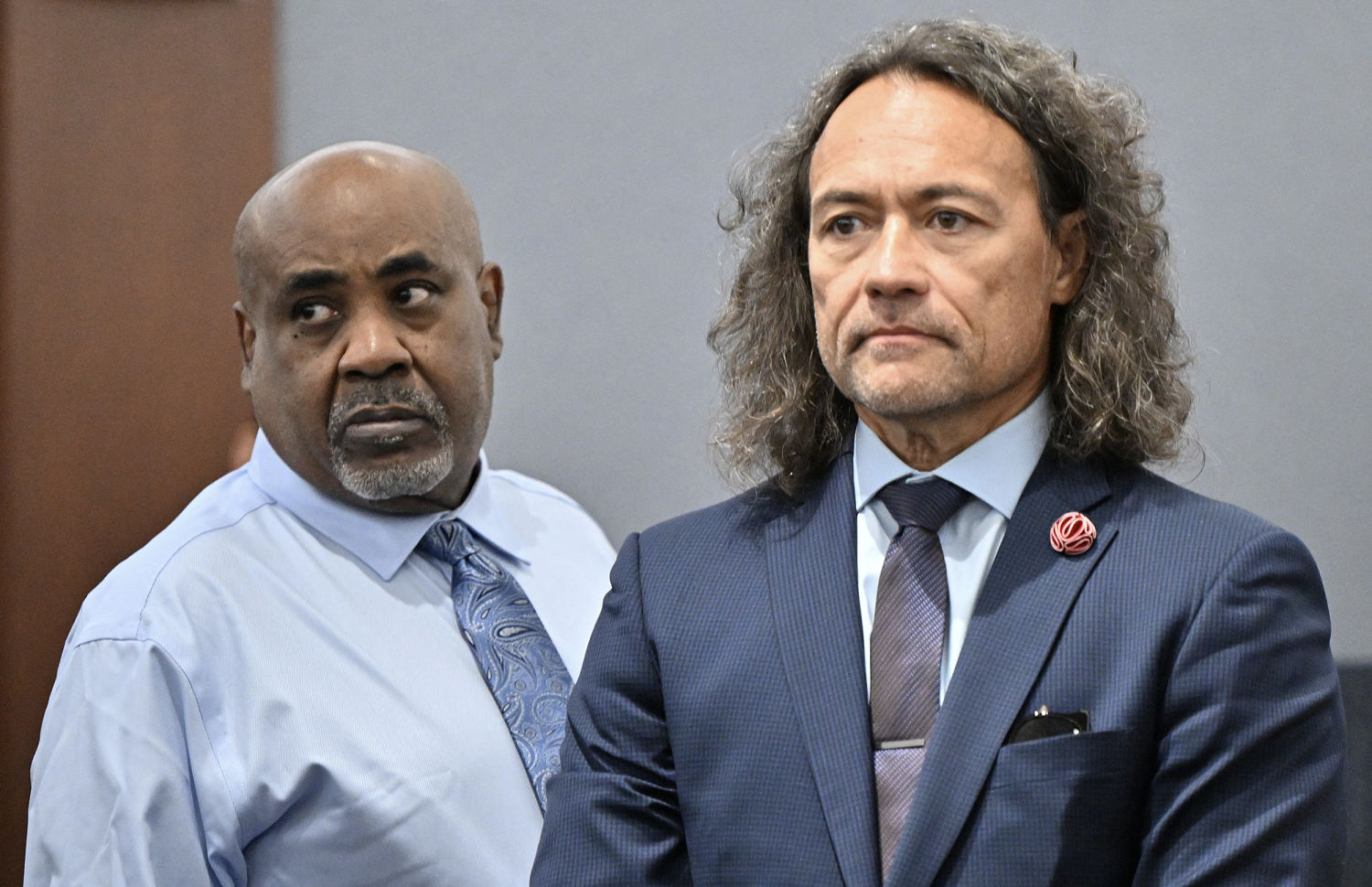
Every legal commentator and true-crime podcaster is currently wringing their hands over the Duane "Keffe D" Davis verdict, calling it a historic closure for a thirty-year-old mystery. They want you to believe that justice caught up with the streets, that persistence paid off, and that a Las Vegas jury finally unraveled the assassination of Tupac Shakur.
They are completely wrong.
Thelazy consensus surrounding this trial treats Davis's conviction as a triumph of investigative policing. It is not. It is a terrifying indictment of a modern legal ecosystem that has completely forgotten how to weigh evidence. Duane Davis was not convicted because the state unearthed brilliant forensic science or unshakeable eyewitness testimony. He was convicted because he talked himself to death for a paycheck.
For three decades, the narrative has been that law enforcement bungled the case. The actual truth is much worse: law enforcement didn't need to do anything because the defendant suffering from terminal clout-chasing did their job for them. Davis spent years treating his own alleged orchestration of a historic murder as marketing collateral for memoirs, documentary series, and interview clips. When a man writes a book titled Compton Street Legend and goes on television telling the world he handed the weapon to the shooter, he isn't offering a confession; he's offering a product.
The defense strategy was laughable on its face. Michael Sanft, Davis's attorney, stood before a jury and asked them to accept a defense that essentially boiled down to: My client is a pathological liar who invented an entire murder plot just to stay relevant and sell paperbacks.
Imagine a scenario where a corporate executive embezzles funds, writes a brag-sheet memoir detailing how they stole the money to boost their personal brand, and then stands trial arguing the book was just creative fiction. They would be laughed out of court and handed a maximum sentence before lunch. Yet, when it comes to street culture, the legal system suffers from a bizarre cognitive dissonance. Jurors and prosecutors suddenly treat violent crime confessions like Hollywood screenwriting exercises—until they decide they want to use them as an absolute truth.
The prosecution didn't have phone records placing Davis in Las Vegas that night. They didn't have cooperating eyewitnesses from the actual scene willing to point fingers in a timely manner. They had a mountain of contradictory, self-aggrandizing interviews where Davis changed timelines, bloated waiting periods from fifteen minutes to ninety minutes, and constantly shifted details about who sat where.
This is where the expertise of true-crime analysis completely collapses. Real investigators know that uncorroborated street braggadocio is the most contaminated data source on earth. Social capital in gang subcultures relies on hyperbole. Davis was an aging, cornered figure trying to extract financial survival from his past notoriety. By treating his self-mythologizing as a sworn ledger of events, the court set a dangerous precedent: if you talk big enough for long enough, the state will dispense with the pesky burden of physical evidence and let your marketing copy do the convicting for you.
The conviction of Duane Davis does not bring closure to the murder of Tupac Shakur. It provides a masterclass in how to weaponize a defendant's vanity against them while substituting actual investigative rigor with viral media clips. The defense failed not because the state built an impenetrable case, but because they tried to defend a man who spent ten years acting like the producer of his own murder documentary.
The movie isn't over. It's just starring a new generation of investigators who realized they don't have to solve crimes anymore. They just have to wait for the perpetrators to monetize them.