The tea in the bazaars of Isfahan carries a specific scent. It is a mix of cardamom, scorched sugar, and the dry, ancient dust that drifts off the Zagros Mountains. For decades, that scent has been the backdrop to a fragile normalcy. But lately, the air feels different. It carries the metallic tang of something modern, something cold, and something that doesn't belong in a city built on poetry and turquoise tiles.
When we talk about "War in Iran," we usually speak in the language of the boardroom or the situation room. We talk about centrifuges. We talk about the Strait of Hormuz. We calculate barrels per day and the range of a ballistic missile. We treat the Middle East like a game of Risk played on a glass table. But stand on the banks of the Zayandehrud river—now often dry due to mismanagement and climate shifts—and you realize that the "bleak future" isn't a forecast. It is a weight.
A conflict between Iran and its regional or global adversaries isn't a localized event. It is a tremor that would snap the spine of the global energy market and send a shiver through every smartphone, every gas pump, and every dinner table from Berlin to Beijing.
The Invisible Net
Imagine a young woman named Leila. She is hypothetical, but her reality is shared by millions. She lives in Tehran and works as a freelance graphic designer. Her world is a constant battle against the "filter." To reach the outside world, she uses a rotating cast of VPNs, digital tunnels that allow her to bypass the state’s massive firewall. For Leila, the war has already started. It’s a silent, digital siege.
The modern face of this conflict is not always a mushroom cloud. It is a line of code. We saw this years ago with Stuxnet, the worm that physically tore apart Iranian centrifuges by spinning them into a frenzy. It was a moment where the digital became physical. Today, that shadow war has expanded. When a cyberattack hits an Iranian gas station, the pumps freeze. Lines stretch for miles. Frustration boils over into the streets.
This is the new attrition. It targets the psyche of the population before it ever targets a bunker. The goal is to make the cost of daily life so high that the social fabric begins to fray. But there is a counter-move. Iran has developed its own cyber-capabilities, targeting infrastructure abroad. It is a dance of invisible knives.
The Geography of a Nightmare
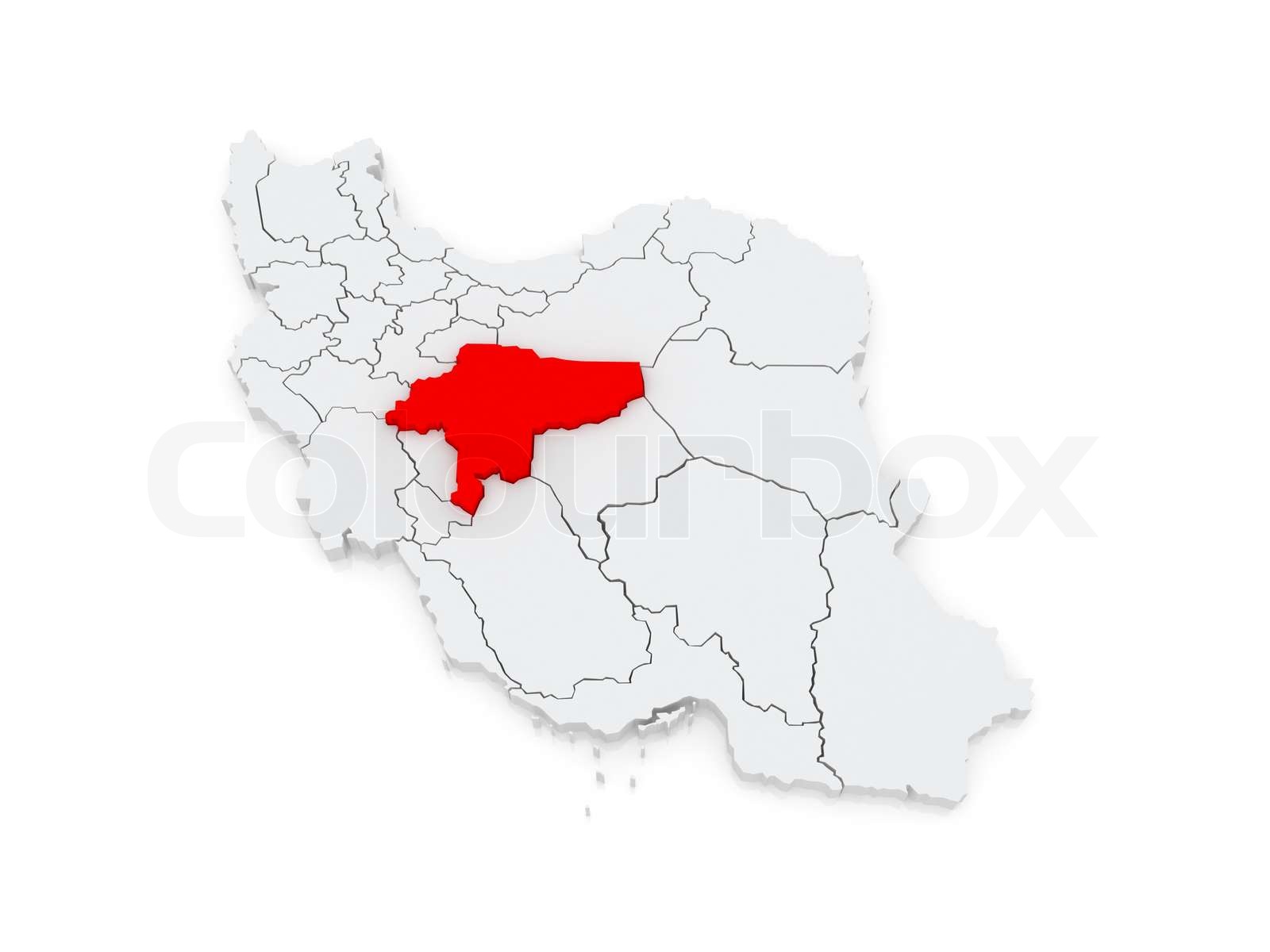
The map of Iran is a fortress. To the north, the Caspian. To the south, the Persian Gulf. In between, a massive, mountainous plateau that has swallowed empires whole. This geography dictates the stakes. If a full-scale kinetic war broke out, the first casualty would be the global economy’s primary artery: the Strait of Hormuz.
Think of the Strait as a throat. Every day, roughly 20 million barrels of oil pass through a narrow channel that is, at its tightest point, only two miles wide for shipping lanes. If that throat is constricted, the world gasps.
Economic models suggest that a total blockage of the Strait could send oil prices soaring past $150 or even $200 a barrel. This isn't just about the price of a gallon of premium. It’s about the cost of transporting grain to sub-Saharan Africa. It’s about the cost of plastic for medical supplies. It’s about the stability of the global financial system. The "bleakness" we fear is a cascade effect where a spark in a narrow body of water causes a fire in a stock exchange ten thousand miles away.
The Proxy Chessboard
War in this region is rarely contained within borders. It spills. It leaks. It manifests as a drone strike in the Saudi desert or a skirmish in the mountains of Lebanon. This is the doctrine of "Strategic Depth." Iran knows it cannot win a conventional head-to-head war against the combined weight of the West. So, it has built a network.
To understand the Middle East, you have to understand the proxy. It is a way of fighting without taking the blame—or at least, without taking the full brunt of the retaliation. From the Houthis in Yemen to Hezbollah in Lebanon, the reach is long and the fingers are many.
If the "big one" happens, these proxies become a thousand tiny fronts. It wouldn't be a war of armies meeting in a field; it would be a war of shadows, an endless series of small, agonizing stings that make the cost of staying in the fight unbearable for any outside power. The human cost here is immeasurable. It is the cost of displaced families in Sana’a and shattered glass in Beirut. It is a generation of children who know the sound of a drone motor better than the sound of a school bell.
The Nuclear Threshold
Then there is the ghost in the room: the atom.
The debate over Iran’s nuclear program is often framed as a binary—either they have the bomb or they don't. But the reality is more nuanced. It’s about "breakout time." It’s about the technical knowledge that, once gained, cannot be unlearned. You can bomb a facility, but you cannot bomb a mathematical formula stored in the minds of a thousand scientists.
The fear of a nuclear Iran isn't just about the use of a weapon. It’s about the regional arms race that follows. If Tehran crosses the threshold, does Riyadh follow? Does Ankara? We are talking about the most volatile region on Earth suddenly becoming a nuclear tinderbox.
The logic of Mutually Assured Destruction (MAD) kept the Cold War cold. But that logic relied on clear communication and a certain level of stability. In the Middle East, where religious fervor, historical grievances, and sheer proximity create a high-pressure cooker, the margin for error is zero. A single misinterpretation of a radar blip could trigger a sequence that no one can stop.
The Human Toll of Silence
Beyond the missiles and the oil, there is the slow-motion tragedy of the Iranian people. Decades of sanctions have created a "sanctions economy." It is a world of shadows and middlemen.
Consider a hospital in Mashhad. They have the machines, but they lack the proprietary parts. They have the doctors, but they lack the newest generation of cancer drugs. The "invisible stakes" of this geopolitical standoff are paid in the currency of human health. When a currency devalues by 50% in a year, the middle class vanishes. The teachers, the engineers, and the artists—the people who make a civilization—find themselves scurrying for basic staples like eggs and flour.
This pressure doesn't always lead to the "regime change" that Western hawks predict. Often, it leads to a hardening. It leads to a rally-around-the-flag effect where even those who despise their government find themselves resenting the external forces that have made their lives a misery.
The Myth of the Quick Strike
There is a dangerous fantasy that persists in certain halls of power: the "surgical strike." The idea that you can fly in, take out the nuclear sites, disable the command centers, and be home in time for the evening news.
History is a graveyard of such certainties.
Iran is not a small, isolated island. It is a nation of 85 million people with a deep sense of historical pride that stretches back to Cyrus the Great. A strike would not be the end of a conflict; it would be the opening of a Pandora’s box. The retaliation would be asymmetrical, prolonged, and global.
We have seen what happens when the West attempts to reshape the region through force. The lessons of Iraq and Afghanistan are written in blood and trillions of dollars in debt. But Iran is a different beast entirely. It is a sophisticated state with a deep bureaucracy and a military designed specifically to survive and punish an aggressor.
The Crossroads
Is the future bleak? It depends on which lens you use.
If you look only at the rhetoric—the "death to" chants on one side and the "all options on the table" on the other—it looks like a tragedy already written. The momentum toward conflict feels like a boulder rolling down a hill.
But there is another side. There is a young generation in Iran that is more connected, more secular, and more globally minded than any that came before them. They watch the same YouTube videos as kids in London. They code in the same languages as developers in San Francisco. They are the strongest bridge we have, yet they are the ones most likely to be burned in a conflict.
The real tragedy is that the "bleakness" isn't inevitable. It is a choice. It is a choice to prioritize short-term political gains over long-term regional stability. It is a choice to ignore the human element in favor of the map.
The tea in Isfahan is still being served. The old men still play backgammon in the squares, the wooden dice clattering against the boards. The turquoise domes still catch the light of the setting sun. But everyone is listening. They are listening for the sound of engines. They are listening for the silence of a failed grid. They are waiting to see if the world remembers that behind every "target" is a home, and behind every "fact" is a life.
If the future is to be anything other than bleak, it will require a radical departure from the scripts of the last forty years. It will require an admission that security is not something you take from your neighbor, but something you build with them. Until then, the dust continues to settle on the Zagros, and the world holds its breath, hoping that the next spark doesn't land in the tinder.
The sun sets over the Milad Tower in Tehran, casting long shadows over a city that never really sleeps because it’s too busy trying to survive the morning. In those shadows, the cost of war isn't a statistic. It is the look in a father's eyes as he checks the exchange rate one more time before buying medicine. It is the silence of a classroom. It is the terrifying realization that the "future" is a luxury not everyone can afford.