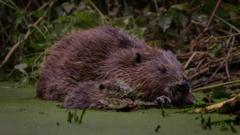
Ealing Council wants children to name a couple of newly introduced beavers. It makes for wonderful local press. It fills column inches with cozy nostalgia. Parents smile, kids scribble crayon drawings of buck-toothed rodents, and everyone feels like they have actively participated in saving the planet before heading back to a gas-guzzling SUV.
It is also an absolute distraction.
While the local authority runs a feel-good public naming competition, the fundamental mechanics of urban rewilding are being entirely misunderstood by the very people funding them. We love the theater of conservation. We despise the friction of actual ecology.
Let us be completely clear about what is happening here. Beavers are not cute furry mascots designed to teach eight-year-olds about civic participation. They are heavy-duty, ecosystem-altering biological engineers. They change water tables, drown infrastructure, and reshape topography with zero regard for human zoning laws. When you drop them into a peri-urban London borough and treat them like characters from a children's book, you are setting up both the animals and the public for a rude awakening.
The Mascot Fallacy
Conservation marketing relies on the charismatic megafauna trap. If an animal has big eyes and a recognizable silhouette, you can raise money, pass ordinances, and distract people from structural failures elsewhere.
Ealing’s beaver project is the latest symptom of this malaise. We treat wildlife introduction as an aesthetic upgrade, akin to planting hanging baskets on a high street. Real ecological restoration is messy, contentious, and frequently hostile to human convenience.
When beavers build dams, water backs up. That water floods basements, submerges footpaths, and threatens utility cables. In a dense urban or suburban environment like West London, human-wildlife conflict is not a distant possibility; it is a mathematical certainty. Yet, the public discourse remains entirely fixated on whether the rodents should be named Barnaby or Nibbles.
If you are not prepared to manage the aggressive eviction of flooded homeowners or the costly restructuring of municipal drainage systems, you have no business dropping semi-aquatic rodents into a suburban park. You are running a PR stunt, not a conservation program.
The Lazy Consensus on Rewilding
The prevailing narrative surrounding urban rewilding assumes that nature is a fragile, broken vessel that merely requires human benevolence to bounce back to some idyllic, pre-industrial state.
History shows the opposite. Nature is aggressive, opportunistic, and entirely indifferent to our aesthetic preferences. Beavers do not ask for permission to fell mature willow trees that local residents fought to protect. They do not consult neighborhood committees before turning a manicured wetland into a chaotic, swampy labyrinth of mud and deadwood.
The lazy consensus says that bringing back native species is an unmitigated good. The data says something far more complicated. Rewilding without a rigorous, unyielding management framework is just localized environmental chaos wrapped in good intentions.
I have watched municipalities launch ambitious biodiversity initiatives only to panic and pull the plug the moment a disgruntled taxpayer complains about a flooded driveway or a blocked culvert. If Ealing wants to play at being a vanguard of urban ecology, they need to abandon the fairytale.
What Actually Matters
Let us look past the cute press releases and examine what a serious ecological intervention in a place like Ealing would actually require.
First, it demands brutal fiscal honesty. Restoring functional waterways costs millions in infrastructure mitigation, not because the beavers are expensive, but because human infrastructure has spent centuries hardening the landscape against water. You cannot introduce a master hydrological engineer into a concrete-choked watershed and expect things to balance out organically.
Second, it requires public education that goes beyond naming contests. Citizens need to understand that a thriving ecosystem smells like rotting vegetation, looks untidy, and occasionally floods their jogging routes. If the public wants pristine, manicured parks, they should stick to concrete and turf. If they want wildlife, they have to accept the loss of human control.
Third, local governance must stop outsourcing hard policy choices to sentimental distractions. Asking children to name wild animals is an effective way to manufacture consent for a project before the community understands its operational trade-offs.
The Downside of Our Approach
There is a dark side to this relentless romanticism. When we sanitize nature into a children's story, we create an intolerant public. The moment a wild animal behaves like a wild animal—damaging property, disrupting traffic, or altering a landscape in a way humans find inconvenient—the public outcry is swift and unforgiving.
The same people who vote to introduce beavers are often the first to demand their removal when a localized flood reaches their back garden. By sugarcoating the reality of rewilding with community engagement gimmicks, we set these species up to fail.
We need to stop treating conservation like a feel-good hobby. It is an engineering discipline. It is a management challenge. And above all, it is an admission that human dominance over the landscape has limits we are only beginning to understand.
Stop worrying about what to call them. Start worrying about where the water is going to go when they get to work.