The smartphone warming your palm right now contains a universe of invisible geography. Scratch beneath its sleek glass exterior, and you will find trace amounts of neodymium, dysprosium, and cobalt. These are not household names. They do not roll off the tongue like gold or silver. Yet, without them, the screen stays dark. The electric car idling at the traffic light becomes an expensive paperweight. The wind turbine on the horizon stops turning.
For decades, the global supply of these essential elements belonged, practically speaking, to just one player. China.
When a single nation holds the keys to the foundational materials of the twenty-first century, dependency is not just an economic vulnerability. It is a quiet, suffocating chokehold. But beneath the surface of global trade, the tectonic plates are finally shifting. A recent, massive agreement between India and the United States signals that the era of complete reliance on a single superpower for critical minerals is coming to an end.
The Weight of a Grain of Dust
Consider a hypothetical engineer named Ramesh. He sits in a brightly lit lab in Bengaluru, staring at the schematic of a next-generation electric vehicle battery. He knows exactly how to make it more efficient, how to stretch its range so a working-class family can travel across states without fear of stalling. But Ramesh has a problem that no amount of engineering genius can solve. The raw materials he needs are stuck behind a wall of geopolitical tension.
To understand why Ramesh’s battery matters, we have to look at the sheer scale of the monopoly. China processes roughly 60 percent of the world’s lithium, 70 percent of its cobalt, and a staggering 90 percent of rare earth elements.
If Beijing decides to restrict exports—as it has done in the past with gallium and germanium—factories half a world away grind to a halt. It is a terrifyingly fragile foundation for the future of clean energy.
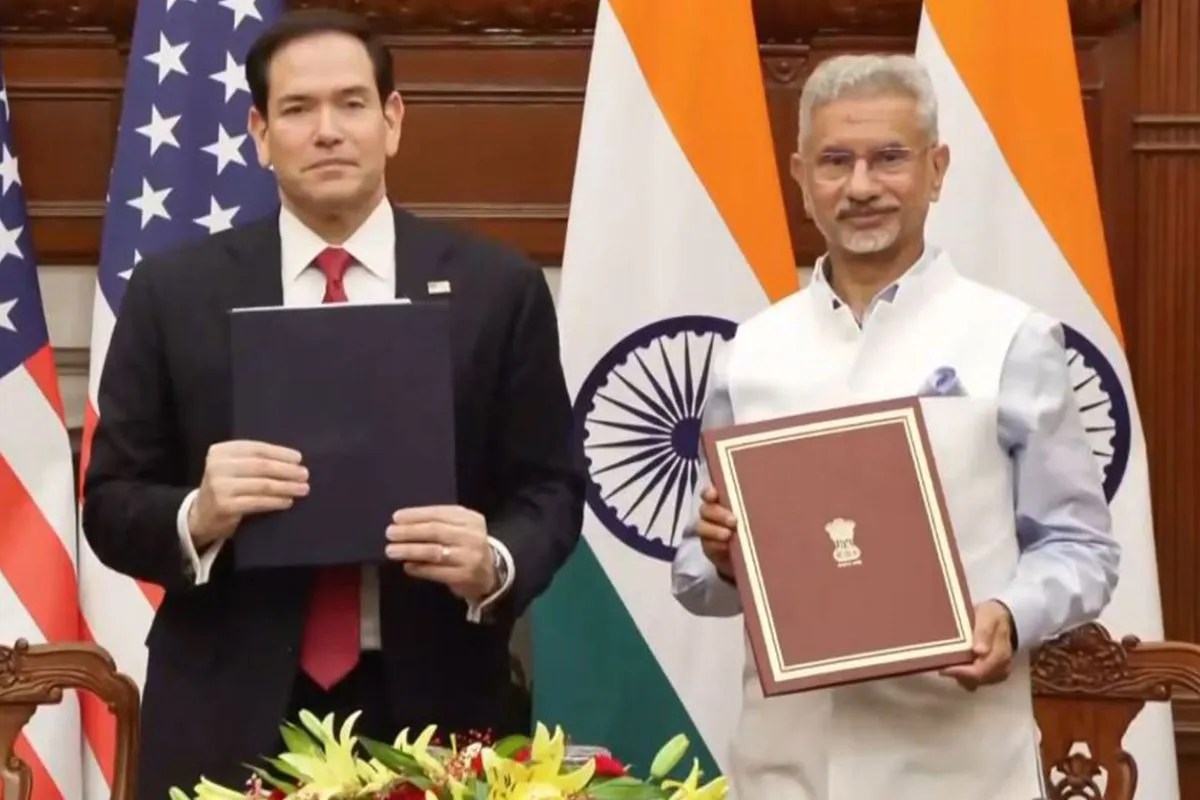
This is the backdrop for the landmark Memorandum of Understanding signed between New Delhi and Washington. This is not just another piece of bureaucratic paperwork shuffled across a mahogany table. It is a defensive shield. The agreement focuses on securing supply chains for critical minerals like lithium, cobalt, and nickel, ensuring that both nations can build their technological futures without waiting for permission from a third party.
The Anatomy of an Unbalanced Scale
Why did the world let this happen? The answer is simple, uncomfortable, and deeply human: it was cheaper to look away.
Extracting rare earths is a brutal, toxic business. It requires crushing thousands of tons of rock, leaching it with acid, and separating elements that are chemically stubborn. For years, Western nations preferred to outsource the environmental and physical toll. China stepped into the vacuum willingly, building massive infrastructure, subsidizing state-owned enterprises, and quietly securing mines from Africa to South America.
They played the long game. The rest of the world played the quarterly earnings game.
The consequences of that short-sightedness are now hitting home. When the global pandemic choked supply lines a few years ago, it exposed the raw nerves of globalization. Car factories closed not because people didn't want cars, but because a tiny microcontroller or a handful of processed neodymium was stuck in a port thousands of miles away.
The India-US partnership is an admission of guilt—and a declaration of independence. By combining India’s vast engineering talent and growing domestic market with American capital and high-end processing technology, the duo aims to build a parallel track. A supply chain that bypasses the monopoly.
The Invisible Stakes in the Boardroom and the Trench
This agreement goes far beyond civilian electronics. The stakes are profoundly military.
A modern fighter jet requires several hundred kilograms of specialized rare earth magnets to operate its guidance systems and radar. A missile defense system relies on them to find its target. When a nation depends on its primary geopolitical rival for the very materials needed to defend its borders, national security becomes an illusion.
The strategy behind the new bilateral deal operates on three distinct levels:
- Exploration and Mining: Joint ventures to discover and extract untapped mineral wealth within both countries and in neutral third nations.
- Processing Technology: Sharing the complex chemical blueprints required to refine raw ore into usable, high-purity materials safely.
- Recycling Infrastructure: Developing advanced methods to harvest critical minerals from old electronics, turning electronic waste dumps into urban mines.
It is a massive undertaking. It will require billions of dollars and years of sustained political will. Skeptics point out that building a refinery takes time, while a geopolitical crisis can happen in an afternoon. They are right to be worried. The transition will be messy, expensive, and slow.
A New Map for the Century Ahead
But the alternative is status quo, and status quo is no longer tenable.
Imagine Ramesh in his Bengaluru lab five years from now. Because of the bridges built by this agreement, the lithium in his test tubes might come from a mine in Australia, be refined using American technology in an Indian facility, and power a bus driving through the streets of Mumbai.
The monopoly is broken not by a war of weapons, but by a slow, deliberate war of supply chains.
The true measure of this treaty will not be found in the celebratory press releases or the handshakes of diplomats in Washington. It will be found in the quiet reliability of the grid, the steady rhythm of the assembly lines, and the knowledge that the digital age no longer rests entirely on the whims of a single capital. The ground beneath our feet is shifting, and for the first time in a generation, the balance of power is shifting with it.