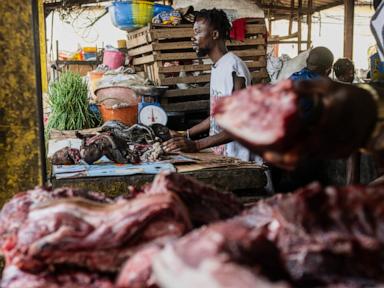
The Democratic Republic of the Congo is fighting another deadly battle against Ebola. It is a recurring nightmare. People are dying, isolation wards are filling up, and health workers are racing against the clock in dense equatorial forests. While international emergency responses focus on vaccines and treatment centers, they often overlook the actual spark that ignites these disasters. That spark is the consumption of wild animals, commonly known as bushmeat.
We cannot fix the Ebola crisis without addressing the deep connection between local food security, hunting practices, and zoonotic disease spillover. For millions of people in the Congo Basin, wild meat isn't a luxury or an exotic delicacy. It is survival. But survival is becoming increasingly dangerous.
The Dangerous Link Between Bushmeat and Ebola Outbreaks
Ebola virus disease does not just appear out of nowhere. It hides in the wild. The scientific consensus points to fruit bats, specifically species like Hypsignathus monstrosus and Epomops franqueti, as the natural reservoirs of the virus. These bats carry the pathogen without getting sick.
The trouble starts when the virus jumps from bats to other forest mammals, or directly to humans.
When a hunter kills an infected chimpanzee, gorilla, forest antelope, or fruit bat, the butchering process exposes them to highly infectious blood and bodily fluids. A single microscopic cut on a hunter's hand is all it takes. Once the virus crosses into that first human host, the index case, it spreads through communities via person-to-person contact.
Data from the World Health Organization shows a direct correlation between regional spikes in Ebola cases and intense hunting activities in pristine forest tracts. Deforestation drives this risk higher. As logging roads cut deeper into previously untouched ecosystems, humans and virus-carrying wildlife collide more frequently than ever before.
Why Telling People to Stop Hunting Does Not Work
Western conservationists and global health agencies love to issue sweeping declarations. "Stop eating wild animals," they say. It sounds simple. It is also incredibly naive and reveals a massive blind spot regarding how life actually functions in rural Congo.
Let's look at the reality on the ground.
- Protein Deficit: Millions of families in rural areas face chronic malnutrition. Livestock farming is nearly impossible in many parts of the rainforest due to rampant animal diseases like trypanosomiasis, spread by tsetse flies. Bushmeat provides up to 80% of the animal protein consumed in rural Congo Basin households.
- Economic Survival: Hunting is an economy. Selling a poached monkey or small antelope provides cash for medicine, school fees, and basic necessities that a barter economy cannot cover.
- Cultural Identity: For indigenous communities, hunting is woven into ancestral traditions, social structures, and spiritual practices.
If you tell a parent to stop feeding their children the only available protein because of an invisible virus, they will ignore you. Every single time. And honestly, who can blame them? Hunger is a certainty today; Ebola is a statistical probability tomorrow.
Moving Past Failed Public Health Strategies
We need to completely rethink how we approach zoonotic disease prevention. Top-down bans fail. They just push the bushmeat trade underground, making it harder to track potential health anomalies. Instead of criminalizing survival, public health strategies must pivot toward harm reduction and viable alternatives.
Developing Local Micro-Livestock Farming
You cannot tell people to stop eating forest animals without giving them something else to put on the dinner plate. Initiatives focused on breeding small, fast-reproducing local species have shown genuine promise in trial phases.
Breeding cane rats, also known as grasscutters, and African giant snails provides a high-protein alternative that requires minimal space and financial investment. These animals do not carry the Ebola virus, and farming them reduces the economic incentive to venture deep into dangerous forest zones.
Safe Handling and Processing Education
People will continue to hunt during the transition to alternative proteins. That is a reality we must accept. Therefore, public health campaigns must focus on risk mitigation rather than total prohibition.
Distributing basic personal protective equipment, like heavy-duty rubber gloves, to hunters and market vendors saves lives. Training communities to recognize the signs of a sick animal in the wild is equally critical. If a hunter finds a dead chimpanzee or antelope in the forest, they must learn to leave it alone. Touching a carcass found dead of unknown causes is an absolute death sentence during an active viral wave.
Community-Led Surveillance Networks
Local communities are the first line of defense against global pandemics. When public health agencies treat villagers as problems to be managed rather than partners, crucial time is lost.
Establishing community-led monitoring systems allows locals to report unusual wildlife die-offs directly to regional health authorities via simple mobile health applications. Early tracking of animal deaths gives scientists a head start, letting them deploy teams to contain a potential spillover before it mutates into a full-scale human epidemic.
Shifting Focus to Long-Term Prevention
The world cannot keep playing catch-up with Ebola. Spending billions on emergency medical deployments after an outbreak occurs is a fundamentally broken strategy. True biosecurity requires investing in the human infrastructure of the Congo Basin long before the virus spills over.
True safety means building sustainable local food systems, providing economic security to forest communities, and respecting the complex realities of rural life. Until global health policies address the empty plates in Congolese households, the next devastating outbreak remains just one bushmeat meal away.