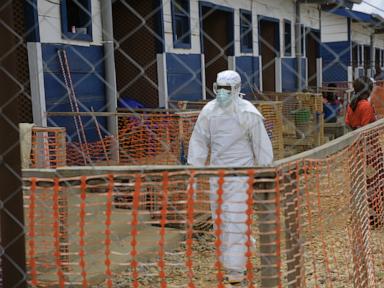
A single treatment center discharging its final confirmed Ebola patients is a local clinical success, not proof that an outbreak in the Democratic Republic of the Congo is over. Treating a discharge milestone as a regional victory confuses facility-level throughput with epidemiological suppression across a wide, porous geography. To evaluate outbreak control rigorously, analysts must separate four distinct layers: ward-level recovery and discharge criteria, surveillance and contact tracing fidelity, spatial movement and transmission dynamics, and operational funding sustainability.
The standard competitor narrative stops at the celebration at the gate. It treats the empty bed as an endpoint rather than a snapshot in time. In field epidemiology, a treatment center does not generate transmission on its own; it absorbs cases that have already escaped upstream containment. When a center discharges its last known patients, two very different realities can exist outside its perimeter. Either transmission chains in that catchment area have been genuinely interrupted, or cases are occurring outside formal detection, moving along informal transport corridors, or presenting late at other clinics. Read more on a connected subject: this related article.
Deconstructing the Standard Celebration Narrative
Conventional outbreak reporting relies on an intuitive story arc: patients enter an isolation ward, clinical teams administer supportive care and targeted therapeutics, recovery is confirmed, and staff celebrate a discharge. This arc satisfies human interest and gives donors a visible marker of progress. Yet as an analytical framework, it suffers from severe selection bias and lag.
The first flaw is denominator blindness. A discharge count tells you how many admitted, laboratory-confirmed patients survived and met discharge protocols. It does not tell you how many symptomatic individuals died in communities before reaching care, how many suspected cases were never swabbed, or how many high-risk contacts left the immediate district before completing a 21-day monitoring window. More analysis by WebMD highlights similar views on this issue.
The second flaw is lag structure. Ebola virus disease has an incubation period typically ranging from 2 to 21 days, followed by time from symptom onset to clinic presentation, laboratory testing, treatment, and recovery or death. A quiet week or an empty ward today reflects transmission conditions several weeks earlier, not real-time containment.
The third flaw is spatial decoupling. A treatment center serves a defined catchment radius, often constrained by road quality, security conditions, and local trust. Even when a specific facility clears its inpatient roster, neighboring health zones or cross-border routes can continue seeding new chains of infection.
Consider a hypothetical eastern Congolese health zone where a rapid-response unit opens a temporary treatment center and discharges its last three patients after two negative RT-PCR tests. Local officials hold a public ceremony to rebuild morale and counter fear. Two weeks later, a cluster appears 40 kilometers away along a trading footpath after a burial was conducted without safe-burial protocols. The discharge ceremony was real, and the recovered patients were genuinely cured, but the celebratory frame led observers to underprice ongoing regional risk.
The Four Pillars of Outbreak Containment
To move past celebratory snapshots, an operational assessment of Ebola response in the Democratic Republic of the Congo requires examining four interlocking pillars. Weakness in any single pillar can undo gains in the others.
1. Clinical Discharge and Post-Recovery Vigilance
Discharging a patient requires meeting strict clinical and virological criteria, typically resolution of symptoms and consecutive negative molecular tests separated by at least 48 hours, depending on national and World Health Organization protocols. While clinically sound, discharge is not the end of biological risk.
Survivors can experience post-Ebola sequelae—such as joint pain, ocular inflammation, fatigue, and neurological symptoms—that require ongoing outpatient care. Furthermore, viral RNA or live virus can persist for extended periods in immunologically privileged sites such as semen, ocular fluid, or breast milk in a subset of survivors. Without survivor follow-up, counseling, and testing programs, rare sexual transmission or relapse events can reignite chains months after acute inpatient care appears finished.
2. Surveillance Sensitivity and Contact Tracing
An outbreak is only as controlled as its surveillance net is sensitive. Active case finding, alert verification, and contact tracing determine whether chains of transmission are caught early during the infectious window or discovered only after secondary clusters form.
In practice, surveillance faces friction at every step:
- Alert generation: Community members must recognize symptoms early and report them rather than hiding illness out of stigma or fear of isolation.
- Case investigation: Teams must reach suspected cases rapidly with safe transport and diagnostic capacity before severe hemorrhagic or gastrointestinal symptoms amplify fluid exposure risk.
- Contact elicitation: Staff must persuade index patients or their families to name every close contact, which breaks down when trust is low or when patients are critically ill.
- Daily follow-up: Tracers must locate mobile contacts daily for 21 days without losing track of individuals who travel for markets, mining, or displacement.
When contact-tracing completion rates drop—for example, when fewer than 80% or 90% of known contacts are seen daily—unmonitored chains become a primary mechanism of ongoing spread. This is a structural mechanism rather than a fixed universal threshold, because transmission risk also depends on how infectious the missed contact is and how densely connected their household is.
3. Mobility, Displacement, and Corridor Dynamics
Epidemiological models often assume neat administrative boundaries, yet human movement in the Democratic Republic of the Congo follows rivers, highways, border crossings, and displacement routes. Armed conflict, economic shocks, and seasonal labor push families across health zones rapidly.
High mobility alters outbreak math in two ways. First, it increases spatial mixing, carrying a pathogen from a contained pocket into previously untouched communities where local health workers have low baseline suspicion. Second, it complicates attribution and continuity of care, because a person exposed in one district may develop symptoms in another, delaying recognition and complicating chain-of-transmission mapping.
4. Operational Financing and Supply Continuity
Public health containment is a high-frequency logistics operation. It depends on continuous availability of personal protective equipment, reverse-transcription polymerase chain reaction reagents, fuel for ambulances and generators, cold-chain integrity where vaccines or therapeutics are deployed, and timely payment of frontline staff and contact tracers.
When emergency funding spikes during a crisis and then tapers off at the first sign of slowing cases, operational capacity erodes before eradication is verified. Cutting surveillance or community engagement budgets early creates a classic premature disengagement trap: apparent progress reduces political urgency, funding contracts, detection weakens, and a dormant or smoldering chain expands unnoticed until a larger resurgence forces a far costlier emergency mobilization.
Cause-and-Effect Chains That Local Milestones Miss
Standard reporting often lists challenges as separate bullet points—insecurity here, community mistrust there, supply delays somewhere else. A rigorous analysis maps how those variables interact through feedback loops.
One critical loop links community trust to early isolation. When families view treatment centers as places where patients go to die or where cultural burial customs are overridden without explanation, they delay seeking care or care for sick relatives at home. Late presentation increases household and caregiver exposure, raising secondary attack rates and generating more deaths in the community. Higher community mortality reinforces fear of the response, feeding back into lower reporting and delayed admission.
A second loop connects case numbers to operational attention. A discharge milestone lowers perceived severity. Lower perceived severity can reduce donor urgency, slow logistics replenishment, and encourage communities to relax precautions. If even one active transmission chain remains outside the formal system, fewer active eyes on the ground mean slower detection and wider geographic diffusion before containment teams ramp back up.
A third loop involves health facility amplification. During outbreaks, general clinics and hospitals that lack strict triage and infection prevention and control can become nosocomial amplifiers if an unrecognized Ebola patient presents for malaria, typhoid, or obstetric care. Protecting routine health workers and establishing triage screening at general facilities breaks a major multiplier of severe disease.
Facts Versus Educated Hypotheses in Outbreak Assessment
Clear decision-making requires separating established epidemiological principles from analytical hypotheses about any specific event.
Known facts include the established biological behavior of Ebola viruses: transmission occurs through direct contact with blood, secretions, organs, or other bodily fluids of symptomatic infected individuals, or via heavily contaminated surfaces and materials, with an incubation period of 2 to 21 days. It is also an established operational reality that durable containment requires pairing clinical care with active surveillance, contact tracing, infection prevention and control, safe and dignified burials, and community engagement.
Educated hypotheses come into play when interpreting a specific treatment center discharge without full surveillance metrics. If a center discharges its last patients while active alerts continue in adjacent villages, a plausible hypothesis is that case detection or care-seeking barriers are still filtering out mild or remote cases. Conversely, if alert investigation remains high, contact tracing has sustained coverage for at least two full maximum incubation periods (42 days) with zero new confirmed cases linked to the zone, and post-mortem swabbing shows no unexplained deaths, a strong hypothesis is that local transmission has been suppressed. Without those underlying indicators, either hypothesis remains provisional.
Tactical Framework for Auditing Outbreak Progress
analysts, program managers, and observers evaluating a "last patient discharged" announcement can apply a five-step verification sequence rather than taking the milestone at face value.
- Audit the time window against incubation biology. Compare the date of the last discharge and the date of the last confirmed case's isolation against the 21-day incubation period and the standard 42-day zero-case benchmark for declaring transmission interrupted in a given area. A discharge today does not equal 42 days without new infections.
- Inspect surveillance volume, not just case counts. Zero confirmed cases is meaningful only if suspected-case alerts and laboratory tests are still being investigated. A drop in confirmed cases paired with a drop in tested alerts often signals under-detection rather than epidemic collapse.
- Check contact-tracing completeness and lost-to-follow-up rates. Ask what share of registered contacts completed the full 21-day monitoring period and how many crossed district or national borders without handoff. Unmonitored high-risk contacts represent unmeasured future cases.
- Map geographic and corridor exposure. Overlay recent case residences and travel histories onto transport routes, markets, displacement sites, and cross-border crossings. Verify whether neighboring health zones report compatible febrile or hemorrhagic illness.
- Stress-test post-milestone funding and staffing. Review whether salaries for contact tracers, infection-control staff, and burial teams are funded through the full post-discharge observation window, or whether operations face an immediate cliff.
Limitations and Operational Trade-Offs
Even rigorous verification has limits. In conflict-affected or remote parts of the Democratic Republic of the Congo, perfect surveillance is rarely achievable. Road conditions, security incidents, rugged terrain, and finite diagnostic supplies constrain how quickly teams can reach every settlement.
There are also real operational trade-offs. Aggressive movement restrictions or heavy-handed enforcement can backfire by driving symptomatic individuals underground and eroding community cooperation. Conversely, overly permissive travel rules increase the risk of exporting cases along busy corridors. Public health leaders must balance epidemiological containment against civil mobility, economic survival, and local legitimacy—there is no frictionless silver bullet.
Furthermore, celebrating recovery is not inherently wrong when framed accurately. Recognizing clinical teams and celebrating patients who survive a high-fatality illness supports workforce morale and community confidence. The analytical error lies in treating emotional and clinical closure at one facility as epidemiological closure across the region.
Strategic Recommendation for Decision-Makers
Treat every "last patient discharged" milestone at a treatment center as a transition from acute inpatient surge to high-vigilance verification, and lock in dedicated funding and active surveillance for at least two full 21-day incubation cycles after the last confirmed case is isolated before scaling down response assets.