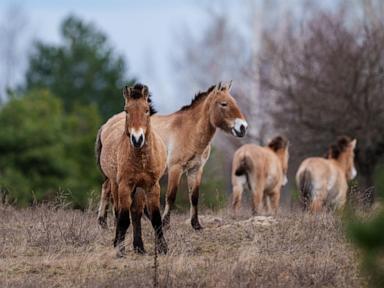
The Chernobyl Exclusion Zone (CEZ) is not a testament to nature's resilience, but rather a high-stakes experiment in biological adaptability under extreme selective pressure. The prevailing narrative of a "flourishing wilderness" ignores the underlying cellular degradation and the specific environmental trade-offs required for survival in a highly radioactive environment. To understand the current state of the CEZ, one must move past visual observations of re-greening and analyze the Three Vectors of Ecological Reconstitution: Anthropogenic Withdrawal, Radionuclide Decay Kinetics, and Mutational Load Management.
The Anthropogenic Void as a Primary Driver
The most significant factor in the return of megafauna to the 2,600-square-kilometer zone is not an inherent immunity to radiation, but the total cessation of human industrial and agricultural activity. In ecological terms, the "human disturbance cost" typically outweighs the "radiological cost" for many species. For a more detailed analysis into this area, we recommend: this related article.
- Removal of Habitat Fragmentation: The abandonment of farms and roads allowed for the immediate reconnection of fragmented ecosystems. This facilitated the expansion of large mammals like the Eurasian lynx and the Przewalski’s horse, which require vast ranges for genetic viability.
- Elimination of Direct Mortality: Hunting, trapping, and vehicle strikes—primary drivers of population decline in Eastern Europe—dropped to zero overnight.
- Trophic Cascade Rebalancing: Without human intervention, apex predators returned, re-establishing a top-down control mechanism that regulates herbivore populations, which in turn dictates the floral density of the zone.
This creates a paradox where an environment that is objectively toxic at a molecular level becomes a refuge at the population level. The survival of these species is a result of a massive reduction in external stressors, providing a "biological buffer" that allows populations to absorb the costs of increased mutation rates.
Radionuclide Distribution and Bioavailability
The CEZ is not a uniform "landscape" of danger; it is a heterogeneous mosaic of contamination. The behavior of specific isotopes dictates the long-term viability of the ecosystem. To get more information on the matter, detailed coverage is available on CNET.
- Iodine-131: With a half-life of 8 days, this was the primary driver of acute radiation syndrome in 1986 but has long since ceased to be a factor.
- Cesium-137: Mimics potassium in biological systems. Because it is highly water-soluble, it enters the food chain through plant uptake and accumulates in muscle tissue.
- Strontium-90: Mimics calcium. It integrates into bone structures and teeth, providing a constant internal source of beta radiation that impacts bone marrow and immune function.
The vertical migration of these isotopes in the soil profile determines bioavailability. In the decades since the meltdown, radionuclides have migrated deeper into the soil, moving out of reach for shallow-rooted grasses but remaining accessible to deep-rooted trees. This creates a staggered risk profile across different strata of the ecosystem.
The Cost Function of Biological Adaptability
Organisms in the CEZ operate under a constant "Radiological Tax." While a population may appear stable, the individual fitness of its members is often compromised. We categorize these impacts into three distinct systemic failures:
1. The Oxidative Stress Bottleneck
Ionizing radiation interacts with water molecules in cells to produce reactive oxygen species (ROS). These molecules damage DNA, proteins, and lipids.
- Adaptive Response: Certain species of birds and bacteria have shown an increased production of antioxidants (such as glutathione).
- The Trade-off: Directing metabolic energy toward antioxidant production reduces the energy available for growth, migration, and reproductive display. This often manifests as smaller body sizes or reduced clutch sizes in avian populations.
2. Genetic Load and Mutational Meltdown
The background radiation in "hotspots" like the Red Forest induces a rate of germ-line mutations significantly higher than the global average.
- Negative Selection: Individuals with deleterious mutations are often filtered out through early-stage mortality or infertility.
- Sub-lethal Effects: In barn swallows, researchers have documented a higher frequency of partial albinism, tumors, and misshapen beaks. While these do not always prevent survival, they increase the "genetic load" of the population, making it less resilient to secondary stressors like climate fluctuations or disease outbreaks.
3. Decomposition Inhibition
One of the most overlooked failures in the CEZ is the degradation of the nutrient cycle. High levels of radiation inhibit the activity of decomposers—fungi, microbes, and certain insects.
- Litter Accumulation: In the most contaminated areas, leaf litter on the forest floor is significantly thicker than in control zones. It does not decay at a normal rate.
- Wildfire Risk: This accumulation of dry, undecomposed organic matter creates a massive fuel load. A wildfire in these areas would aerosolize the stored radionuclides, re-distributing Cesium-137 across Europe and resetting the ecological recovery clock.
Quantifying the Resilience Threshold
To determine if an ecosystem is "resilient" or merely "persistent," we must look at the Selection Pressure Gradient. In the CEZ, the selection pressure has shifted from "competing for resources" to "managing genomic integrity."
The ability of a species to thrive depends on its life-history strategy. r-selected species (those with high reproductive rates and short lifespans, like rodents) tend to show more visible success because high turnover allows for rapid selective filtering. K-selected species (long-lived, slow-reproducing, like wolves) are more susceptible to the cumulative effects of radiation, as they have more time to accumulate internal dose loads before reaching reproductive maturity.
Structural Failures in Long-Term Monitoring
Current data is hindered by a lack of standardized longitudinal studies. Most research in the CEZ is "snapshot" science, which fails to account for:
- Trans-generational Epigenetics: How radiation exposure in parents affects the gene expression of offspring that have never been exposed to high doses.
- Synergistic Toxicity: The interaction between radionuclides and heavy metals or chemical pollutants also present in the zone.
The assumption that the CEZ serves as a blueprint for "nature after man" is flawed because it ignores the unique, persistent energy input of ionizing radiation. A truly abandoned city without radiation would follow a trajectory of primary and secondary succession led by native species. The CEZ follows a trajectory of Stunted Succession, where certain climax species are unable to establish themselves due to the metabolic cost of living in the zone.
Strategic Imperatives for Environmental Management
The CEZ must be managed as a repository of genetic information and a laboratory for cellular repair mechanisms. The priority should shift from passive observation to active stabilization of the nutrient cycle.
- Mycoremediation Protocols: Introducing radiation-resistant fungal strains that can accelerate the decomposition of organic matter without increasing the bioavailability of isotopes.
- Isotopic Sequestration: Targeted planting of hyperaccumulating flora in hotspots to "mine" Strontium and Cesium from the topsoil, followed by controlled harvest and storage.
- Sentinel Species Integration: Utilizing GPS-tracked apex predators equipped with dosimeters to map real-time bioavailability of contaminants across the zone's borders.
The "resilience" seen in Chernobyl is a fragile equilibrium. If the anthropogenic withdrawal were reversed—if humans attempted to re-colonize the zone—the combined stress of radiation and human activity would likely lead to a total ecological collapse. The zone remains a wilderness only because it is a graveyard for human ambition.