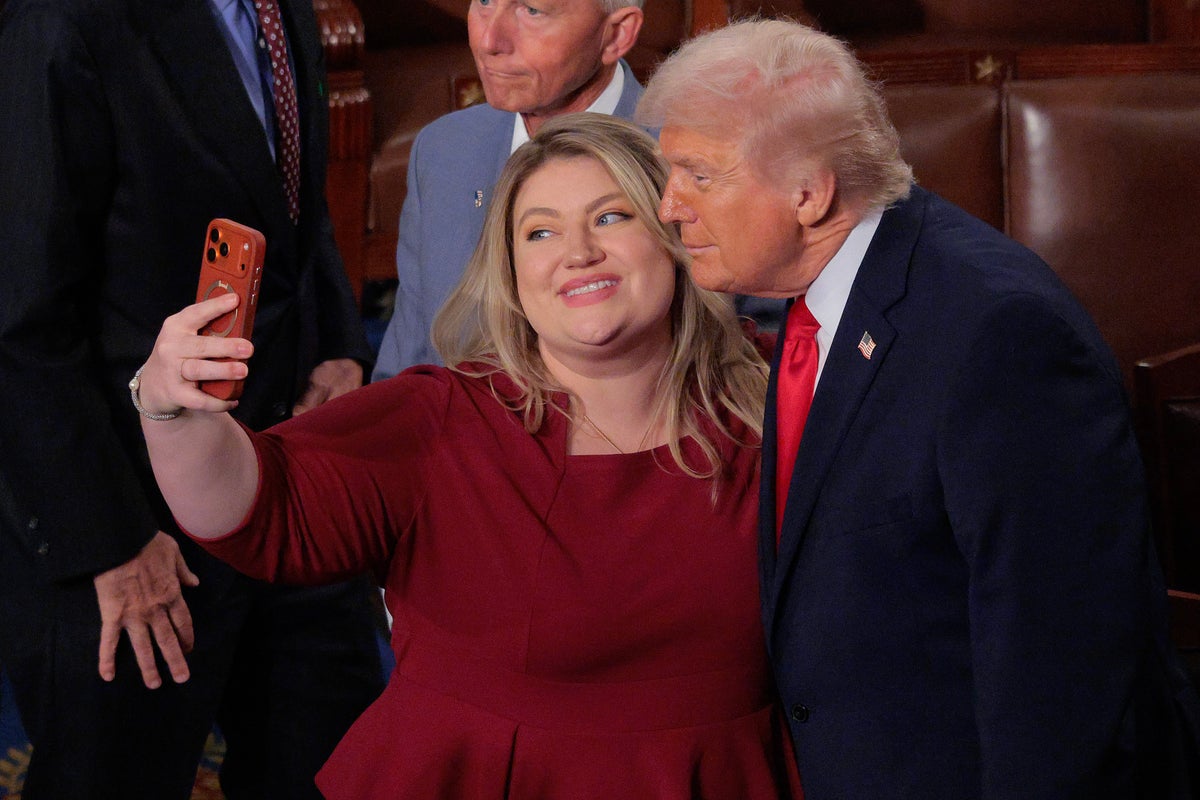
Political fundraising operates on strict principles of supply restriction and tiered status allocation, best illustrated by the Republican National Committee pricing schedule setting an eighty-eight thousand six hundred dollar fee for a single photograph with Donald Trump. Treatises on campaign finance often frame such transactions as mere eccentricities of modern campaigning, missing the underlying market mechanics. Political currency relies on manufactured scarcity. When a centralized political brand commands institutional apparatuses and commands legislative majorities, physical proximity to the primary node of power transforms into an exclusive financial instrument.
The Value Matrix of Access Architecture
Modern campaign structures rely on a distinct hierarchy of transactional tiers. Traditional political fundraising spreads costs across low-dollar digital contributions, utilizing volume to offset acquisition expenses. High-yield institutional fundraising reverses this model by restricting participation through prohibitive pricing floors.
The pricing architecture deployed for the upcoming Dallas midterm convention reveals a strict valuation curve mapped to time and proximity:
- General entry and credentialing tiers establish the baseline community participation cost.
- Vice presidential access via JD Vance carries an intermediate price point of thirty-five thousand dollars.
- Presidential photographic access scales to eighty-eight thousand six hundred dollars.
- Closed-door roundtable participation with the executive core escalates to two hundred fifty thousand dollars per seat.
This gradient functions as a price discrimination model. The committee captures maximum consumer surplus from donors whose utility function relies on public signaling, social proof, or direct alignment with executive authority. Each tier strips away transactional friction for the buyer while optimizing capital yield per square foot of event execution.
The Mechanics of Supply Restriction
Microeconomics dictates that price ceilings or floors distort natural market clearing levels, but political access operates entirely outside standard commodity markets. The primary asset is finite: linear time. A political figure cannot scale infinite photographic encounters within a standard operational window without degrading the exclusivity of the product.
By pricing the encounter at nearly ninety thousand dollars, organizers artificially restrict demand to high-net-worth individuals, political action committees, and corporate treasuries. This creates a dual-benefit loop for the campaign apparatus. First, it generates massive immediate liquidity—evidenced by forty-two million dollars raised ahead of schedule. Second, it filters the donor pool to reduce operational liabilities, ensuring that attendees possess the financial capitalization required to sustain independent downstream political investments.
Critics routinely mischaracterize these figures as anomalous extraction or tone-deaf consumer gouging. This perspective ignores the systemic capital requirements of defending narrow legislative majorities. Midterm elections are expensive logistical campaigns requiring extensive data infrastructure, voter turnout operations, and media saturation across dozens of competitive congressional districts. The marginal cost of retaining legislative control forces national committees to monetize their most potent intellectual property: executive proximity.
Capital Allocation and the Cost of Defense
Defending legislative majorities during a midterm cycle demands aggressive resource centralization. When an incumbent party faces historical headwinds or narrow margins, the national committee shifts from broad-based fundraising to high-yield extraction models.
The defense of marginal House and Senate seats requires liquid capital deployed weeks before general election ballots hit mailboxes. Traditional small-dollar fundraising fluctuates based on real-time news cycles and emotional resonance, making it an unreliable baseline for long-term media buys. High-ticket donor events bypass this volatility. A single roundtable of four participants yields the equivalent of thousands of small-dollar web contributions, locking in guaranteed capital with zero acquisition lag.
The structural trade-off of this strategy involves brand perception. High entry costs alienate populist bases who view the fees as exclusionary, creating friction between grassroots enthusiasm and institutional fundraising mechanisms. Defenders of the pricing strategy, such as Texas Representative Beth Van Duyne, emphasize that these funds flow directly into competitive races where national survival is determined precinct by precinct. The economic imperative of winning competitive districts outweighs the optics of exclusive pricing structures.
Strategic Deployment of Executive Capital
The centralizing force of executive authority within congressional campaigns alters traditional separation-of-powers dynamics. By positioning the executive at the literal and financial center of the midterm defensive strategy, the party converts presidential equity into down-ballot insurance. Candidates running in suburban swing districts leverage this central apparatus to secure the funding necessary to survive hostile local environments.
To evaluate the long-term viability of this financial model, monitor the conversion rate of convention liquidity into targeted media saturation within the top twenty most vulnerable congressional districts. If the capital deployed from high-yield tier events successfully shifts polling baselines in contested districts, the pricing architecture is validated as a rational allocation of political scarcity. Committees will continue to compress access points and elevate baseline pricing until market saturation forces a structural correction.


