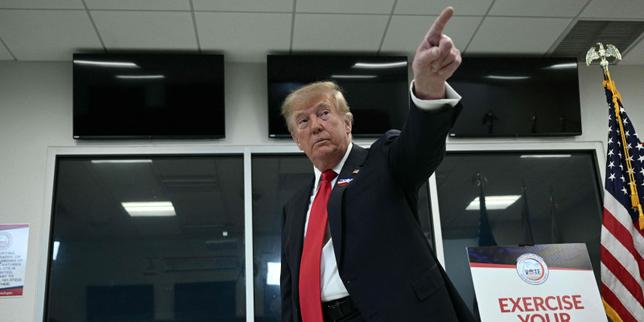
On October 24, 2026, ten days before the November 3 midterm elections, President Donald Trump cast an early in-person ballot at the Palm Beach County Library in West Palm Beach, Florida. Standard wire coverage treats this event as a routine photo opportunity paired with off-the-cuff remarks on foreign policy and down-ballot endorsements. That framing misses the underlying operational mechanics. When a sitting president reverses years of rhetoric against pre-Election Day voting to model early turnout in his home state before boarding a flight to a Georgia campaign rally, the event functions as a calculated resource-allocation and signaling maneuver.
The Turnout Banking Mechanism
Political campaigns operate under severe capital and temporal constraints during the final ten days of an election cycle. Every voter who casts a ballot during the early voting window is immediately removed from the campaign's active get-out-the-vote (GOTV) target universe via daily voter-file updates from county election supervisors. This creates a direct operational dividend. Read more on a related topic: this related article.
- Cost Per Contact Reduction: Field operations, digital ad impressions, and peer-to-peer text outreach carry marginal costs per voter. Banking a reliable partisan vote on October 24 eliminates ten days of redundant media spend directed at that household.
- Weather and Friction Insurance: Election Day turnout is vulnerable to exogenous shocks, including severe weather, localized precinct bottlenecks, and unexpected personal emergencies. Shifting high-propensity and medium-propensity voters into the early voting pool insulates the party from single-day variance.
- Resource Reallocation: Once the core base is locked in, field directors can divert finite door-knocking capacity and call-center bandwidth toward low-propensity swing voters who require multiple touches to convert.
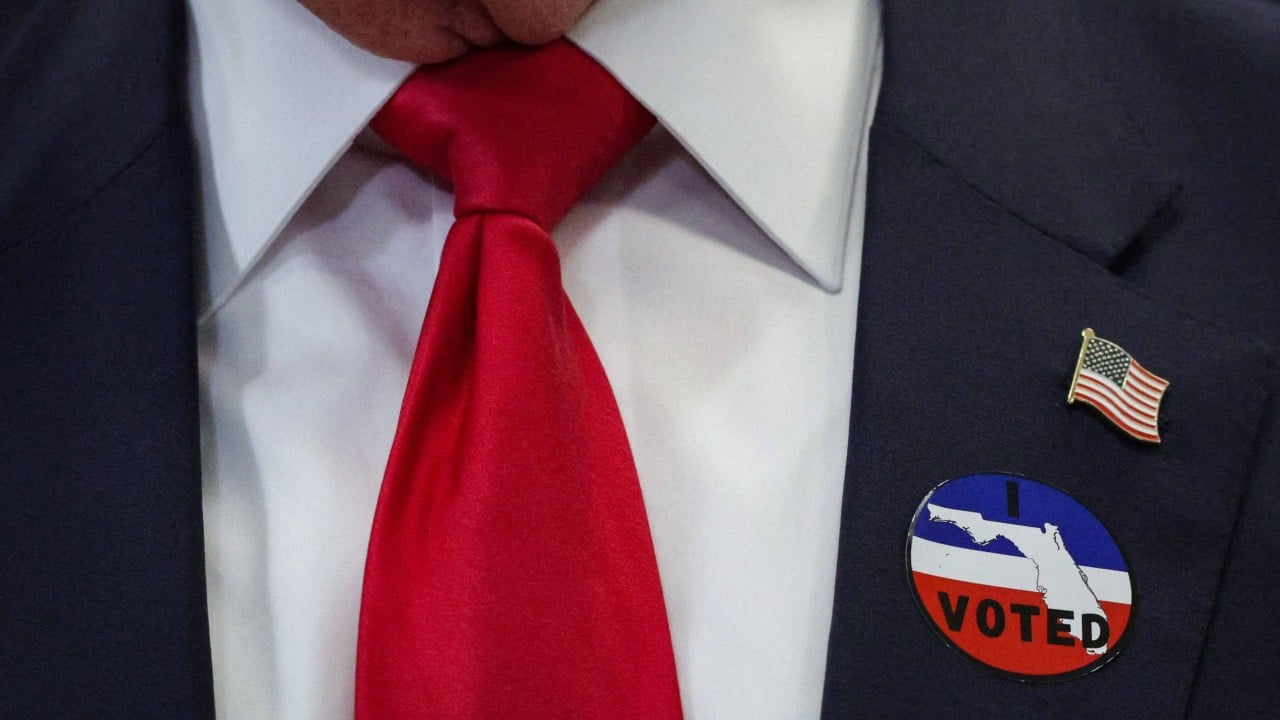
In previous cycles, skepticism toward early and mail-in voting created an asymmetric disadvantage for Republican field operations, forcing campaigns to concentrate turnout into a narrow twelve-hour window on Tuesday while opponents banked hundreds of thousands of votes weeks in advance. By physically appearing at a Palm Beach County polling site with First Lady Melania Trump and wearing an "I Voted" sticker before the press pool, the executive branch executed a top-down behavioral correction. The public demonstration overrides prior skepticism and grants permission to hesitant base voters to utilize early voting infrastructure.
Florida as a Down-Ballot Consolidation Engine
The geographic location of the ballot cast—West Palm Beach—anchors the national messaging to specific state-level structural races. Unlike presidential years, midterm elections suffer from sharp drop-off among intermittent voters. Holding congressional majorities and statehouses requires transferring top-of-ticket brand equity to down-ballot candidates. More journalism by Reuters delves into comparable views on the subject.
During his post-voting press availability, Trump explicitly confirmed a straight-ticket Republican vote, anchoring attention on two high-stakes statewide races in Florida:
- The Gubernatorial Succession: With Governor Ron DeSantis term-limited, the open-seat contest between Trump-endorsed Republican Representative Byron Donalds and Democrat David Jolly (a former Republican who transitioned to independent before joining the Democratic Party) represents a critical test of Florida's rightward shift. Open-seat races lack the structural advantage of incumbency, making executive endorsement and early turnout mobilization the primary drivers of base cohesion.
- The Special Senate Election: Appointed Republican Senator Ashley Moody faced progressive state lawmaker Angie Nixon to fill the remaining two years of the Senate term vacated by Secretary of State Marco Rubio. Special elections on midterm ballots frequently experience ballot roll-off, where voters cast a ballot for governor or House representative and leave the special Senate line blank. Straight-ticket signaling directly combats this attrition.
At the national level, the stakes of these turnout mechanics were magnified by razor-thin congressional margins entering November 2026. With Republicans holding a 219–214 edge in the House of Representatives—where Democrats needed a net gain of just four seats to flip control—and a 53–47 advantage in the Senate (factoring in two independents caucusing with Democrats), single-digit percentage shifts in early turnout efficiency carried disproportionate legislative consequences.
The Press Pool as an Earned Media Multiplier
A standard polling-place appearance generates local B-roll. Combining a morning voting event in South Florida with an afternoon rally in Georgia turns a routine civic act into a multi-market earned media cycle. Campaigns use controlled-access press availabilities immediately after voting to set the news agenda before afternoon news cycles lock in.
In West Palm Beach, the remarks spanned three distinct strategic vectors:
- Pre-Emptive Legal Framing: Addressing the Alaska Senate race, Trump stated he had ordered legal action to challenge results if Republican Senator Dan Sullivan lost, citing the presence of a second candidate sharing the exact same name on the ballot. Regardless of the eventual judicial outcome, introducing the narrative ten days prior to Election Day primes supporters and establishes a public record of grievance before a single Election Day ballot is tallied.
- Geopolitical Projection: Responding to questions regarding conflict with Iran, he maintained strategic ambiguity—stating he might have to "finish it off" while leaving open the possibility of a negotiated deal, concluding that "either way, we win". Projecting strength on foreign policy during a domestic turnout event reinforces the commander-in-chief frame for undecided voters prioritizing national security.
- Candidate Defense: By defending Republican candidates facing intense media scrutiny—such as addressing blowback over campaign advertisements in the Ohio gubernatorial race involving Vivek Ramaswamy and Democrat Dr. Amy Acton—the president absorbed media fire on behalf of down-ballot allies, shielding local campaigns from having to spend their own media budgets on defensive messaging.
Structural Limitations of Top-Down Turnout Signaling
While executive modeling solves the permission problem for early voting, relying on top-down signaling to drive midterm turnout carries inherent operational limitations.
First, cannibalization versus expansion remains the central metric of early voting efficacy. If an October 24 media push merely convinces voters who were already guaranteed to vote on November 3 to cast their ballots ten days earlier, the net vote total does not change. The strategy only generates positive expected value if the freed-up GOTV capital is successfully redeployed to convert low-propensity voters who would otherwise stay home.
Second, the midterm enthusiasm gap cannot be closed entirely by surrogate appearances. Presidential voters who only engage every four years exhibit high elasticity; they respond to the presence of the national figure on the ballot itself, not merely his endorsement of state-level replacements like Byron Donalds or Ashley Moody. When the top-of-ticket principal is absent from the ballot, a measurable fraction of marginal supporters will abstain regardless of early voting convenience.
Third, multi-topic press availabilities dilute message discipline. Bundling early voting promotion with statements on Iranian military options, Alaska ballot litigation, and Ohio attack ads fractures media coverage. Local Florida voters consuming evening news broadcasts may receive clips focused on Middle East escalation rather than the logistical details of Palm Beach County early voting hours and locations.
Strategic Execution for Campaign Operations
To convert high-profile early voting events from symbolic media moments into measurable vote margins, campaign operatives must execute a strict post-event operational sequence:
- Immediate Voter-File Scrubbing: Synchronize state election board early-vote returns with internal CRM databases every 24 hours. Suppress all confirmed early voters from paid digital, direct mail, and SMS persuasion channels within one day of ballot receipt to recapture capital.
- Hyper-Localized Geo-Fencing: Pair national earned media clips with localized paid digital ads targeting unbanked partisan households within a five-mile radius of active early voting sites, providing exact operating hours and wait-time metrics rather than broad ideological slogans.
- Deploy Freed Field Capacity to Drop-Off Precincts: Reassign volunteer door-knockers from high-turnout retirement communities—where early voting adoption naturally peaks—to younger, working-class precincts exhibiting historical midterm drop-off, utilizing the final 72 hours before Election Day exclusively for ballot-completion logistics.
You can watch the full media availability in President Trump casts midterm ballot early in Florida to observe how the remarks on down-ballot endorsements and foreign policy were framed directly outside the Palm Beach County polling site.