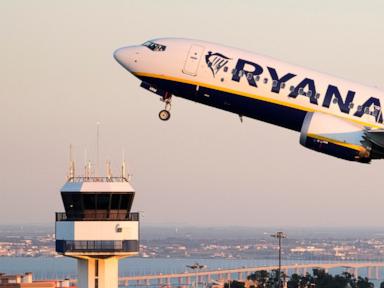
European commercial aviation has entered a structural pricing regime where a 20% year-over-year increase in base airfares represents the logical equilibrium of constrained seat supply, inelastic leisure demand, and rising input costs. When Ryanair leadership projects ticket price surges of up to one-fifth across European networks, the market is witnessing the collision of post-pandemic demand normalization with severe original equipment manufacturer (OEM) delivery bottlenecks. Understanding this pricing shift requires stripping away surface-level consumer narratives and analyzing the underlying mechanics of airline yield management, fleet utilization, and regulatory cost pass-through.
The Structural Supply Deficit in European Aviation
Airline ticket pricing is governed by dynamic yield management systems that adjust fares in real time based on remaining seat inventory and historical booking curves. Under normal market conditions, European short-haul aviation operates as a near-commodity market characterized by thin operating margins, aggressive capacity expansion, and fierce price competition among ultra-low-cost carriers (ULCCs) and legacy network airlines. That competitive dynamic breaks down when industry-wide Available Seat Kilometers (ASKs) cannot expand to meet Revenue Passenger Kilometers (RPKs).
The primary driver of the European capacity ceiling is a dual-OEM manufacturing bottleneck. Both Boeing and Airbus face prolonged supply chain disruptions, labor shortages, and quality-control delays that have pushed narrowbody aircraft deliveries months and years behind schedule.
- Boeing 737 MAX Production Caps: Regulatory scrutiny and manufacturing audits have restricted Boeing's monthly output, directly delaying fleet deliveries to major European operators like Ryanair, which relies exclusively on a single-type 737 fleet to maintain low maintenance and crew training costs.
- Airbus A320neo Engine Inspections: Pratt & Whitney Geared Turbofan (GTF) powder metal defects have forced widespread unscheduled engine removals and groundings across European Airbus operators, including Wizz Air and Lufthansa Group subsidiaries.
When an airline loses expected summer capacity due to delayed deliveries or grounded aircraft, it does not simply forfeit revenue proportionally. Instead, the sudden scarcity of seats across competing European city pairs alters the price elasticity of demand. Because total market capacity is artificially capped, airlines face less pressure to discount lower-tier fare buckets to stimulate load factors. The lowest fare classes sell out earlier in the booking window, pushing the average consumer into higher-yielding fare buckets weeks before departure.
Deconstructing the Airline Cost Function
While supply constraints explain the pricing power airlines currently wield, the operational cost function explains why carriers must exercise that power to protect operating margins. An airline's Cost per Available Seat Kilometer (CASK) is divided into fuel and ex-fuel components, both of which face upward structural pressure in the European theater.
Jet Fuel and Hedging Decay
Jet fuel typically accounts for 25% to 35% of an ultra-low-cost carrier's total operating expenses. Large European carriers mitigate short-term volatility through systematic forward hedging programs, locking in fuel prices 12 to 18 months in advance. However, hedging only delays price adjustments; it does not eliminate them. As older, lower-priced fuel hedges roll off and are replaced by contracts reflecting sustained high refining margins (crack spreads) and geopolitical risk premiums, the baseline fuel CASK rises across the entire sector. Carriers must raise average ticket prices simply to maintain unit profitability.
Ex-Fuel CASK and Regulatory Friction
Ex-fuel expenses—comprising airport landing charges, air navigation fees, crew salaries, and maintenance—have experienced persistent inflation across the European Union.
- Environmental Compliance Costs: Under the EU Emissions Trading System (ETS), aviation is undergoing a phased elimination of free carbon allowances. Airlines must purchase carbon credits on the open market to offset intra-European emissions, converting environmental regulation into a direct variable cost per flight hour. Simultaneously, Sustainable Aviation Fuel (SAF) blending mandates introduce a fuel component that costs three to five times more than conventional kerosene.
- Air Traffic Control (ATC) Inefficiencies: European airspace fragmentation and recurring ATC staffing shortages force airlines to fly suboptimal routes, burn excess fuel, and absorb costly delay compensation under EU261 passenger rights regulations.
- Airport Monopoly Pricing: Major European hubs and regional airports have raised passenger facility and landing fees to recover capital expenditures and offset inflationary labor costs. Unlike fuel, airport charges cannot be hedged, leaving carriers with no mechanism to absorb the increase other than direct fare pass-through.
Yield Management and Price Elasticity Mechanics
To understand how a 20% fare increase materializes without collapsing passenger load factors, one must examine the mechanics of airline revenue management. Airlines do not apply a flat 20% surcharge across every seat on an aircraft. Instead, they manipulate fare class availability along the booking curve.
A standard 189-seat narrowbody aircraft is segmented into distinct pricing tiers, ranging from deep-discount promotional fares designed to cover marginal flight costs to high-yield last-minute fares targeting price-inelastic travelers.
- Historical Baseline: In an oversupplied market, an airline might allocate 40% of the cabin to the lowest fare buckets to ensure the aircraft departs at a 92% load factor, generating ancillary revenue (baggage, seat selection, onboard retail) from high passenger volume.
- Constrained Capacity Regime: When overall European seat supply is down 5% to 10% relative to demand, revenue management algorithms detect accelerated booking velocity. The system automatically closes the lowest three fare buckets months earlier than usual. A consumer searching for a flight 90 days out encounters pricing historically reserved for 14 days prior to departure.
This shift relies on the behavioral reality of post-pandemic European consumer spending. Empirical booking data across European carriers demonstrates that discretionary travel has shifted higher in consumer budget hierarchies. Households facing macroeconomic inflation have reduced spending on durable goods while defending budgets for annual holidays and visiting friends and relatives (VFR). Because short-haul European flights are heavily concentrated in leisure and VFR segments, demand has proven significantly less elastic than traditional economic models predicted.
Competitive Consolidation and Market Power
The European aviation market has undergone a multi-year process of structural consolidation, fundamentally altering competitive dynamics. During the market disruptions of 2020 through 2022, several weak regional carriers exited the market, while state-backed legacy airlines underwent restructuring that required permanent capacity reductions as a condition of European Commission state-aid approval.
Strong, well-capitalized carriers with fortress balance sheets—most notably Ryanair—used that period to expand market share across key jurisdictions such as Italy, Spain, and Eastern Europe. By capturing dominant market positions at secondary airports and securing long-term airport growth incentives, leading carriers reduced the number of viable competitors on hundreds of intra-European routes.
In microeconomic terms, localized route monopolies or duopolies allow the dominant carrier to act as a price maker rather than a price taker. On routes where a single carrier controls over 60% of seat capacity, competitors lack the scale to initiate destructive fare wars. When the market leader raises base fares to offset CASK inflation, smaller competitors follow suit to repair their own balance sheets rather than undercutting on price.
Operational Limitations of the High-Fare Thesis
While the structural arguments supporting a 20% fare increase are robust in economic logic, forecasting airline yields involves significant downside risks. Strategy execution in aviation is uniquely vulnerable to exogenous shocks and macroeconomic inflection points.
- Consumer Demand Destruction: Price elasticity is non-linear. Consumers may absorb a 10% to 15% fare increase without altering travel frequency, but crossing a psychological price threshold—such as a €150 round-trip base fare before ancillary fees—can trigger sudden booking deceleration. If discretionary household savings are exhausted faster than anticipated, airlines will be forced to re-open discounted fare buckets rapidly to protect load factors, compressing yields in the final weeks of a booking quarter.
- Ancillary Revenue Cannibalization: Ultra-low-cost carriers rely heavily on high-margin ancillary products, which often generate over 30% of total revenue. When base airfares rise sharply, passengers exhibit wallet-share fatigue, compensating for the higher ticket price by skipping priority boarding, declining paid seat assignments, and traveling exclusively with free under-seat cabin bags. Higher base yields can therefore be partially offset by declining ancillary revenue per passenger.
- Geopolitical and Macroeconomic Disruption: European aviation operates adjacent to active conflict zones in Eastern Europe and the Middle East. Any escalation that disrupts airspace corridors, triggers sudden spikes in Brent crude prices beyond hedged thresholds, or depresses European consumer confidence can invalidate forward yield projections within weeks.
Strategic Execution for Corporate Buyers and Market Participants
For corporate travel managers, tour operators, and investors evaluating the European aviation sector, assuming a return to pre-pandemic ultra-low-cost pricing is a strategic error. The structural constraints on narrowbody aircraft production and EU environmental compliance costs establish a permanently higher price floor.
Corporate travel programs with European short-haul exposure must immediately abandon spot-buying procurement strategies. Advance purchase windows must be extended from the traditional 14-to-21-day threshold to a minimum of 45 to 60 days to capture mid-tier fare buckets before dynamic algorithms lock out inventory. Simultaneously, procurement teams should negotiate multi-year corporate rate agreements that bundle ancillary fees—specifically cabin baggage and flexible ticket changes—into fixed-discount structures, insulating travel budgets from retail ancillary price inflation.
For market analysts and capital allocators, capital deployment should favor carriers with unencumbered balance sheets, owned aircraft fleets rather than expensive operating leases, and locked-in aircraft delivery slots. Carriers forced to lease capacity on the spot market (ACMI wet-leasing) to cover engine groundings will suffer severe margin compression despite higher ticket prices, whereas low-cost operators with owned fleets will convert the 20% fare environment directly into free cash flow expansion.