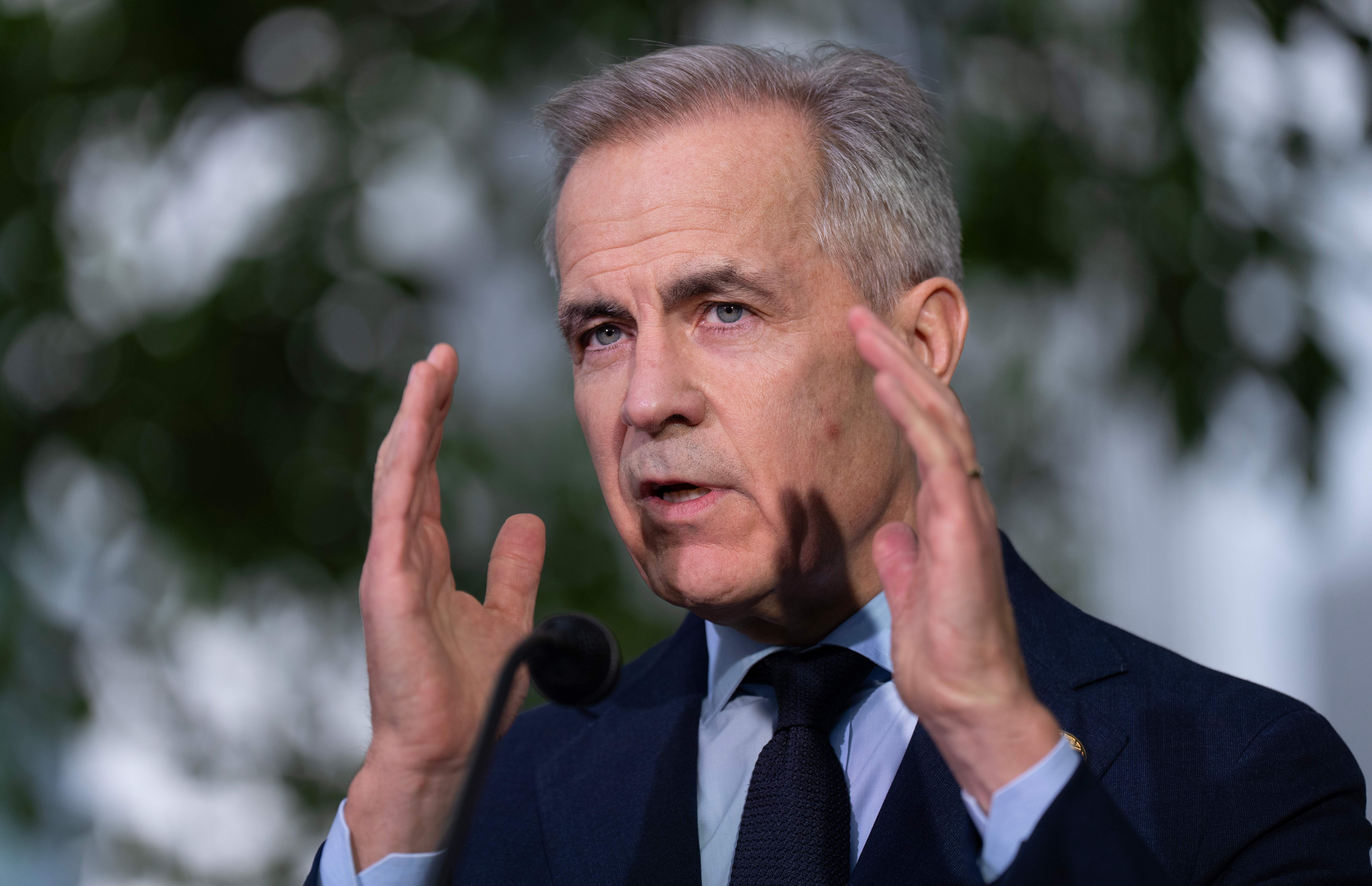
Political rhetoric surrounding cost-of-living crises consistently relies on broad promises to lower household expenses, yet the legislative mechanics required to alter consumer prices operate under strict macroeconomic constraints. Following his November 2026 nomination by House Democrats to serve as Speaker of the 120th Congress, Representative Hakeem Jeffries outlined an economic platform centered on fighting for an "affordable America". While standard media coverage reduces these remarks to partisan talking points regarding groceries, energy, housing, healthcare, and executive oversight, an institutional strategy analysis requires separating rhetorical signaling from actual fiscal and regulatory transmission mechanisms. To evaluate the viability of the incoming House majority's economic agenda, analysts must examine the specific policy levers available to a single chamber of Congress operating within a divided government.
The Structural Architecture of the Affordability Agenda
A rigorous breakdown of the House Democratic platform reveals four distinct policy vectors. Rather than functioning as a unified economic stimulus, these initiatives target separate segments of the household balance sheet through different legislative mechanisms.
Trade Policy Reversal and Tariff Rollbacks
The incoming majority explicitly targets executive-branch tariffs imposed during the preceding administration, citing them as a direct tax on consumers. Economically, broad-based tariffs function as an ad valorem excise tax on imported intermediate and final goods. When importers face higher border duties, the incidence of that tax is distributed between foreign exporters compressing their margins, domestic retailers absorbing costs, and consumers paying higher retail prices. Reversing these duties aims to reduce input costs across supply chains, particularly in consumer electronics, apparel, and agricultural equipment.Consumer Staples and Price-Setting Oversight
The platform emphasizes lowering costs for groceries, gasoline, and utilities. In market economies, the federal legislature does not directly set retail prices outside of wartime price controls. House Democrats must rely on secondary interventions: antitrust enforcement directives, supply-chain transparency mandates, and regulatory scrutiny of corporate consolidation in food processing and energy distribution.Healthcare Subsidy Preservation and Cost Containment
Healthcare affordability represents a major fiscal component of the House agenda. The primary legislative mechanism here involves extending or expanding premium tax credits under the Affordable Care Act (ACA) and expanding Medicare drug price negotiation authority. Unlike tariff reductions, which alter market prices by removing a friction, healthcare interventions largely rely on federal fiscal transfers to subsidize household out-of-pocket expenditures.Governance and Executive Accountability
Jeffries directly links economic affordability to institutional oversight, framing executive branch corruption and campaign finance structures—specifically the Citizens United framework—as distortions that favor corporate monopolies over consumers. From a regulatory economics perspective, this represents an effort to reduce regulatory capture, ensuring that federal agencies enforce competition laws without political interference.
Deconstructing the Household Cost Function
To measure how these proposals affect median household solvency, one must examine the household cost function. Consumer financial distress rarely stems from a single price spike; rather, it results from the compounding interaction of inelastic expenses—costs households cannot easily reduce when prices rise—and stagnant real wage growth.
Groceries, energy, housing, and healthcare exhibit low price elasticity of demand. When the cost of shelter or medical care increases by ten percent, households cannot simply substitute away from those goods. Instead, they compress discretionary spending, draw down savings, or increase unsecured debt. When political leaders promise to "lower the high cost" of these essentials, they are attempting to intervene in markets governed by vastly different supply-and-demand dynamics.
- Energy and Gasoline: Retail fuel prices are determined primarily by global crude oil benchmarks, domestic refining capacity, and seasonal blend requirements. Congressional actions, such as releasing reserves or altering leasing rules on federal lands, operate with significant time lags and exert minimal short-term influence over global spot prices.
- Groceries: Food inflation is driven by agricultural commodity yields, transportation freight costs, labor expenses in processing, and retail market concentration. Legislative efforts to penalize "price gouging" often struggle to define an objective baseline for excessive profit margins in low-margin, high-volume grocery retail, where net margins typically hover between one and three percent.
- Housing: The affordability crisis in housing is fundamentally a supply-side deficit caused by decades of restrictive local zoning laws, elevated construction financing costs, and labor shortages. Federal demand-side subsidies—such as down-payment assistance—frequently backfire in supply-constrained markets by bidding up asset prices, transferring the subsidy directly to existing property owners rather than improving long-term affordability.
The Institutional Bottleneck: Legislative Execution in the 120th Congress
Evaluating the feasibility of this platform requires mapping its path through the federal lawmaking process. Winning a majority in the House of Representatives grants control over the floor schedule, committee chairmanships, and subpoena power, but it does not confer unilateral legislative authority.
The Bicameral and Executive Veto Gates
Under Article I of the Constitution, any bill affecting taxes, tariffs, or federal spending must pass both the House and the Senate before reaching the President's desk. Even if House Democrats hold a cohesive voting bloc—having nominated Jeffries with 251 of 262 caucus votes—their legislation faces immediate friction in the Senate and a near-certain presidential veto on measures that directly repudiate the administration's trade or deregulatory policies.
The Tariff Authority Paradox
A critical operational hurdle lies in the delegation of trade authority. Over several decades, Congress ceded substantial tariff-setting power to the executive branch under statutes such as Section 232 of the Trade Expansion Act of 1962 and Section 301 of the Trade Act of 1974. To repeal executive tariffs without presidential cooperation, Congress must pass a joint resolution of disapproval or amend the underlying statutory authority. Because the President can veto such legislation, overriding the veto requires a two-thirds supermajority in both chambers—a threshold mathematically out of reach in a polarized legislature.
Appropriations and Must-Pass Leverage
Because standalone bills face executive vetoes, the primary mechanism for a House majority to extract policy concessions is the federal appropriations process. By attaching policy riders to must-pass government funding bills or debt ceiling increases, House leadership can force negotiations with the White House. However, this tactic introduces high execution risk: prolonged brinkmanship can trigger government shutdowns, which disrupt federal contracting, delay benefit processing, and depress short-term gross domestic product growth, thereby undermining the very economic stability the majority seeks to project.
Caucus Cohesion and Internal Factional Friction
The internal arithmetic of the House Democratic caucus introduces a second layer of operational constraint. While Jeffries secured 95.8 percent of the secret-ballot vote for Speaker nominee, the 11 holdouts represent an ideological faction demanding immediate, aggressive action on non-economic priorities, including immigration enforcement restructuring, foreign policy conditions, and campaign finance overhauls.
In a chamber with narrow operating margins, leadership must manage a classic principal-agent problem. Frontline members representing swing districts require moderate, kitchen-table economic messaging to survive subsequent election cycles. Conversely, members from safe districts face primary challenges from the left if they compromise on structural progressive demands. If leadership expends floor time and political capital on messaging bills designed to appease internal factions—such as constitutional amendments to overturn Citizens United—it dilutes the legislative focus on tangible cost-of-living measures. Conversely, ignoring those factions risks floor defections during procedural rules votes, which can paralyze the entire legislative calendar.
Macroeconomic Trade-Offs and Policy Limitations
Even if the House Democratic platform were enacted in full, standard economic theory dictates that each intervention carries structural trade-offs and limitations. No legislative package can simultaneously lower consumer prices, expand federal subsidies, and reduce the national debt without generating secondary market distortions.
Fiscal Expansion vs. Monetary Tightening
Proposals to expand healthcare subsidies, childcare tax credits, or housing assistance inject fiscal stimulus into the economy. If these expenditures are deficit-financed rather than offset by equivalent tax increases or spending cuts, they increase aggregate demand. In an economy where inflation remains sensitive to demand shocks, expansionary fiscal policy forces the Federal Reserve to maintain higher benchmark interest rates for longer periods. Elevated interest rates directly increase the cost of mortgages, auto loans, and business capital expenditure, neutralizing the affordability gains achieved through federal subsidies.
Regulatory Friction and Supply Constraints
Aggressive antitrust enforcement and corporate oversight can curb monopolistic pricing power in consolidated sectors over a multi-year horizon. However, rapid regulatory shifts or aggressive price-cap proposals create policy uncertainty. When firms anticipate margin compression or arbitrary regulatory penalties, they reduce capital investment in new production capacity. In sectors like energy refining and residential construction, reduced capital expenditure tightens future supply, exacerbating long-term price volatility.
The Limits of Oversight as an Economic Tool
Using House committee subpoena power to investigate corporate pricing practices and executive branch corruption serves a clear constitutional and political function. Public hearings expose market inefficiencies and deter overt misconduct. Yet oversight hearings do not alter supply curves, clear port bottlenecks, or increase housing starts. Mistaking investigative visibility for structural economic reform is a recurring strategic error in congressional governance.
Strategic Execution for the Incoming House Majority
To convert the "affordable America" framework from a campaign slogan into measurable economic leverage during the 120th Congress, House Democratic leadership must abandon broad, unpassable omnibus bills in favor of targeted, asymmetric legislative tactics.
First, leadership should decouple trade reform from partisan messaging by building bipartisan coalitions with agricultural and manufacturing-district Republicans whose constituents suffer directly from retaliatory tariffs. Framing tariff relief around domestic industrial competitiveness rather than executive rebuke creates a viable path to Senate advancement.
Second, rather than pursuing demand-side housing subsidies that inflate asset prices, the House should focus on supply-side incentives tied to federal infrastructure grants. Conditioning federal transportation and water funds on local zoning reform directly addresses the regulatory bottleneck restricting housing supply without requiring massive new federal outlays.
Third, leadership must deploy its appropriations leverage selectively during the fiscal year budget cycle, targeting the preservation of expiring healthcare tax credits as its primary non-negotiable demand. By concentrating political capital on a single, quantifiable household expense where federal fiscal authority is absolute, the House majority can deliver a concrete reduction in middle-class expenditure before the next electoral cycle begins.
For further context on the incoming Speaker-designee's legislative framing, see Jeffries says House Democrats will 'fight for an affordable America', which captures his initial remarks following the November 2026 caucus nomination vote.