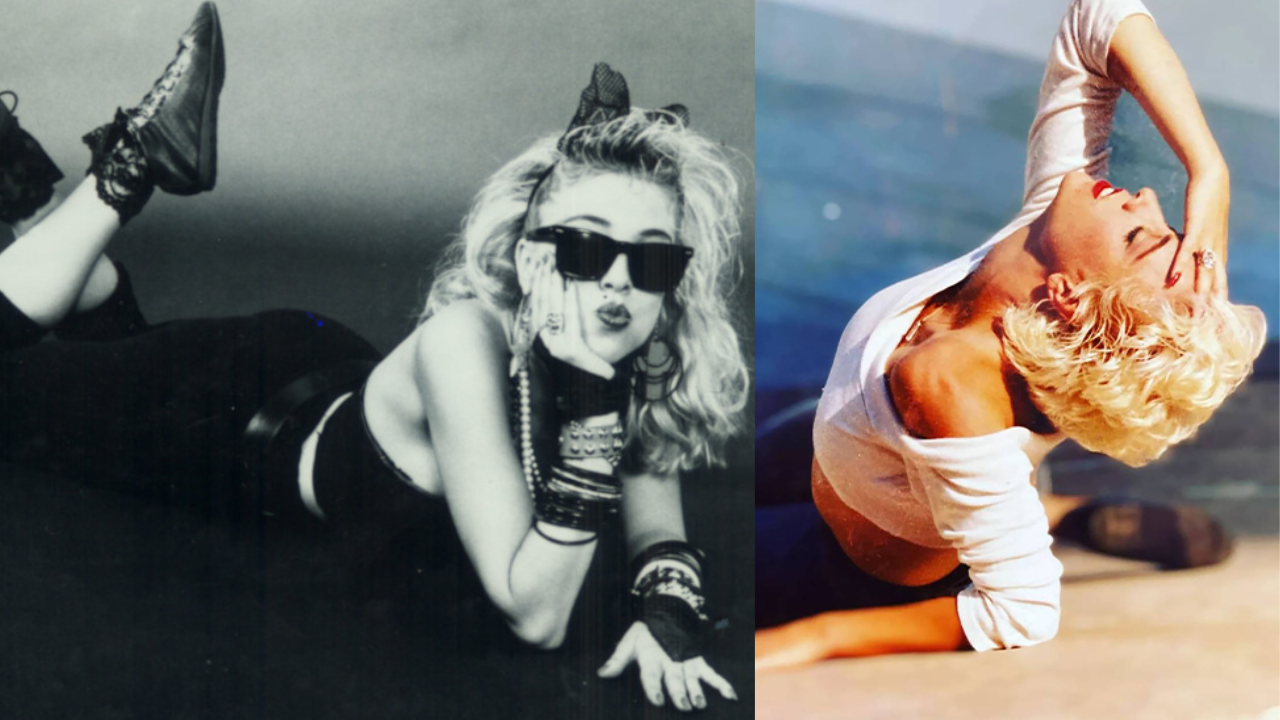
Sustaining a commercial tribute career across four decades requires navigating a hyper-volatile entertainment ecosystem where cultural touchstones shift every five years. Most impersonators experience rapid obsolescence as their primary subject cycles through aesthetic iterations or fades from public consciousness. Yet rare practitioners manage to decouple their operational lifespan from the commercial lifecycle of the original artist. By examining the trajectory of long-standing performers such as Guinness World Record holder Denise Bella Vlasis, who began mimicking Madonna in 1985, we can deconstruct the exact mechanical variables required to engineer multi-decade market survival in the tribute industry.
The fundamental asset in celebrity emulation is not physical resemblance, which degrades with age, but structural adaptability. Madonna’s career serves as a masterclass in brand reinvention, moving from the early 1980s street-urchin look to the cinematic glamour of the 1990s, the electronica era, and beyond. A tribute act tethered to a single static aesthetic suffers immediate market contraction the moment the primary intellectual property shifts its visual or sonic identity. Survival demands a parallel product lifecycle strategy. As the source material evolves, the performer must absorb new choreography, update vocal production techniques, and re-engineer wardrobe architectures to match the contemporary iteration of the brand.
Operational diversification forms the second pillar of longevity. Relying entirely on ticket sales for live concert-style tribute shows exposes a performer to severe macroeconomic vulnerability and shifting venue demands. The professional lifespan of a long-term impersonator expands significantly through horizontal integration into adjacent media markets. Performers who transition into commercial stand-ins, decoy marketing assets, television guest spots, and localized corporate entertainment hedge against the volatility of the live-performance sector. Decoy work, in particular, requires a granular understanding of public psychology and spatial awareness, transforming a passive visual impression into an active operational service.
Market positioning dictates pricing power and career duration. Low-tier impersonators compete strictly on proximity to the physical likeness during the peak years of the celebrity's commercial dominance. High-tier longevity requires shifting the value proposition from mere replication to institutional nostalgia management. As an original artist's core demographic ages, their disposable income increases. A tribute act that survives into the fourth decade captures this demographic shift, monetizing generational memory rather than transient pop-chart relevance. This creates an economic moat that raw newcomers cannot penetrate simply through youthful resemblance.
Brand equity in the tribute sector eventually reaches a threshold where the performer's own operational history becomes an independent PR asset. Securing official verification from bodies like Guinness World Records transforms an operational benchmark into a certified credential. This shifts the acquisition cost of clients downward, as inbound media profiles, memoirs, and documentary projects replace outbound sales efforts. The asset transitions from a physical labor model to an intellectual property and personal brand ecosystem.
To replicate a four-decade career in celebrity emulation, operators must abandon short-term tactical copying and implement a systematic framework of brand tracking, risk diversification, and demographic alignment. The strategic play is clear: treat the primary celebrity's brand evolution as your own R and D pipeline, diversify revenue streams across institutional, corporate, and media verticals before physical aging limits live performance capacity, and institutionalize longevity through formal records and historical documentation.