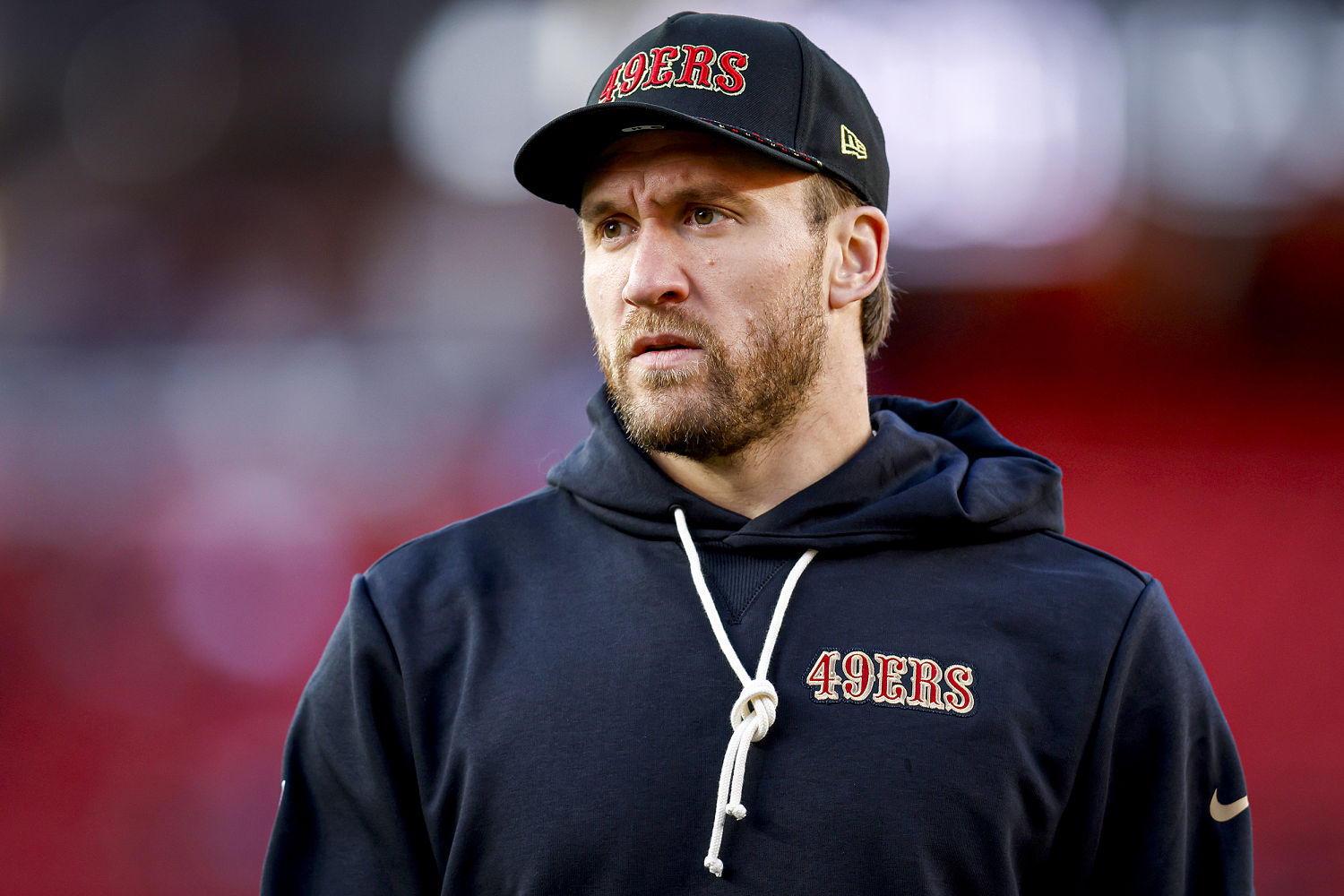
The National Football League operates as a closed economic cartel governed by a centralized disciplinary apparatus. When San Francisco 49ers fullback Kyle Juszczyk received a fine approaching fifteen thousand dollars for pantomiming a beer chug after a touchdown, public commentary treated the event as an anomaly of sports entertainment culture. This perspective misdiagnoses the mechanism at play. The incident serves as a clean case study in regulatory overreach, signaling costs, and the misallocation of organizational incentives within a high-revenue sports entertainment market.
To understand why a symbolic gesture triggers a punitive four-figure levy, one must deconstruct the governing body's regulatory framework into its constituent components: risk management, broadcast compliance, and revenue protection.
The Regulatory Framework of On Field Expression
Professional sports leagues occupy a unique position in industrial organization. They function as vertically integrated monopolies where the governing body dictates not only the rules of competition on the field of play but also the aesthetic presentation of the product delivered to consumers.
The NFL rulebook maintains strict boundaries regarding what constitutes acceptable post-scoring behavior. Rules prohibiting props, prolonged celebrations, and unsportsmanlike conduct are ostensibly designed to maintain competitive pace and uphold a standardized corporate image suitable for broad-demographic broadcast partners. However, the enforcement mechanism relies heavily on subjective interpretation by officiating crews and league disciplinarians sitting in New York offices days after the whistle blows.
When Juszczyk pantomimed consuming an alcoholic beverage using a football as a prop, he violated specific operational codes regarding the use of external objects and simulated vice. The league office evaluates these violations through a binary lens: compliance versus non-compliance. The absence of nuance in this evaluation creates a rigid enforcement matrix where context, intent, and audience reception are systematically filtered out of the decision-making calculus.
The Cost Function of Disciplinary Fines
From a financial perspective, a fifteen-thousand-dollar fine represents a rounding error for a veteran player operating under a multi-million-dollar contract. Yet, analyzing the transaction solely through the lens of player compensation ignores the broader economic signaling function these penalties serve.
League discipline functions as a tax on unauthorized variance. In any corporate hierarchy, individual contributors who capture disproportionate attention outside of approved marketing channels introduce operational risk for the central brand. The NFL maintains exclusive sponsorship agreements with corporate entities, including major beverage and alcohol brands. Allowing players to freely simulate consumption or endorse unapproved products—even parodically—creates friction within existing contractual obligations between the league and its commercial partners.
The fine is therefore a corrective price affixed to brand protection. It establishes a clear cost function for deviation from the league's aesthetic guidelines. However, the efficiency of this fine is questionable. When the penalty fails to scale proportionally with the player's economic reality or the actual commercial damage inflicted—which in this case was zero, given the obvious parody—the fine ceases to be a deterrent and instead operates as an arbitrary tax levied by management to maintain the appearance of absolute control.
Signaling, Authenticity, and Fan Engagement
The friction between league governance and player expression highlights a fundamental tension in modern sports entertainment: the value of spontaneous authenticity versus corporate sanitization.
Fans consume athletic competition not merely for the mechanical execution of plays, but for the narrative richness and human emotion displayed on the field. Spontaneous celebrations act as a primary vehicle for emotional release and player branding. When a league penalizes harmless theatricality, it alters the cost-benefit analysis for athletes considering creative expression. Over time, heavy-handed enforcement induces a chilling effect, leading to homogenous, risk-averse behavior that diminishes the entertainment value of the product.
The economic paradox lies in the fact that viral moments driven by player personality enhance overall league interest, driving media consumption, merchandise sales, and digital engagement. By penalizing Juszczyk, the league incurs a minor public relations cost to protect its institutional rigidity, demonstrating a misalignment between internal risk aversion and external market desires.
Strategic Implications for League Governance
The Juszczyk incident is emblematic of a broader structural challenge facing centralized sports regulators. As media consumption fragments and fans increasingly value unscripted, authentic interactions, legacy disciplinary frameworks that prioritize rigid control over contextual nuance become increasingly obsolete.
A rationalized approach to on-field behavior would separate genuine unsportsmanlike conduct—actions intended to demean opponents or incite crowd violence—from harmless, expressive pantomime. By conflating the two, the league devalues the severity of actual infractions and squanders organizational capital on policing minor theatricals.
Organizations that fail to adapt their governance models to the realities of modern media consumption inevitably face rising friction with their primary labor force. The long-term solution requires shifting from punitive enforcement toward collaborative frameworks that acknowledge player expression as a vital driver of audience engagement rather than a threat to institutional stability. Until that pivot occurs, disciplinary actions will continue to function as blunt instruments, maximizing friction while offering minimal strategic return.