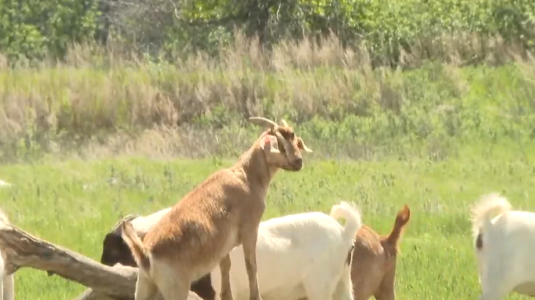
Municipal land management consistently falters at the intersection of fiscal constraint and ecological volatility. Traditional mechanical mowing and chemical herbicide applications introduce recurring operational liabilities, variable fuel costs, and compounding environmental degradation. The reintroduction of targeted caprine grazing—specifically employing goats for biological vegetation control—is frequently mischaracterized as a novel or quaint community initiative. In reality, it represents a highly structured, self-replicating cost-containment strategy.
By analyzing the operational deployment of grazing herds in municipal contexts like Lethbridge, Alberta, we can isolate the exact mechanisms that make biological infrastructure management superior to mechanical alternatives. To understand why a municipality scales or reduces these programs, one must examine the specific unit economics, caloric density variables, and labor-to-acreage ratios that govern target grazing.
The Tri-Particle Efficacy Framework of Biological Land Management
The operational success of utilizing caprine herds over mechanical or chemical intervention relies on three distinct variables: terrain accessibility, botanical selectivity, and seed-viability termination.
                  [MUNICIPAL VEGETATION CHALLENGE]
                                 │
         ┌───────────────────────┼───────────────────────┐
         ▼                       ▼                       ▼
┌─────────────────┐     ┌─────────────────┐     ┌─────────────────┐
│     Terrain     │     │    Botanical    │     │ Seed-Viability  │
│  Accessibility  │     │   Selectivity   │     │   Termination   │
└────────┬────────┘     └────────┬────────┘     └────────┬────────┘
         │                       │                       │
         ▼                       ▼                       ▼
[Slope & Substrate      [Targeted Caloric       [Digestive Acid
 Independence]          Extraction]             Neutralization]
1. Terrain Accessibility
Mechanical mowing assets face severe degradation and safety thresholds when operating on slopes exceeding 15 degrees. Rocky substrates, river valleys, and coulees introduce catastrophic equipment failure risks and increase municipal liability insurance premiums. Goats operate via a quad-pedal musculoskeletal structure that maintains stability on slopes up to 45 degrees, eliminating the capital expenditure depreciation associated with specialized steep-slope mechanical mowers.
2. Botanical Selectivity
Unlike broad-spectrum chemical applications that decimate native low-growth flora and create ecological voids ripe for secondary weed colonization, caprine dietary preferences are highly specialized. Goats are natural browsers rather than grazers. They actively select deep-rooted, woody, and broad-leafed invasive species—such as leafy spurge, Canada thistle, and toadflax—while bypassing the foundational native grasses that stabilize topsoil.
3. Seed-Viability Termination
When a mechanical mower cuts an invasive weed, it frequently acts as a vector for seed dispersal, inadvertently accelerating the propagation radius via wind and blade contact. Conversely, the digestive tract of a goat utilizes a highly acidic, multi-chambered rumination process. This biochemical environment neutralizes the germination viability of ingested seeds. The output is a sterile, nutrient-dense organic fertilizer that actively regenerates depleted topsoil rather than depositing viable weed seeds back into the biome.
The Cost Function of Mechanical vs. Biological Management
To evaluate the fiscal viability of implementing a targeted grazing program, municipal budget architects must analyze the total cost of ownership (TCO) per acre. The baseline cost function for mechanical intervention is defined by volatile inputs:
$$C_{mechanical} = L_m + F_v + E_d + C_r$$
Where:
- $L_m$ represents operator labor hours adjusted for hazard pay on variable terrain.
- $F_v$ represents fossil fuel volume and pricing volatility.
- $E_d$ represents equipment depreciation and specialized parts replacement.
- $C_r$ represents chemical herbicide regulatory compliance and application costs.
The biological alternative restructures this cost curve into a highly predictable, fixed-rate contract. The cost function shifts to:
$$C_{biological} = H_d + S_s + T_e$$
Where:
- $H_d$ represents the daily herd-lease rate (inclusive of shepherd labor).
- $S_s$ represents site security and containment infrastructure (e.g., portable electrified fencing).
- $T_e$ represents transport logistics to and from the municipal management zone.
The core financial bottleneck of biological management resides entirely within $T_e$ and $S_s$. While the variable cost of fuel ($F_v$) fluctuates wildly based on global oil markets, the caloric input of a biological system is self-sustaining—the weed population itself serves as the primary fuel source.
The economic inflection point occurs when dealing with dense, established infestations of noxious weeds. A mechanical crew requires multiple passes per season to exhaust the root systems of perennial weeds. A managed herd forces the plant into a state of accelerated carbohydrate depletion by repeatedly stripping the photosynthetic canopy. This forces the weed to expend its root reserves, leading to systemic mortality over a multi-year cycle without an escalation in labor hours.
Operational Bottlenecks and Structural Contraints
An objective assessment of caprine deployment reveals distinct operational boundaries that prevent it from completely replacing mechanical assets. Understanding these limitations is critical for municipal project management.
The first structural limitation is the non-instantaneous execution speed. A mechanical flail mower can clear multiple acres within a single shift, providing immediate visual and physical reduction of fuel loads for wildfire mitigation. A herd of 200 goats operates on a metabolic timeline, requiring days to systematically strip the same acreage. Municipalities cannot deploy biological units for emergency clearance or rapid-response sightline remediation along transit corridors.
The second constraint is containment and predator mitigation. Urban grazing requires constant human oversight and physical barriers to prevent herd ingress into residential zones or active roadways. The presence of domestic dogs introduces a significant liability vector; off-leash pets can disrupt herd cohesion, causing stress injuries or mortality, which instantly degrades the operational efficiency of the deployment. Consequently, the shepherd is not merely an animal handler, but a critical risk-management asset who oversees security and community engagement.
The third limitation involves the toxicity thresholds of specific plant species. While goats possess highly resilient hepatic filtration systems capable of neutralizing alkaloids that would kill cattle or horses, certain plants present acute biological risks. For example, high concentrations of specific cyanogenic glycoside-producing plants require careful monitoring to avoid herd toxicity. The management team must conduct a thorough botanical census of the target zone prior to deployment to map out zones that require pre-clearing or strict grazing time limits.
Metric Standardization for Urban Grazing Portfolios
Municipalities utilizing biological land management frequently fail to track the correct key performance indicators (KPIs), relying instead on superficial public relations metrics like community engagement or media impressions. To prove structural efficacy, management must track hard data points.
- Canopy Depletion Index (CDI): The percentage reduction of targeted invasive foliage mass post-grazing within a defined quadrant. A successful deployment should net a CDI of greater than 85% on target species.
- Native Re-emergence Coefficient (NRC): The year-over-year percentage increase of indigenous grass species within the managed zone, indicating successful topsoil stabilization and reduced weed competition.
- Cost Per Acre-Year (CPAY): The total lifecycle cost of maintaining a specific parcel of land over a rolling 36-month window, accounting for the long-term decline in weed density.
By shifting the evaluation metric from immediate acreage cleared per hour to the compound reduction of weed density over a three-year horizon, the fiscal argument tilts heavily toward biological systems. The upfront costs of containment and shepherding yield diminishing resource requirements in subsequent years as the seed bank is progressively depleted.
Strategic Asset Allocation Protocol
To maximize the return on investment for municipal vegetation management, city planners must adopt a tiered deployment model rather than treating biological grazing as an all-or-nothing substitute for mechanical infrastructure.
                    [TOTAL MUNICIPAL LAND AREA]
                                 │
         ┌───────────────────────┴───────────────────────┐
         ▼                                               ▼
[High-Slope / Dense Weed Zones]               [Flat / High-Traffic Corridors]
         │                                               │
         ▼                                               ▼
{DEPLOY: Caprine Herds}                       {DEPLOY: Mechanical Assets}
         │                                               │
         └───────────────────────┬───────────────────────┘
                                 ▼
                     [ECOLOGICAL EQUILIBRIUM]
Zones characterized by flat topography, roadside clear zones, and low weed density must remain under mechanical management protocols. The mechanical asset excels in high-speed, linear maintenance where containment setup costs would neutralize the economic benefits of a herd.
Zones defined by slopes greater than 15 degrees, river valleys, coulees, and heavy infestations of deep-rooted noxious weeds must be designated for primary biological intervention. The herd acts as the heavy clearing mechanism, exhausting the dominant invasive canopy and sterilizing the immediate seed bank.
Following two consecutive seasons of biological suppression, the municipality should transition the land into a low-cost maintenance phase. This involves deploying smaller, highly mobile satellite herds to target re-emerging patches, or utilizing spot-applied, ultra-targeted chemical applications if the native grass canopy has recovered sufficiently to outcompete the remaining weeds.
This hybrid approach optimizes municipal capital allocation. It eliminates unnecessary machinery wear, drastically reduces the chemical volume introduced into local watersheds, and leverages the specific metabolic advantages of biological assets to achieve permanent, long-term stabilization of urban ecosystems.