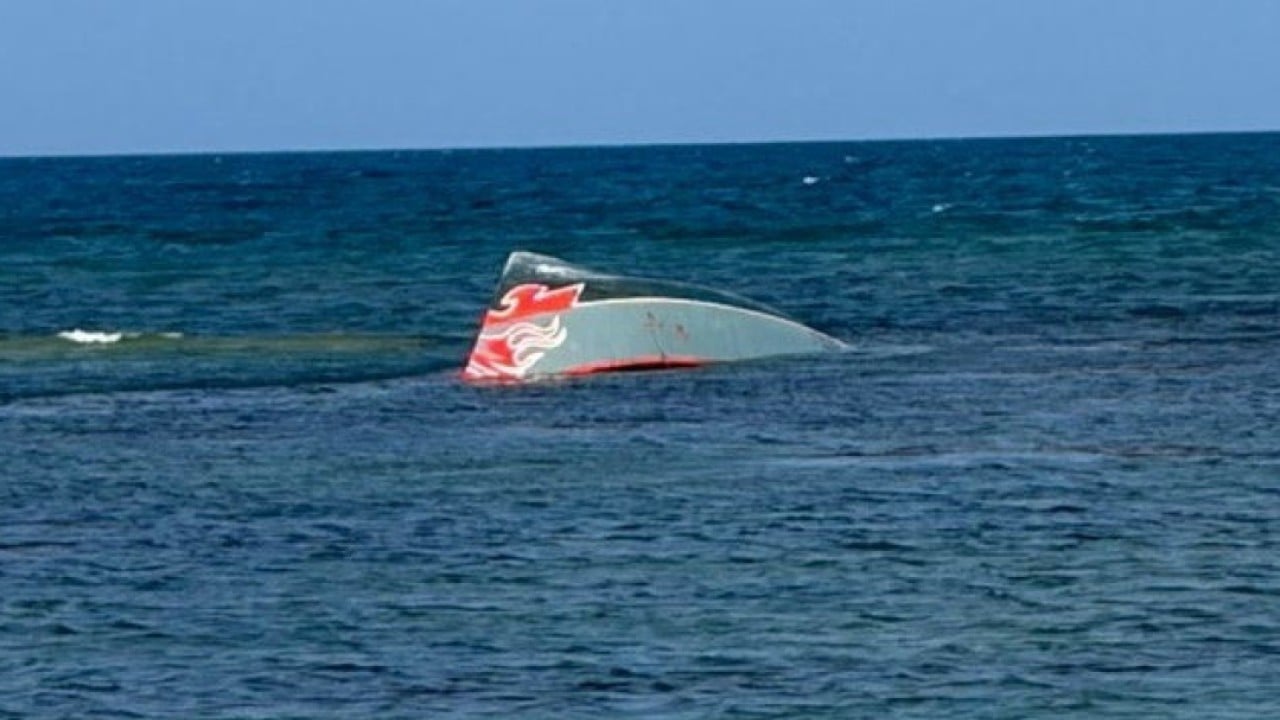
The capsizing of an overcrowded vessel off the coast of Djibouti, resulting in at least 139 fatalities and dozens missing out of 305 total passengers, is not a random maritime accident. It is the catastrophic operational failure of an entrenched shadow supply chain operating across the Horn of Africa. When structural economic pressures intersect with illegal transit cartels, maritime disasters transform from unpredictable events into statistical certainties.
Analyzing the mechanics behind the Guehere shipwreck requires stripping away reactive rhetoric and examining the cost functions, regulatory bottlenecks, and systemic vulnerabilities that drive thousands of Ethiopian nationals onto unseaworthy vessels bound for Yemen.
The Structural Drivers of the Eastern Route
The migration corridor running from the Horn of Africa across the Bab-el-Mandeb strait to the Arabian Peninsula represents one of the most active yet perilous transit vectors globally. To understand why individuals continuously board vessels with near-zero survival probabilities, the migration flow must be evaluated through a rational choice framework.
- The Push Vector: Domestic economic friction, localized conflict, and severe structural underemployment in Ethiopia create an environment where the expected utility of remaining stationary is lower than the expected utility of migration, even when adjusted for high mortality risks.
- The Pull Vector: Perceived labor demand in Gulf economies creates a high financial incentive. Smuggling syndicates monetize this demand by offering variable-cost transit options that shift all physical and mortality risk onto the end consumer—the migrant.
- The Infrastructure Deficit: The absolute absence of legal, low-cost mobility corridors creates a total monopoly for illicit brokers. When state-sanctioned pathways are restricted to zero, the market naturally clears through informal, high-risk alternatives.
The Cost Function of Smuggling Operations
Illicit maritime transport operates on extreme profit optimization principles. Smugglers maximize asset utilization by ignoring displacement limits, safety equipment standards, and basic operational protocols.
In the specific incident near Obock, a vessel engineered for a fraction of its load accommodated 305 individuals. This represents a severe over-allocation of passenger weight relative to buoyancy parameters.
[Demand: High Volume of Migrants]
       ↓
[Monopoly: Absence of Legal Pathways]
       ↓
[Optimization: Extreme Overcrowding & Substandard Vessels]
       ↓
[Systemic Vulnerability: High Sensitivity to Minor Disruptions]
       ↓
[Output: Catastrophic Structural Failure / Capsizing]
Under these operating conditions, the margin for error approaches zero. A minor shift in passenger weight, adverse night currents, or slight wind shear transforms a floating hull into a capsizing hazard. The smugglers face minimal economic penalty for vessel loss, as capital equipment costs are amortized rapidly across multiple high-density voyages, decoupling operator profitability from asset preservation.
Regulatory Bottlenecks and Regional Response Failures
International oversight and regional state interventions currently suffer from a reactive latency loop. Interdiction efforts and rescue coordination mechanisms are deployed after structural failures occur, rather than choking the operational capacity of smuggling networks at terrestrial choke points.
- Terrestrial Transit Nodes: Migrants typically traverse established land routes through Djibouti toward embarkation points like Obock. These routes depend on visible logistical support networks, including staging camps and local transport vehicles.
- Maritime Surveillance Gaps: The coastal waters of Djibouti and the broader Gulf of Aden span vast monitoring zones where local coast guard resources are frequently mismatched against the speed and agility of decentralized smuggling fleets.
- The Deterrence Paradox: Increasing border security without expanding legal economic migration channels does not suppress volume; it merely increases the unit price of smuggling and forces operators to utilize even more hazardous routes and vessels.
Strategic Interventions for Corridor Stabilization
Mitigating future loss of life requires a systematic shift from post-disaster humanitarian triage to supply chain disruption and market substitution.
First, enforcement agencies must target the financial clearing mechanisms of smuggling syndicates. By tracking and freezing illicit capital flows used to finance fleet acquisition, local cartels face higher operational friction.
Second, regional frameworks must address the economic differentials between origin and destination countries. Without bilateral labor agreements that establish transparent, safe, and regulated employment pathways, the economic incentives driving individuals toward unregulated maritime transit will overpower deterrent messaging.
Third, maritime early-warning systems must be integrated with intelligence-led interdictions at known departure beaches. Intercepting overloaded vessels prior to embarkation eliminates the open-water rescue variable, where survival rates drop exponentially once a hull compromises its structural integrity at sea.
The recurring scale of mortality along the Eastern Route is a symptom of structural market failure. Treating the crisis strictly as a series of isolated maritime emergencies guarantees that the underlying economics will continue to produce identical operational failures.