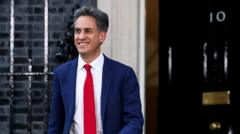
Ed Miliband called taking over the Foreign Office the "honour of my life" on his first day in the role. You can understand why. It's a massive shift in British politics. Prime Minister Andy Burnham’s cabinet reshuffle moved Miliband from his previous spot at Energy Security and Net Zero right into the top diplomatic job at King Charles Street.
It's a striking turn of events. Sixteen years ago, Miliband beat Burnham for the Labour leadership in a brutal contest. Now Burnham is in Downing Street and Miliband is handling the UK's global relations.
The move instantly caught attention across Europe and beyond. British foreign policy under the previous administration focused heavily on immediate domestic stability. Miliband brings a different energy and a distinct worldview to foreign policy.
The Brother Connection Nobody Can Ignore
You can't write about Ed Miliband entering the Foreign Office without bringing up history. His older brother, David Miliband, held the exact same job from 2007 to 2010 under Gordon Brown. They are the only siblings in modern British political history to both serve as Foreign Secretary.
Back in 2010, the brothers fought a bitter battle for the party leadership. Ed won by a hair, backed by trade union votes. David left Westminster entirely, moving to New York to lead the International Rescue Committee.
Now Ed walks through the doors of the Foreign, Commonwealth and Development Office as its boss. He isn't just following in his brother's footsteps. He's stepping into international diplomacy at a moment of huge global friction.
From Net Zero Strategy to International Geopolitics
For two years under Keir Starmer, Miliband ran the Department for Energy Security and Net Zero. He oversaw major green infrastructure approvals, solar expansion, and offshore wind development. He knows energy policy inside and out.
That experience isn't irrelevant to diplomacy. Foreign policy today revolves around energy security, critical minerals, and supply chain vulnerability.
When Miliband steps into meetings with foreign ministers, he brings deep knowledge of global energy markets. That gives him immediate weight in discussions on international resource security and climate compacts.
Here is what his track record tells us about how he will operate:
- Expect climate diplomacy to take center stage alongside traditional defense alliances.
- Expect tighter alignment with European partners on supply chain resilience.
- Expect a pragmatic, policy-heavy approach to international negotiations.
The Challenges Waiting on His Desk
This isn't an easy assignment. Global affairs are volatile. Escalating conflicts in the Middle East, ongoing tension in Eastern Europe, and shifting trade dynamics with major global powers demand immediate action.
Miliband's past statements on international relations will be scrutinized closely. During his time as opposition leader in 2014, his stance on Middle Eastern affairs drew significant debate. Diplomatic partners around the world are already dissecting his previous positions to anticipate his next moves.
Managing relationships with key allies requires delicate balancing. Washington, Brussels, and international partner capitals will want clear signals on UK defense commitments and international development spending.
His appointment signals a left-of-center tilt in British international policy under Burnham's leadership. It shows the new Prime Minister wants experienced, heavyweight figures steering major departments rather than quiet technocrats.
What This Shift Means for British Foreign Policy
Putting Ed Miliband in charge of diplomacy isn't a cosmetic change. It means Britain's approach to global affairs will look noticeably different than it did over the past few years.
He is comfortable with detail, understands institutional machinery, and has spent decades in the public eye. His presence ensures Britain's voice will be loud in international forums.
If you want to track how this changes things, watch three specific areas over the coming weeks:
- Look for new bilateral agreements focused on international clean energy networks.
- Watch how the UK position evolves at upcoming international diplomatic summits.
- Keep an eye on direct diplomatic engagements with European Union counterparts regarding trade and security coordination.
The job may be the honour of his life, but the political test begins right away.