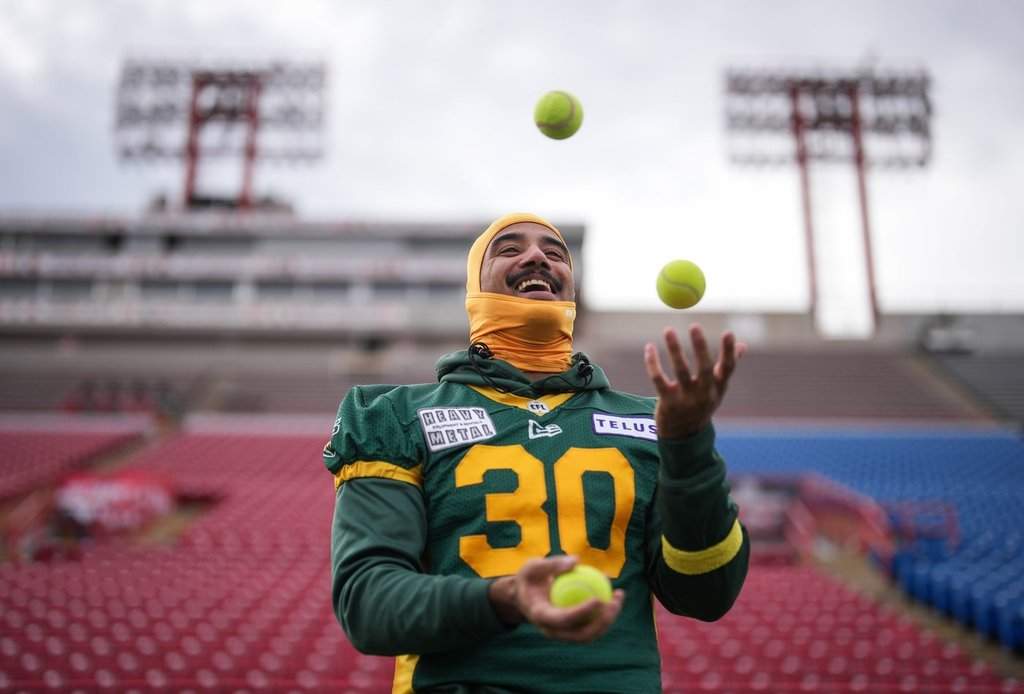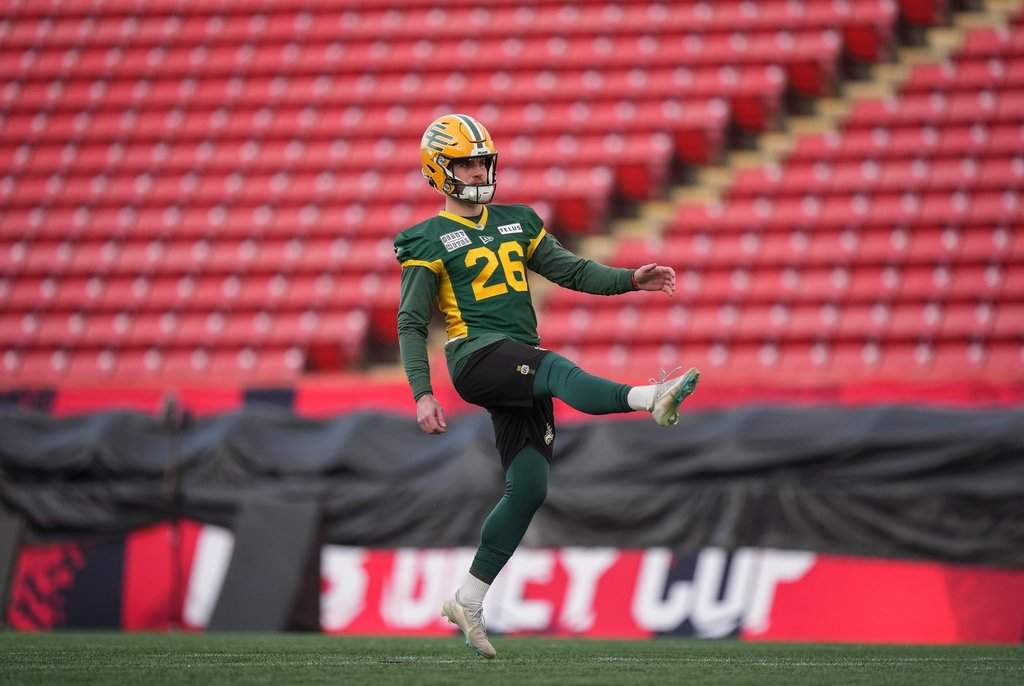
Professional sports run on data, contracts, and split-second execution, yet one of the most consequential offseason decisions made by Edmonton Elks kicker Vincent Blanchard heading into the 2026 Canadian Football League campaign involved nothing more complicated than pen and paper. By physically writing down his targets for the 2026 season, the former Laval Rouge et Or standout tapped into a deliberate psychological and mechanical framework used by elite specialists to survive the volatility of CFL kicking. In a league where a single missed field goal in October can erase months of roster building and end a special teams coordinator's tenure, putting goals on paper turns vague preseason optimism into measurable daily accountability.
The habit looks simple on the surface. It is not.
Most fans treat kicking as an afterthought until a fourth-quarter kick sails wide right in swirling prairie wind. Inside CFL front offices and locker rooms, the reality looks entirely different. Rosters are tight, salary caps leave zero room for dead weight, and the margin between keeping a job and getting cut at the end of training camp often comes down to two or three kicks over an eighteen-game schedule. When a young kicker like Blanchard commits his 2026 benchmarks to paper, he is building a personal audit system designed to survive the most unforgiving position in Canadian football.
The Brutal Economics of CFL Special Teams
To understand why a written blueprint matters in Edmonton, you have to look at the structural pressures governing CFL special teams. Unlike the National Football League, where franchises carry dedicated rosters with broader positional depth and massive financial cushions, CFL clubs operate under strict ratio rules and tight cap ceilings. Every Canadian roster spot carries heightened strategic value. A national kicker who can handle field goals, convert extra points reliably, and pin opponents deep on kickoffs frees up an American spot elsewhere on the depth chart—at defensive back, receiver, or offensive line.
That structural reality cuts both ways. It gives Canadian kickers a clear pathway onto the active roster, while simultaneously placing them under relentless scrutiny. If a national kicker falters, general managers do not hesitate to churn the position, bring in competition during bye weeks, or restructure their ratio math overnight.
Edmonton knows this cycle intimately. Over recent seasons, the Elks have worked through roster turnover, front-office transitions, and the heavy pressure of restoring stability at Commonwealth Stadium. For a kicker operating in that environment, external noise is constant. Media coverage dissects every miss. Fans remember the shanked 42-yarder far longer than the routine 33-yarder made in the second quarter.
Writing down concrete goals strips away that external static. Instead of reacting to weekly standings or talk-radio chatter, a specialist anchors his preparation to a fixed set of personal standards established before the chaos of the regular season begins.
What Happens When an Athlete Writes Down Goals
Sports psychology has studied goal-setting mechanics for decades, and the distinction between mental intentions and written commitments is well established. A thought left in your head shifts shape depending on your mood, fatigue level, or recent performance. A target written in ink stays fixed.
Turning Abstract Ambition Into Mechanical Checklists
Saying you want to "have a great season" or "make more kicks" gives the brain nothing actionable to execute during a Tuesday afternoon practice in July. Effective written goals for a placekicker break down into tiered, controllable metrics rather than wishful outcomes.
Consider a hypothetical example of how an elite CFL kicker structures a written goal sheet before training camp opens. Instead of writing "be an All-Star," the sheet separates outcome targets from process habits:
- Field Goal Accuracy Benchmarks: Splitting conversion targets by distance brackets—such as hitting 95 percent or better inside 39 yards, above 85 percent from 40 to 49 yards, and maintaining composure on attempts beyond 50 yards.
- Kickoff Hang Time and Placement: Tracking average hang time in seconds and directional placement outside the numbers to prevent explosive returns on the wider CFL field.
- Operation Time Standards: Auditing the total time from the long snapper's release to the ball leaving the foot, aiming consistently around the 1.25-to-1.30-second threshold so edge rushers cannot block low trajectories.
- Recovery and Film Logs: Recording post-practice leg fatigue, hip mobility work, and daily film review of plant-foot angles.
Notice the difference. Every single item on that hypothetical sheet measures something the kicker can verify on tape or with a stopwatch. When Blanchard wrote down his 2026 objectives, he was creating an objective scoreboard that exists independently of weather conditions, bad holds, or blocked kicks.
The Encoding Effect and Cognitive Ownership
Cognitive researchers refer to the physical act of handwriting as a deeper encoding process than typing or speaking. When an athlete writes out a target by hand, motor pathways and visual processing centers engage simultaneously, strengthening memory retention and personal ownership.
More importantly, written goals create friction against self-deception. Every athlete experiences slumps. When a kicker pushes two kicks right during a windy afternoon session, the natural human instinct is to rationalize the misses—blaming the turf, the wind gust, or a slightly high snap. Looking back at a physical notebook forces honest self-assessment. Either the plant foot landed too close to the ball, or the hips opened early. The paper does not care about excuses.
From Laval Standout to Edmonton Pro
Blanchard's background makes his methodical approach entirely logical. Coming out of Université Laval, one of the premier U SPORTS football programs in the country, he developed inside an environment famous for discipline, preparation, and championship expectations. Laval does not treat special teams as an afterthought; the program treats kicking, punting, and coverage units as core pillars of field-position warfare.
Transitioning from U SPORTS to the professional ranks, however, exposes every subtle flaw in a kicker's technique.
In university football, a kicker can occasionally muscle a ball through the uprights even if his plant foot lands half an inch off target or his follow-through drifts across his body. At the CFL level, the margins disappear. Defensive linemen and edge rushers are faster, taller, and coached specifically to time the snap count and attack the kicking lane. The ball has to get up faster, carry cleaner rotation, and hold its line through crosswinds in stadiums from Calgary to Montreal.
Furthermore, the CFL calendar tests physical durability in ways university schedules never do. An eighteen-game regular season—plus preseason and potential playoff rounds—demands careful workload management. Kicking too many balls on Wednesday can leave a specialist dead-legged by Friday night. Kicking too few can dull timing with the holder and long snapper.
A written seasonal plan helps regulate that rhythm. By mapping out volume limits, technical focus points, and seasonal checkpoints in advance, a young pro avoids the classic trap of over-practicing after a bad game or coasting after a streak of makes.
Why Commonwealth Stadium Tests Every Kicker
Home-field conditions in Edmonton add another layer of complexity to Blanchard's 2026 preparation. Commonwealth Stadium is an open-air venue with an expansive bowl, natural grass turf, and weather patterns that can shift dramatically between June and November.
Early summer games bring warm air where footballs travel effortlessly. By late September and October, temperatures drop, the air grows denser, and the football itself hardens into something closer to a leather brick. Cold weather compresses the ball, reduces trampoline effect off the foot, and shrinks maximum effective range by five to eight yards.
Turf conditions evolve alongside the calendar. Natural grass at Commonwealth provides superior footing when dry and well-rooted, yet late-season moisture, frost, or heavy wear between the hash marks requires precise cleat selection and disciplined plant-foot balance. A slight slip on the plant leg alters the swing path of the kicking hip, turning a routine 38-yard field goal into a low line drive.
Writing down goals before the season starts prepares a kicker mentally for those environmental shifts before they arrive. You do not wait until an October snow squall in Alberta to decide how you will adjust your approach steps or tempo. You commit to your cold-weather mechanics and mental cues months earlier, then execute the plan when the temperature drops.
The Invisible Trio Behind Every Successful Kick
When media coverage highlights a kicker's preseason mindset, it is easy to isolate the kicker as a solo performer. In reality, a placekick is a three-person mechanical chain operating under extreme time compression.
- The Long Snapper: Must deliver a clean spiral with consistent velocity and lace orientation so the holder does not have to spin the ball frantically.
- The Holder: Must catch, spot, tilt, and clear his hands within fractions of a second while maintaining the exact lean angle the kicker prefers.
- The Kicker: Must trust the spot completely without peeking early, driving through the sweet spot of the ball while keeping his head down through impact.
If any link in that trio falters by a tenth of a second, the entire operation breaks down. Even the most detailed written goal sheet cannot compensate for poor chemistry between snapper, holder, and kicker.
That is why veteran specialists pair their personal notebooks with shared unit standards. When Blanchard sets targets for his 2026 campaign, those numbers implicitly depend on thousands of synchronized reps with his battery mates during spring mini-camp and main training camp. Trusting the operation allows the kicker to swing freely rather than steering the ball.
The Gray Areas of Goal-Setting in High-Variance Sports
Writing down goals is a proven competitive edge, yet honest analysis requires acknowledging where the method hits its limits. Kicking is a high-variance craft governed by variables no athlete controls.
A kicker can strike a 47-yard attempt with textbook biomechanics, perfect rotation, and ideal trajectory, only to watch a sudden twenty-knot crosswind push the ball onto the upright. Conversely, an ugly, off-center strike can wobble ugly over the crossbar for three points. If an athlete ties his psychological stability exclusively to outcome numbers written on a page—such as demanding a 90 percent conversion rate regardless of weather or distance distribution—one windy afternoon in Regina or Winnipeg can trigger unnecessary panic.
Over-attachment to rigid stats also risks creating mechanical paralysis. Kickers who obsess over percentages mid-season often start aiming their kicks rather than swinging through their natural rhythm. Once a specialist starts trying to guide the ball instead of trusting his swing, distance drops and misses multiply.
The sharpest professionals solve this problem by separating outcome goals from execution goals. You write down the statistical targets in the offseason to establish ambition and direction. Once the season kicks off, you focus strictly on single-kick execution cues—tempo, plant-foot alignment, head discipline, and follow-through—letting the seasonal numbers accumulate on their own.
What Makes a Specialist Survive Long-Term in the CFL
Look across the history of the Canadian Football League, and the kickers who last a decade or more share an unmistakable temperament. They are neither reckless nor overly emotional. They treat a game-winning 48-yarder in the final seconds with the exact same pre-kick routine as a first-quarter extra point.
- Short Memory Architecture: Whether they just drilled a 53-yarder or hooked a 32-yarder, their demeanor on the sideline remains flat.
- Routine Consistency: Two steps back, two steps left, deep breath, visual target line, smooth tempo—every single time.
- Proactive Self-Auditing: Keeping detailed records of kicks, wind reads, footwear choices, and physical recovery across every stadium in the league.
Blanchard's decision to write down his 2026 goals fits squarely inside that veteran tradition. It signals a player who refuses to leave his career trajectory to chance or hope that raw leg strength alone will carry him through a grueling pro schedule.
In Edmonton, where every roster spot is earned under the microscope of a demanding fan base and an unforgiving division, preparation begins long before the opening kickoff clears the crossbar. A pen, a sheet of paper, and a clear set of standards do not guarantee a flawless season—nothing in kicking ever does—but they ensure that when the fourth quarter arrives and the game hangs on a single swing of the right leg, nothing about the moment comes as a surprise.