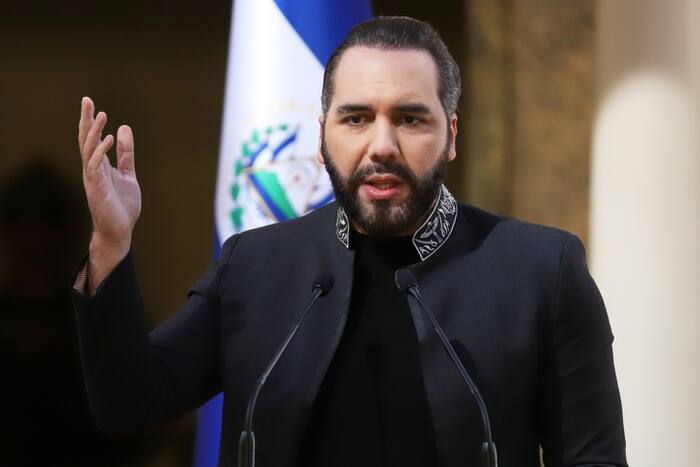
When an elite contingent of Salvadoran special forces deployed to Haiti to locate four missing soldiers who came under fire, the move signaled an unprecedented shift in Latin American security intervention. For years, regional security operations across the Caribbean have followed a predictable, often paralyzed playbook governed by international bureaucracy and multilateral hesitation. President Nayib Bukele's administration bypassed this traditional inertia, transforming a tactical extraction operation into a striking demonstration of unilateral power projection.
The primary driver behind this deployment is not merely a localized rescue mission. It is a calculated stress test of El Salvador's aggressive military doctrine outside its own borders. By dispatching elite operators into a fractured urban combat zone dominated by heavily armed gangs, San Salvador is testing whether the hyper-militarized tactics that decimated domestic cartels can be exported to international hotbeds of state collapse.
To understand the weight of this deployment, one must look closely at the operational reality in Port-au-Prince. The Haitian capital remains carved up by coalitions of gangs wielding automatic weaponry, tactical gear, and deep financial networks that frequently outgun local law enforcement. When foreign personnel, even those with specialized training, enter these neighborhoods without deep localized intelligence or heavy armored infrastructure, the margins for error shrink to zero. The four missing soldiers found themselves in the crosshairs of an asymmetrical urban war where front lines shift block by block, and traditional rules of engagement offer little protection against decentralized militia forces.
Yet, the decision to send specialized troops rather than rely on diplomatic channels or multinational peacekeeping frameworks reveals a distinct strategic calculus. Bukele has built a domestic political brand on swift, uncompromising force. Expanding this posture internationally elevates El Salvador from a small Central American state dealing with domestic gang containment to an active security exporter in the Western Hemisphere. This projection of hard power changes the diplomatic leverage equations across the region, positioning Salvadoran commandos as viable contractors for regional stabilization where the United Nations or the Organization of American States have faltered or stalled.
Critics point out the profound risks of such an intervention. Operating in a sovereign nation without a robust, long-term stabilization framework risks entangling foreign troops in a quagmire with no clear exit strategy. Unlike domestic operations where state sovereignty and total intelligence saturation provide an overwhelming advantage, foreign deployment in a failed state exposes units to hostile populations, language barriers, and volatile shifting alliances among local armed factions. If the extraction mission encounters catastrophic setbacks, the political fallout could fracture the carefully curated aura of invincibility surrounding El Salvador's security apparatus.
Furthermore, the mechanics of urban extraction in hostile territory require precise logistical backing that stretches far beyond the capabilities of most regional militaries. Coordinating air support, medical evacuation routes, and secure communications through hostile airspace in Haiti demands a level of technological and intelligence integration that tests even seasoned operators. The missing soldiers represent not just a human crisis for the families back home, but a high-stakes vulnerability for a government that has staked its entire international reputation on absolute operational control.
As these elite units navigate the maze of Port-au-Prince, the implications extend far beyond the immediate rescue parameters. If successful, this intervention creates a new precedent for bilateral military assistance in the Caribbean, bypassing cumbersome multilateral bodies in favor of direct, muscular state-to-state agreements. If it fails, it serves as a sobering reminder of the limits of exported authoritarian efficiency when confronted with the bottomless chaos of a collapsed state. The outcome in the streets of Haiti will dictate whether this deployment was a visionary reshaping of regional defense or a reckless overextension of military ambition.