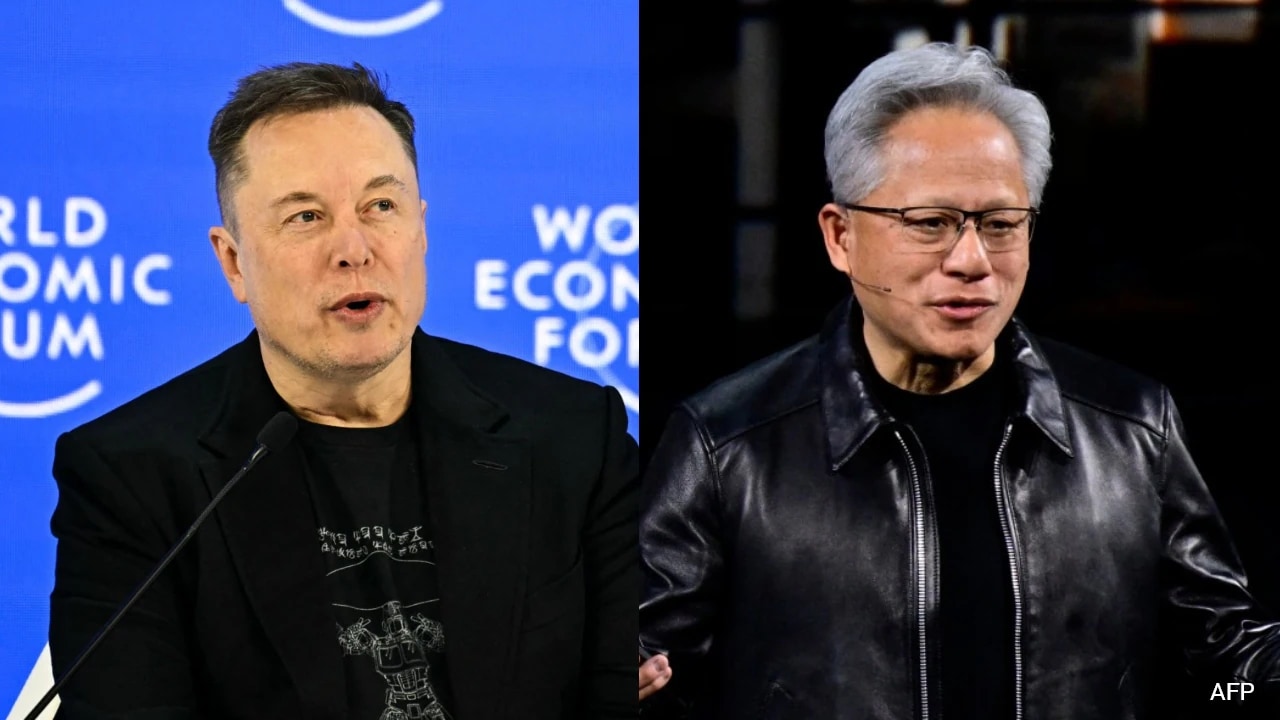
Picture the most valuable chip company on Earth suddenly losing the one guy who actually knows how the whole machine works. That's the exact scenario Elon Musk pointed to when he warned that without Jensen Huang at the helm, Nvidia's legendary handshake deals would evaporate overnight.
He's not wrong.
Most investors look at Nvidia through the cold, hard lens of quarterly earnings, H100 and Blackwell shipment volumes, and software moats like CUDA. Musk, who has spent billions buying Nvidia hardware for Tesla's Dojo-adjacent clusters and xAI's massive Colossus supercomputer in Memphis, sees something entirely different. He sees a founder-led trust network that no traditional corporate successor could ever replicate.
The Reality Behind Jensen Huang Handshake Deals
Silicon Valley loves contracts, redlines, and armies of corporate lawyers. Yet when the AI boom exploded, GPU allocation became more valuable than gold, and standard procurement timelines went right out the window.
Musk has openly talked about how he does business with Huang. There's no endless bureaucratic dance. They get on a call, agree on massive hardware allocations, and shake on it. When xAI needed 100,000 H100 GPUs wired up in record time—a feat Huang himself later called "superhuman"—that speed didn't happen because of a standard enterprise sales funnel. It happened because two obsessive founders trusted each other to deliver.
Think about what happens when a normal Fortune 500 CEO takes over a company like Nvidia. Suddenly, every massive allocation requires three layers of risk-committee sign-offs, margin protection audits, and legal reviews. The velocity dies. Competitors like AMD, Broadcom, or custom in-house silicon teams at Google and Amazon get the exact breathing room they've been praying for.
Why Founder-Led Tech Companies Operate Differently
I've watched plenty of tech giants transition from their original founders to professional managers, and the pattern is painfully predictable. Look at Apple after Steve Jobs or Microsoft under Steve Ballmer before Satya Nadella pulled it out of its tailspin. Professional CEOs are trained to optimize existing profit engines, not bet the entire company on terrifyingly expensive architectural shifts.
Jensen Huang co-founded Nvidia in 1993 at a Denny's in San Jose. He survived near-bankruptcy in the late nineties, bet the farm on programmable shaders, and spent over a decade pouring money into CUDA before anyone outside of niche academic circles cared about parallel computing for neural networks.
A hired gun from a business school doesn't have the moral authority inside a company to burn billions on an unproven software ecosystem for ten straight years. Boards fire professional CEOs for that kind of patience. Founders get away with it because they built the house.
The Flat Organization Secret Nobody Copies
Here's a detail most Wall Street analysts miss when they talk about Nvidia's succession risk. Huang doesn't run a normal corporate hierarchy. He famously has around 50 to 60 direct reports, skips regular one-on-one meetings unless an executive specifically asks for help, and refuses to receive traditional status reports.
Instead, he relies on raw, unfiltered information flowing straight from engineers to the top. Anyone at the company can email him their top five priorities, and he actually reads them.
Try handing that management structure to a traditional corporate executive. They'd panic within forty-eight hours and hire three layers of vice presidents to "bring order to the chaos." The moment those middle managers show up, the handshake deals stop working because the person making the promise no longer has direct visibility into the engineering and supply chain reality on the ground.
What Musk Actually Needs From Nvidia
To understand why Musk is vocal about Huang's irreplaceability, you have to look at Musk's own hardware dependency. Despite building Tesla's custom AI inference chips and experimenting with Dojo training tiles, Musk remains one of Nvidia's largest customers on the planet.
xAI's Colossus cluster in Memphis didn't just use off-the-shelf setups. It required deep, real-time engineering coordination between xAI's infrastructure team and Nvidia's networking and GPU engineers to get Spectrum-X Ethernet networking running at unprecedented scale without bottlenecks.
When you're pushing tens of thousands of liquid-cooled GPUs to their thermal and electrical limits, things break. Drivers crash. Cables fail. Optical transceivers overheat. In those moments, having a direct line to a CEO who understands the silicon physics down to the transistor level is the difference between a three-day delay and a three-month disaster.
The Key Man Risk Wall Street Ignores
Financial filings always include a boilerplate section about "key man risk," and institutional investors almost always skim right past it. For Nvidia, that paragraph isn't legal filler. It's the single biggest vulnerability on the balance sheet.
Huang is in his early sixties, wears his signature leather jacket to every keynote, and shows zero signs of slowing down. Honestly, he looks like he's having the time of his life. Still, markets hate single points of failure, and Nvidia's entire culture is fused to one man's relentless work ethic and technical intuition.
Consider the sheer number of relationships Huang personally maintains across the semiconductor supply chain:
- TSMC Leadership: Securing advanced CoWoS packaging capacity when every tech giant on Earth is begging for wafers requires decades of personal trust between Huang and TSMC's top brass in Taiwan.
- Hyperscale Buyers: Balancing GPU allocations between fiercely competing buyers like Microsoft, Meta, Google, Amazon, and xAI without triggering an all-out customer revolt is a diplomatic high-wire act.
- AI Startup Founders: Huang routinely meets with early-stage AI builders, giving them early access to architecture roadmaps so they build their software stacks around Nvidia hardware from day one.
If you swap Huang out for a typical chief operating officer, those relationships immediately revert to transactional vendor-client contracts. And transactional contracts are easy to break the second a cheaper alternative hits the market.
Can Anyone Actually Replace Jensen Huang
Let's be realistic here. Nvidia has an extraordinary bench of engineering talent, including longtime executives like Colette Kress on the finance side and key hardware architects who designed the Hopper, Blackwell, and Rubin architectures. The company wouldn't vanish into thin air if Huang stepped down tomorrow.
The real danger isn't immediate collapse. It's slow, steady commoditization.
Right now, cloud providers are spending tens of billions of dollars designing their own custom ASICs—like Google's TPUs and Amazon's Trainium chips—specifically to break free from Nvidia's massive gross margins. The only reason those companies keep writing blank checks to Nvidia is because Huang keeps moving the goalpost every single year, shifting from a two-year product cadence to an annual release cycle that leaves competitors perpetually playing catch-up.
That aggressive roadmap isn't driven by a spreadsheet. It's driven by a founder who is still paranoid about going out of business thirty years after starting the company.
How Investors and Tech Leaders Should Read This
If you're tracking the AI hardware race, watching Nvidia's quarterly revenue growth only tells you what happened ninety days ago. Paying attention to leadership dynamics tells you where the moat actually lives.
Start tracking how much custom silicon adoption accelerates among the major hyperscalers over the next four quarters, and watch how frequently Huang stays directly involved in major sovereign AI and supercomputer deployments. As long as Jensen Huang is personally closing the biggest infrastructure deals in tech, Nvidia's dominance remains intact—the second those deals get handed off to a committee, the real vulnerability begins.