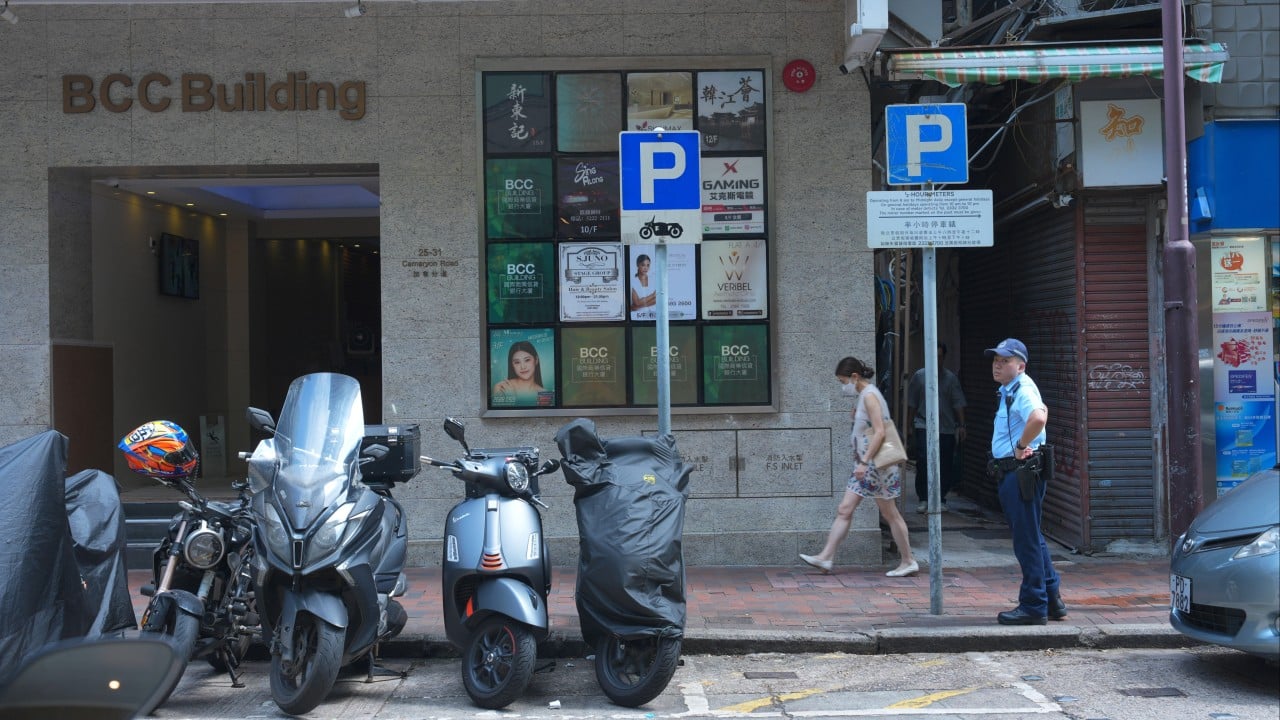
Another headline breaks. A man is found dead outside a commercial high-rise in Hong Kong. The police are searching for a woman. The media treats it like an episode of a predictable procedural drama, painting a neat picture of suspect and victim, crime and immediate manhunt. It is a comforting narrative. It assumes a broken clock can be fixed by simply replacing the hands.
It is also entirely useless.
We consume these tragedy reports like fast food. We read about the perimeter cordons, the frantic witness appeals, the blinking blue lights reflecting off damp pavement in Central or Tsim Sha Tsui, and we pat ourselves on the back for being informed. We ask who she was, where she went, and what security camera caught her last footprint.
We are asking the wrong questions entirely.
The real story is not about the woman running down an alleyway or the tragic finality of a body on concrete. The real story is the absolute fragility of the urban surveillance state we have constructed, a system that costs billions, boasts millions of lenses, and yet fails to prevent the descent into chaos before the tape ever goes up.
The Myth of Total Visibility
Hong Kong is one of the most monitored coordinates on the planet. Walk through any district, and you are tracked by closed-circuit television, smart lampposts, transit cards, and biometric toll gates. The conventional narrative dictates that with this level of digital saturation, crimes should be solved in real-time, or better yet, intercepted before the first blow is struck.
Yet, when a body drops outside a commercial building, the routine remains distressingly primitive. Authorities pull the footage. They release blurry stills to the press. They ask the public for help.
Think about that for a second. We have surrendered our privacy to a sprawling municipal panopticon under the explicit promise of absolute security. Yet, when an actual crisis hits the pavement, the machinery reverts to nineteenth-century detective work supplemented by low-resolution screenshots.
The lazy consensus in modern crime journalism is that more cameras equal more safety. I have watched municipal governments blow fortunes on facial recognition software and predictive policing algorithms that look impressive in a PowerPoint deck to a room full of bureaucrats. When the rubber meets the road, those systems produce noise, not signal. They generate false positives on subway platforms while missing the quiet, low-tech unraveling of human lives happening in broad daylight just outside the lobby doors of a multi-national conglomerate.
Architecture Designed for Alienation
Look at the setting of these urban tragedies: the modern commercial building. These structures are gleaming monoliths of glass, steel, and granite, engineered to optimize tenant yield and project corporate invulnerability. They are gated fortresses wrapped in slick marketing copy about wellness and community.
They are also lethal vacuums of social cohesion.
Modern architecture designs the humanity right out of our streets. When a person is in deep distress, tumbling toward a catastrophic break, they do not find a village. They find a security guard behind a polished marble desk who is contractually obligated to look away, a revolving glass door, and a cold plaza swept clean of benches to deter anyone from lingering too long.
When you sterilize public space, you do not eliminate crime or despair; you merely drive it into the blind spots. A man dying outside a commercial complex is the logical endpoint of a city that values pristine square footage over organic neighborhood watchfulness. We built high-rises that isolate us, and then we act shocked when isolation turns fatal.
The Detective Fetish
The media loves the hunt because the hunt has a beginning, middle, and end. Finding the woman, bringing her in for questioning, holding a press conference with stern-faced inspectors pointing at boards—this provides closure. It gives the illusion that justice has restored equilibrium to the universe.
It hasn't. It is a theatrical performance.
Catching the suspect does nothing to reverse the systemic rot that left a man dead on the pavement at dawn. It is the ultimate symptom-chasing exercise. We spend millions prosecuting the aftermath while refusing to allocate a fraction of that capital to the preventative infrastructure of mental health support, housing security, and community-level intervention that actually stops bodies from hitting the ground.
If you want to fix urban safety, stop obsessing over the manhunt. Start examining the alienation engine that forced two people into a fatal collision course in the shadows of a billion-dollar skyscraper.
The police will find her. They always do, eventually. But the body will still be cold, and the concrete will still be washed clean for the morning commute, ready for the next cycle of engineered amnesia.


