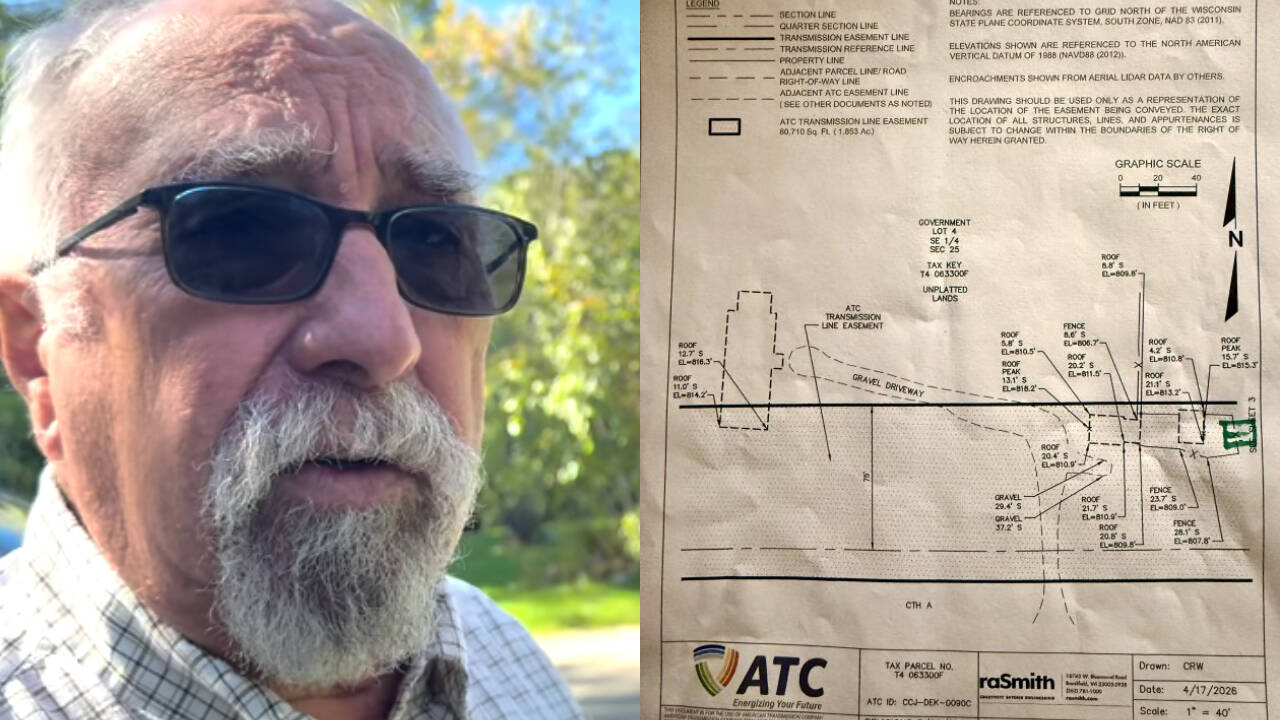
Infrastructure modernization projects frequently trigger friction between macroeconomic necessity and localized property rights. When transmission line updates intersect with private land parcels, disputes over compensation metrics expose structural flaws in utility valuation models. A single case in Wisconsin, where a property owner contested a high-voltage transmission route alongside an $81,000 compensation offer, illustrates the broader structural friction of the energy transition. Understanding this dynamic requires examining the economic models governing utility easements, the valuation gap in compulsory land acquisition, and the systemic bottlenecks slowing critical power grid upgrades.
The Economic Mechanics of Utility Easements
Transmission line expansion projects are driven by shifting generation profiles, primarily the transition toward distributed renewables and the retirement of legacy baseload generation. These macro forces require high-voltage alternating current and direct current corridors to transport power across vast distances.
When a utility company or transmission cooperative routes a line through private property, it rarely acquires the land in fee simple. Instead, it secures an easement. An easement grants perpetual rights to construct, maintain, operate, and access infrastructure while leaving nominal title with the landowner.
This creates a split property rights framework:
- The underlying fee owner retains rights to agricultural, recreational, or residential use, subject to rigid operational constraints.
- The utility holds an encumbrance that restricts structural building, limits canopy growth via vegetation management rules, and introduces constant electromagnetic and acoustic externalities.
The valuation of this encumbrance rests on fair market value assessments before and after the taking. Appraisers calculate the value of the parent tract, subtract the value of the remainder tract after the easement is imposed, and factor in damages to remaining acreage.
However, standard appraisal models frequently fail to capture the non-linear utility losses experienced by property owners. Linear infrastructure introduces aesthetic degradation, limits future subdivision potential, and can depress agricultural productivity through compaction and restricted aerial spraying access.
The Valuation Disconnect and the $81K Threshold
Disputes like the Wisconsin case emerge when the utility’s calculated fair market value diverges sharply from the owner's subjective and opportunity-cost-adjusted valuation. Utilities operate under regulated rate-of-return frameworks where capital expenditure efficiency is scrutinized by public service commissions. Consequently, initial acquisition offers tend to anchor near historical comparable sales for similar encumbrances within the region.
When an offer such as $81,000 is rejected, the disagreement usually stems from divergent assumptions regarding residual property utility:
- Parcel Severance: If a transmission corridor bisects a parcel, it creates irregularly shaped remnants that reduce operational efficiency for commercial agriculture or master-planned real estate development.
- Perceived Market Stigmatization: Buyers often discount properties encumbered by high-voltage lines due to aesthetic aversion or unquantified health concerns, regardless of epidemiological consensus.
- Negotiation Asymmetry: Utilities possess statutory condemnation authority through eminent domain. This statutory backing alters game-theoretic bargaining dynamics. The landowner cannot walk away from the transaction; their only recourse is contesting the valuation through administrative hearings, appraisal commissions, or judicial litigation.
Litigation introduces substantial transaction costs, including expert witness fees, legal retainers, and prolonged capital lockup. Many landowners lack the liquidity to mount a robust defense against well-funded utility legal teams, forcing acceptance of sub-optimal settlements. Conversely, when landowners organize or contest terms aggressively, projects face timeline compression and escalating legal overhead.
Systemic Bottlenecks in Transmission Scaling
The friction between landowners and grid operators is a symptom of a macro-level bottleneck. The United States power grid requires monumental capacity expansion to accommodate electrification and variable generation sources. Yet, linear infrastructure faces severe inter-state and intra-state permitting hurdles.
Each state public service commission operates under distinct statutory mandates governing need determination, route selection hierarchy, and environmental impact mitigation. Utilities must navigate these fragmented regulatory regimes while managing supply chain volatility for conductors, transformers, and structural steel.
When route optimization algorithms prioritize least-cost engineering paths over social friction minimization, they frequently select alignments that cross dense private holdings rather than utilizing existing public rights-of-way like highway medians. While public rights-of-way involve complex jurisdictional coordination with departments of transportation, they avoid the decentralized political resistance of individual landowners who can delay projects through administrative interventions.
Strategic Forecast for Linear Infrastructure Development
The structural tension between grid decarbonization and private property rights will intensify as renewable interconnection queues clear. To mitigate escalating acquisition costs and protracted legal disputes, transmission developers are shifting toward modernized stakeholder engagement models.
Advanced analytics now allow developers to map social friction indices alongside topological and engineering constraints. By incorporating parcel-level ownership concentration, historical litigation rates, and local zoning preferences into early-stage routing software, operators can avoid high-resistance corridors before capital is committed to land acquisition.
Simultaneously, compensation structures are evolving beyond one-time easement buyouts. Forward-thinking utilities are experimenting with ongoing community benefit agreements, localized tax revenue sharing, and shared-ownership models for adjacent generation assets to align local incentives with macro infrastructure imperatives. Without such institutional adaptations, every gigawatt of new transmission capacity will remain bottlenecked by the arithmetic of individual landowners defending their property boundaries against state-sanctioned utility expansion.