Every afternoon in Yiwu, an industrial hub in Zhejiang province, the heavy machinery at plastics factories hums a rhythm that has defined modern China for forty years. But lately, a new sound has crept into the background. Silence.
It is the silence of missing workers.
Consider a hypothetical but entirely accurate composite of a modern factory owner, whom we will call Lao Chen. For decades, Chen’s biggest problem was managing the sheer volume of migrant laborers knocking at his gate every spring. Today, his biggest problem is arithmetic. The average age of his floor staff is forty-seven. The younger generation isn't coming to replace them. They aren't coming because, quite simply, they do not exist.
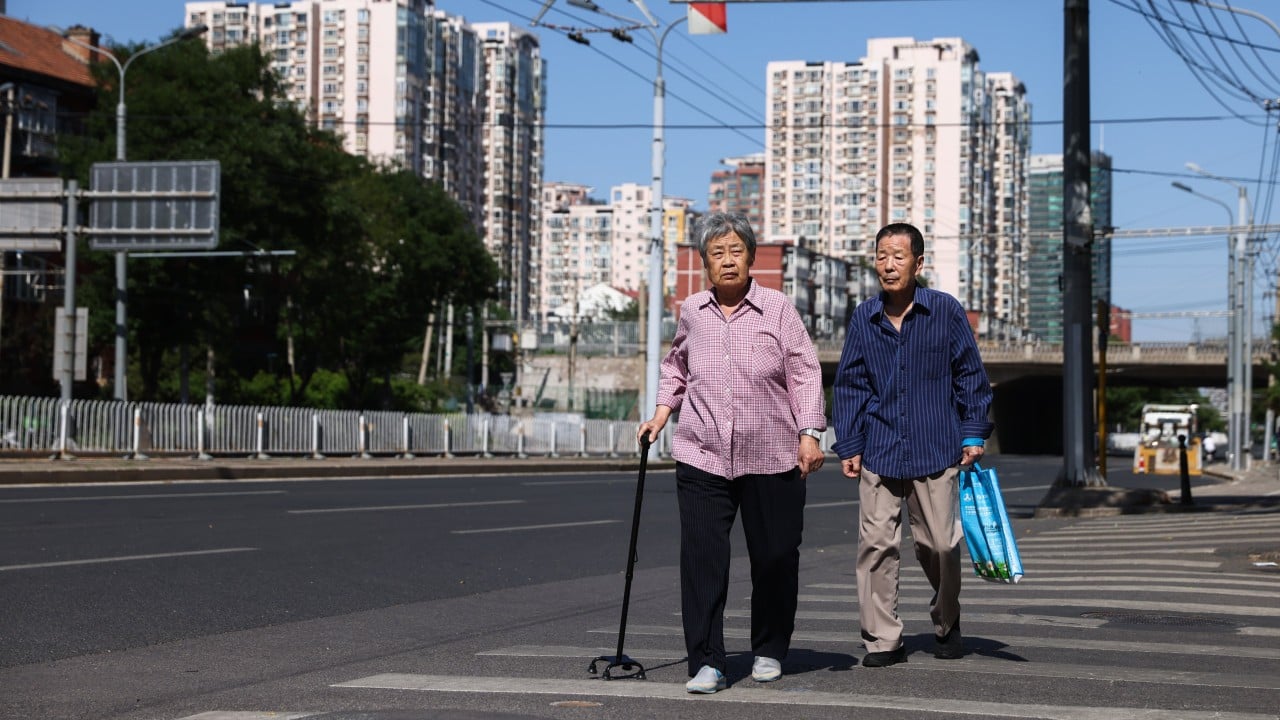
China is aging faster than any society in modern history. In 2022, the nation’s population shrank for the first time in six decades, a tipping point that arrived years ahead of official projections. By 2040, nearly thirty percent of the population will be over sixty. To visualize this, imagine a country where every third person you pass on the street is a retiree. The economic engine that lifted hundreds of millions out of poverty—a seemingly bottomless well of cheap, young labor—has run dry.
This is not a looming policy debate. It is a current, sharp economic reality. Yet, inside this demographic squeeze, a massive, quiet realignment of capital is underway. Where mainstream headlines see absolute catastrophe, venture capitalists and industrial engineers see a forced evolution. The crisis is birth rates; the opportunity is automation, specialized healthcare, and the total reinvention of domestic consumption.
The Ghost in the Assembly Line
To understand how a shortage of people transforms a business, you have to look at the margins. When labor is cheap, inefficiency is affordable. If a packing line slows down, you throw four more workers at it.
But when the working-age population contracts by millions of people each year, the math breaks. Wages rise, margins shrink, and factories face a brutal choice: automate or die.
This pressure has turned China into the world’s largest market for industrial robotics. The country now installs more robots annually than the rest of the world combined. Walk into a high-end electronics plant in Shenzhen today, and the human element is strangely sparse. You see mechanical arms operating with terrifying, silent precision under fluorescent lights, moving microchips with a steady cadence that no human hand could maintain over a twelve-hour shift.
This shift creates an booming sector for local tech firms. Foreign automation giants used to dominate the market. Now, domestic startups are engineering cheaper, more adaptable software and hardware tailored specifically for mid-sized factories that previously couldn't afford a single robotic arm. They are automating the mundane—sorting, welding, heavy lifting—out of sheer necessity.
The invisible stake here is the nature of work itself. We often fear that robots will steal our jobs. In this narrative, the reality is reversed. The robots are arriving because there is no one left to take the job.
The Economy of Longevity
The demographic shift changes more than just how things are made. It changes who buys them.
For decades, consumer brands focused entirely on the young. Marketing dollars chased the disposable income of twenty-somethings in tier-one cities. But the financial center of gravity is shifting toward the silver economy. The elderly population in China is not only growing; their financial profile is vastly different from previous generations.
The retirees of the 2020s and 2030s are the direct beneficiaries of China's economic boom. Many own their homes outright due to the privatization waves of the late nineties. They have pensions. They have savings. And increasingly, they are spending money on themselves rather than hoarding it entirely for their children.
This has sparked an explosion in sectors that barely existed fifteen years ago. Adult supplements, senior-friendly travel packages, and specialized medical devices are seeing double-digit growth. Insurance companies are rewriting their entire product lines, pivoting away from standard life policies toward complex long-term care insurance.
Even tech giants are rewriting their user interfaces. Apps like WeChat and Alipay now feature "elderly modes" with massive text, simplified navigation, and voice-assisted checkout systems. The digital ecosystem, once notoriously hostile to anyone born before 1970, is being retrofitted.
The Precision of Care
The most acute pain point of an aging society is caregiving. The traditional Confucian model of filial piety—where adult children care for aging parents at home—is colliding with the brutal reality of the one-child policy.
A single young couple today can find themselves financially and logistically responsible for four aging parents and their own children. It is an unsustainable structural weight. Economists call it the 4-2-1 problem.
Because human caregivers are scarce and expensive, tech companies are stepping into the void with healthcare infrastructure. We are seeing the rise of smart senior housing units equipped with non-invasive sensors. These systems monitor the breathing patterns of a resident sleeping in bed, track falls without invading privacy via cameras, and use predictive algorithms to alert medical staff before a health crisis occurs.
This is where the business potential gets deeply personal. It is easy to look at a spreadsheet showing senior housing construction metrics and see data points. But beneath that data is a profound human anxiety: the fear of growing old alone in a high-rise apartment, with an adult child stuck in an office three hundred miles away.
The Re-engineered Future
The transition is messy, expensive, and filled with friction. No amount of robotic automation can perfectly replace the consumer vitality of a young, growing population. The economic growth rates of the early 2000s are gone, likely forever.
But the narrative that China’s economic story ends with its demographic peak misses the actual activity on the ground. The crisis is acting as a catalyst, forcing an economy notorious for low-cost replication to pivot toward high-value innovation. The country is essentially running a massive, real-time experiment in whether technology can decouple economic growth from population size.
Back in Yiwu, Lao Chen’s factory floor looks different than it did five years ago. There are fewer voices, fewer smoke breaks, and less ambient noise. In the corner, three newly installed automated guided vehicles glide across the concrete, carrying heavy pallets of raw plastic to the molding machines without a single human driver.
The machinery keeps turning, adapting to an era where the most valuable resource is no longer the hands available to do the work, but the ingenuity used to replace them.