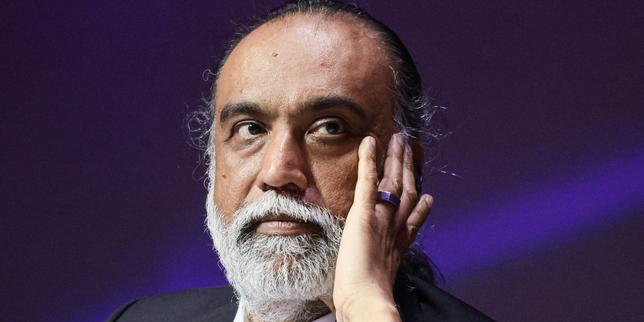
Technological breakthroughs rarely emerge from incremental adjustments to existing architectures; they require a fundamental shift in how physical and computational systems handle uncertainty. The career trajectory of Sebastian Thrun offers a blueprint for how complex, high-risk technical domains are forced across the threshold from theoretical research into operational reality. Deconstructing his work across autonomous vehicles, experimental research labs, and scalable education reveals a consistent operational methodology based on probabilistic modeling, low-cost failure loops, and infrastructure bypassing.
The Probabilistic Shift in Autonomous Navigation
Before the mid-2000s, robotics relied primarily on deterministic programming and hard-coded rules to interpret physical environments. This approach failed under real-world conditions because sensors are noisy, friction coefficients fluctuate, and physical obstacles rarely conform to geometric ideals. Thrun's structural contribution was shifting robotics from deterministic logic to probabilistic state estimation. For a more detailed analysis into similar topics, we suggest: this related article.
By applying Bayesian probability networks, Markov localization, and Simultaneous Localization and Mapping (SLAM) algorithms, autonomous systems stopped treating sensor data as absolute truths. Instead, they evaluated sensory inputs as distributions of probabilities, continuously updating their belief states as new data arrived.
The operational proof of this framework occurred during the 2005 DARPA Grand Challenge, where the Stanford Racing Team's vehicle, Stanley, navigated 132 miles of unpaved desert terrain autonomously to claim first place. The competitive advantage of Stanley was not superior mechanical hardware; it was a software architecture capable of filtering out sensor uncertainty in real time. This proved that complex navigation in unpredictable physical environments is fundamentally a computational inference problem rather than a mechanical control problem. For broader background on this topic, extensive analysis can be read on Mashable.
Institutional R&D and the Moonshot Architecture
Traditional corporate research laboratories often suffer from institutional friction, incrementalism, and risk aversion. When Thrun co-founded Google X alongside Sergey Brin and others, the objective was to institutionalize a high-failure, high-reward R&D pipeline that separated speculative engineering from core product revenue cycles.
The structural mechanics of a moonshot factory rely on three constraints:
- Radical Problem Definition: The target must address a massive societal or technical bottleneck rather than an immediate market optimization.
- Exponential Prototyping: Projects must bypass slow analytical deliberation by building physical or computational prototypes immediately to test against real-world friction.
- Decoupled Funding: Initial exploration must be isolated from quarterly financial pressures to allow for systemic engineering failures without commercial collapse.
This framework governed the development of diverse systems, ranging from Project Chauffeur (which evolved into Waymo) to data collection infrastructure like Project Ground Truth. By applying the algorithmic tolerance for error learned in robotics to enterprise R&D, these projects transformed high-risk anomalies into scalable operational products.
The Economics of Scale in Digital Education
The constraints of physical infrastructure have historically limited the distribution of high-tier technical expertise. Elite academic institutions optimize for scarcity, maintaining high admissions barriers that restrict the propagation of complex knowledge.
When Thrun co-founded Udacity and launched early massive open online courses (MOOCs), the intervention was an attempt to decouple instructional delivery from physical seat-time. While early MOOCs suffered from high attrition rates due to passive content consumption, the structural evolution of the model led to targeted nanodegrees and project-based credentialing.
The underlying economic principle mirrors software engineering: marginal distribution costs approach zero while intellectual capital scales infinitely. By transforming elite computer science curriculum into modular, asynchronous computational feedback loops, this model shifted professional training from localized physical institutions to decentralized, competency-verified networks.
Systemic Execution Strategy
To replicate these outcomes within modern technical organizations, leadership must transition from static planning to probabilistic iteration loops.
- Instrument all edge environments to capture high-frequency telemetry, ensuring that unexpected failures update the internal model rather than halting operations.
- Isolate exploratory engineering divisions from quarterly revenue dependencies to prevent risk mitigation from killing asymmetric upside.
- Replace fixed procedural checklists with dynamic performance feedback loops that measure system health against real-time variance.
Scale is achieved not by eliminating uncertainty, but by engineering systems that learn faster than the environments they operate within.