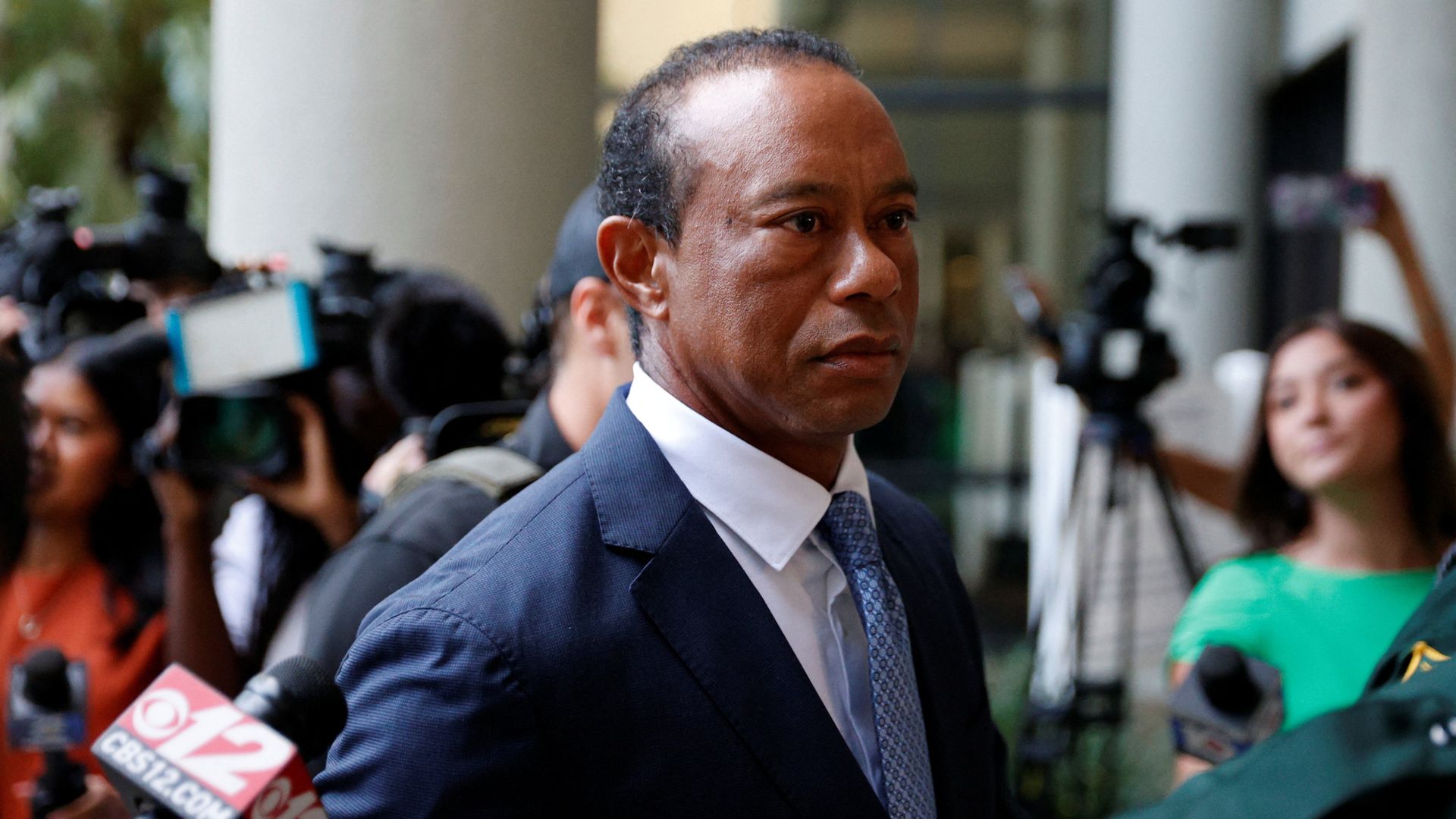
The headlines rolled in with predictable, sanctimonious fury. Tiger Woods caught a reckless driving charge, lost his license, and the moralists of the sports industrial complex immediately went to work. They wrote the standard obituary for his personal life, whispered about self-destruction, and acted as though a traffic infraction in Jupiter, Florida was clear evidence of a terminal spiritual decay.
They missed the point entirely.
Media coverage of athletes in crisis suffers from a lazy, pedestrian addiction to narrative arcs. Every misstep must fit neatly into a Greek tragedy or a redemption redemption-tour template. But looking at the legal fallout of a high-profile traffic stop through the lens of moral failure is intellectually bankrupt. It ignores how systems actually treat high-profile individuals, how municipal legal frameworks operate under the weight of celebrity, and how elite athletes process the brutal transition away from physical dominance.
We need to stop pretending this is a morality play. It is a logistics problem wrapped in media sensationalism.
The Myth of Special Treatment for Icons
The consensus narrative assumes that being Tiger Woods means you get a free pass from law enforcement. People love to spin yarns about velvet-rope justice, imagining that star athletes glide through the legal system while regular citizens bear the full weight of the code.
Reality works in precisely the opposite direction.
When you carry that level of visibility, local law enforcement does not look the other way; they look harder. Every officer on the beat knows that a mugshot of a global icon is a career-maker or a media circus piece. The standard operating procedure for a celebrity traffic stop involves maximum scrutiny, heavy-handed public disclosures, and zero discretionary leniency. Why? Because letting a major name off with a warning invites immediate internal affairs audits and public flogging for the department.
I have watched high-profile public figures get dragged through administrative meat grinders for minor infractions that would result in a polite warning for a standard commuter. The legal system does not give celebrities a break; it makes an example of them to prove its own impartiality. When Woods lost his driving privileges, the public cheered as if a dangerous menace had been hauled off the streets forever. In truth, the penalty was calibrated for maximum cultural impact, not proportional deterrence.
The Empty Rehearsal of Public Condemnation
Public moralizing over athlete misdemeanors serves one primary function: it gives armchair critics a cheap moral high ground. When a commentator dissects an athlete's driving record or personal turbulence, they are not engaging in rigorous legal analysis. They are performing a ritual cleansing.
Look at the mechanics of the coverage. Pundits parsed every clause of the police report as if it were a geopolitical treaty. They brought on legal analysts to debate the nuances of reckless driving statutes in Florida, completely ignoring the mundane reality that millions of Americans drive with points on their licenses, minor infractions, or mechanical oversights every single day. The only difference is that the average driver does not have a helicopter hovering over their sedan.
This obsession with perfection creates an impossible standard that warps how we view public figures. We demand superhuman output on the course or the field, and then express feigned shock when the human machinery required to sustain that level of focus cracks under the pressure of constant surveillance.
The Unspoken Cost of Elite Obsession
To understand why athletes run into these administrative walls, you have to look at the psychological architecture of obsession. Greatness does not come from a balanced lifestyle. It comes from pathological hyper-focus.
When you spend decades shutting out the rest of the world to master a single craft—controlling the spin of a golf ball in a twenty-mile-per-hour crosswind, managing physical pain that would put most people on permanent disability, enduring the relentless roar of galleries—you develop a specific kind of tunnel vision. That cognitive wiring does not simply switch off when you slide behind the steering wheel of an SUV.
The mistake is expecting an apex predator to operate like a suburban actuary. They do not calculate risk the way normal people do. Their entire career is built on calculating micro-risks that sane individuals would walk away from. When that mindset spills over into civic life, it looks reckless. To them, it is just another variable to manage, until the state steps in with a heavy-handed reminder that municipal courts do not care about your major championships.
Fixing the Conversation Around Celebrity Misconduct
If we want to move past the superficial hand-wringing, we have to change how we talk about athlete legal troubles. Stop treating them as spiritual interventions. Start treating them as administrative events involving flawed humans navigating an unforgiving public fishbowl.
The next time an iconic figure makes a misstep on the asphalt, do not look for the deeper meaning. There is no hidden message about the fragility of greatness or the collapse of an empire. There is just a tired guy in a squad car, a flashing light, and a media machine waiting to turn a common paperwork failure into a Greek tragedy for clicks.
The legal system did its job. The media did its job. And the public ate the cheap candy they were handed.
Next time, try looking past the sirens.