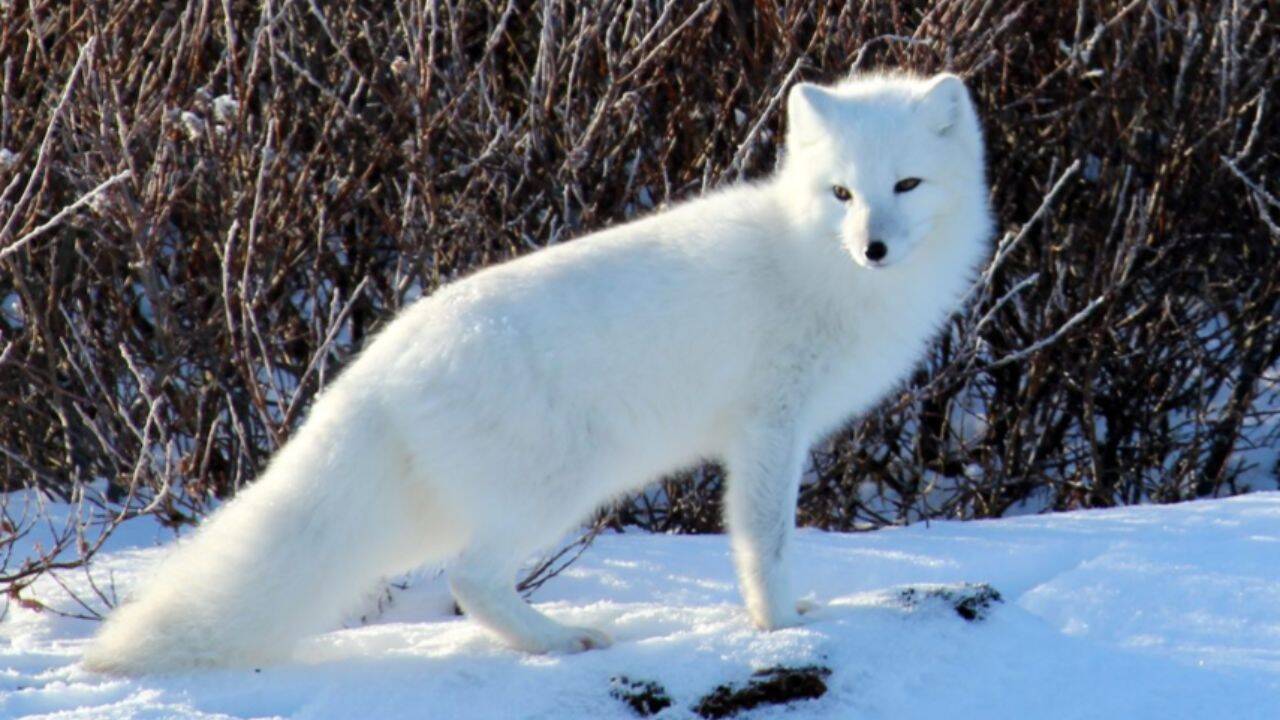
We love a clean moral fable. Humans mess with nature, cute predators are deployed for profit, innocent birds are slaughtered, and paradise turns to dust. It is a neat little bedtime story that makes everyone feel appropriately guilty about the industrial era.
There is just one problem. It is profoundly misleading. Discover more on a similar topic: this related article.
The prevailing narrative surrounding the Aleutian Islands claims that fur traders unleashed Arctic foxes onto hundreds of Alaskan islands, obliterating ground-nesting seabirds, cutting off their guano-based fertilizer, and single-handedly shifting lush grasslands into barren maritime tundra. Science-backed headlines scream about ecological devastation and how a tiny mammalian predator rewired an entire landscape.
I have watched billions of dollars get funneled into conservation projects built on this exact brand of linear, knee-jerk romanticism. I have seen researchers spend decades trying to reverse ecosystems to a pristine snapshot that only existed because of a temporary historical anomaly. More journalism by The New York Times highlights comparable perspectives on the subject.
Stop blaming the fox. The real ecological villain is our collective refusal to accept that nature is not a static museum exhibit.
The Flawed Premise of the Pristine Meadow
Let us look at the mechanics of the claim. Researchers like Donald Croll pointed out that islands overrun by foxes had a fraction of the seabird density compared to fox-free sanctuaries, leading to a massive drop in marine-derived nitrogen and phosphorus. Without millions of birds dropping guano across the turf, high-biomass grasses starved, allowing low-growing shrubs and tundra plants to take over.
Mathematically and chemically, the data checks out. Seabird guano is a potent fertilizer. Take away the guano, and nutrient-hungry grasses lose their competitive edge.
Here is what the standard narrative conveniently leaves out: those lush, waist-high grasslands were never a stable, permanent climax state. They were an extreme, hyper-fertilized ecological outlier maintained by an unnatural glut of seabird biomass. For millennia, ecosystems shift, pulse, and oscillate. When we cry foul over an island shifting from grass to tundra, we are mourning the loss of a localized fertilizer dump and calling it a tragedy of biodiversity.
Tundra is not a degraded wasteland. Tundra is a fully functional, highly adapted biome that covers vast swaths of the circumpolar north. Calling it a downgrade from grass is pure aesthetic bias. We prefer green meadows because they look like a golf course or a pastoral painting. Nature does not care about your landscaping preferences.
The Myth of the Balance of Nature
The lazy consensus relies on the myth of the pristine balance. The underlying assumption is that before human interference, every island existed in a state of static harmony.
Imagine a scenario where fur traders never touched the Aleutians. Seabird populations would still experience massive cyclical crashes driven by oceanic temperature shifts, El Niño variants, disease outbreaks, and pelagic food web collapses. Nature is a chaotic feedback loop, not a pristine clockwork mechanism.
When Russian and American traders dropped blue foxes onto those islands in the 18th and 19th centuries, they did not invent ecological disruption. They simply accelerated a trophic shift. The foxes acted as an apex terrestrial pressure on islands that had evolved in the absence of land predators.
To call this "ecological devastation" is to misunderstand how evolution operates under pressure. Species migrate, adapt, or disappear. The ground-nesting auklets and puffins lacked anti-predator defenses because they evolved on isolated rocks. That is a vulnerability, not a moral failing of the fox.
The Cost of Playing Eco-Gardener
Conservation groups love eradication programs. For decades, agencies like the U.S. Fish and Wildlife Service have poured millions into hunting down and exterminating foxes across the Aleutian chain to bring back the birds and the grass.
I have seen companies and government bodies blow fortunes on these heavy-handed interventions, operating under the hubris that we can reset the planetary clock whenever we feel nostalgic.
When you eradicate a resilient species from an island to engineer a preferred plant community, you are not restoring nature. You are gardening on a regional scale. You are picking your favorite organisms—fluffy puffins and tall grasses—and eliminating the rest to satisfy a human craving for ecological order.
Even worse, these eradication efforts often trigger cascading unintended consequences. Removing a top predator can unleash secondary pests, release rodent populations, or destabilize scavengers that adapted to the presence of foxes over the last two hundred years. Nature adapts to our interventions just as fast as it adapts to natural changes, and our track record of managing these ripples is abysmal.
Redefining the Real Question
People ask: "How do we undo the damage caused by historical fur farming?"
That is the wrong question entirely.
The right question is: "Why do we assume historical snapshots from the peak of the maritime fur trade era represent the only valid baseline for planetary health?"
If an island shifts from a grass-dominated state fueled by bird poop to a shrub-dominated tundra state fueled by internal nutrient recycling, it has simply transitioned to a different stable state. Both are real. Both are natural.
Stop trying to micromanage every square acre of the planet into a human-approved aesthetic. Let the tundra be the tundra.