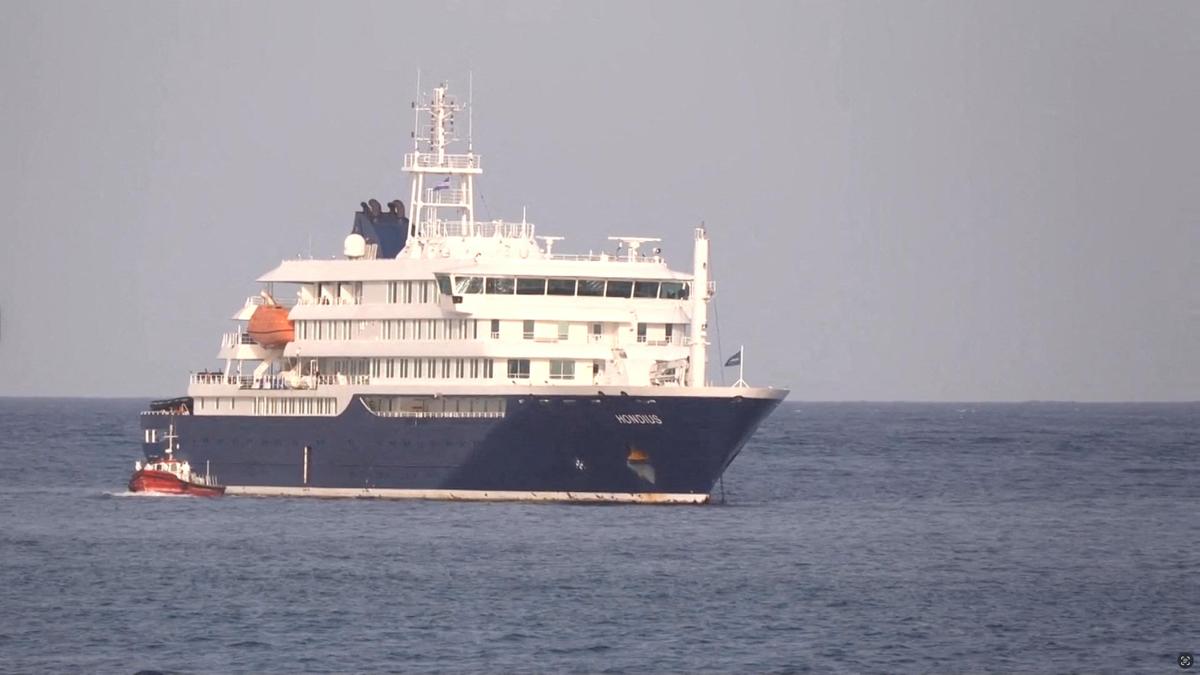
The detection of human-to-human hantavirus transmission within the closed-loop ecosystem of a cruise vessel represents a fundamental shift in the risk profile of Orthohantaviruses. Historically, these viral agents were categorized as "dead-end" pathogens in humans, requiring direct contact with rodent excreta (the primary reservoir) to initiate infection. However, the recent confirmation of two passengers infected with a strain exhibiting inter-human mobility signals a breakdown in the traditional barrier between zoonotic spillover and community spread. The primary challenge is not merely the presence of the virus, but the optimization of its transmission mechanics within the specific architectural and social constraints of maritime environments.
The Mechanistic Shift from Zoonosis to Anthropometric Spread
To understand the gravity of this development, one must isolate the variables that define hantavirus behavior. Most strains, such as Sin Nombre or Andes virus, utilize the respiratory route via aerosolized viral particles. The baseline assumption has always been that once the virus enters a human host, the viral load remains insufficient or the tissue tropism too specific to permit further shedding into a secondary human host.
The emergence of a strain capable of human transmission suggests a mutation in the viral surface glycoproteins, specifically $Gn$ and $Gc$. These proteins mediate cell entry and are the primary targets for the host immune response. If a mutation allows for higher viral titers in the upper respiratory tract—rather than focusing exclusively on the lower pulmonary system—the probability of aerosolized shedding through simple respiration or speech increases exponentially.
The Triple-Threat Architecture of Cruise Vessels
Cruise ships function as "incubation accelerators" due to three distinct structural factors:
- Recirculated Airflow Systems: Modern HVAC systems on vessels are designed for thermal efficiency, often recycling a significant percentage of internal air. If HEPA-grade filtration is not maintained or if the viral particle size is sub-micrometer, the ventilation system becomes a distribution network.
- High Contact Frequency (HCF) Zones: Dining halls, theaters, and gangways force a high number of unique interactions per hour. Unlike an office or a school, a cruise ship maintains this density 24 hours a day.
- The Immunity Gap: The demographic skew of cruise passengers often trends toward older populations or those with underlying comorbidities. This creates a "soft target" environment where the virus can achieve higher replication rates before the host immune system mounts a defense, thereby extending the infectious window.
Quantifying the Transmission Chain
In classical epidemiology, the $R_0$ (Basic Reproduction Number) for hantavirus was effectively zero. In this novel scenario, the $R_0$ must be recalculated based on the cruise ship’s internal dynamics. If two passengers were infected without direct rodent contact, we are observing a "Point Source" transition to a "Linear Chain."
The Viral Shedding Window
The clinical progression of Hantavirus Pulmonary Syndrome (HPS) or Hemorrhagic Fever with Renal Syndrome (HFRS) typically involves a long incubation period (1 to 8 weeks). The danger lies in the prodromal phase—the period where the patient feels mildly ill (fever, muscle aches) but is not yet incapacitated. If human-to-human transmission occurs during this phase, the asymptomatic or paucisymptomatic carrier can traverse the ship, depositing viral loads across multiple decks before being isolated.
Environmental Persistence Factors
Hantaviruses are lipid-enveloped viruses, making them susceptible to detergents but relatively stable in cool, moist environments. A cruise ship’s humidity control (often kept high for passenger comfort) actually aids the structural integrity of the viral envelope when suspended in droplets. This increases the "half-life" of the virus on surfaces like handrails, elevator buttons, and buffet utensils.
Operational Failures in Containment Protocols
The standard maritime response to outbreaks is usually calibrated for Norovirus (fecal-oral route) or Influenza (droplet route). Hantavirus requires a different level of biosafety.
- Failure of Surface-Only Sanitization: Norovirus protocols focus heavily on bleach-based surface cleaning. While effective, if the hantavirus strain is primarily aerosolized, surface cleaning provides a false sense of security while the primary transmission vector remains active in the air.
- The Diagnostic Lag: Standard onboard medical facilities are equipped for rapid strep or flu tests. Hantavirus requires RT-PCR (Reverse Transcription Polymerase Chain Reaction) or serological assays for IgM antibodies. The delay between the first "flu-like" symptom and a confirmed hantavirus diagnosis allows for multiple cycles of transmission.
Logic Framework for Pathogen Escalation
We can categorize the risk of this new strain using the Transmission-Pathogenicity Matrix.
- Level 1 (Zoonotic): Spillover from rodent to human. No further spread. (Standard Hantavirus).
- Level 2 (Stochastic): Occasional human-to-human spread in very close contact (e.g., household members).
- Level 3 (Systemic): Efficient human-to-human transmission in public settings. (The current cruise ship observation).
The jump from Level 1 to Level 3 on a vessel suggests that the virus has bypassed the need for a high "infectious dose." In previous outbreaks of Andes virus in South America, human transmission was limited to those in extreme proximity. If two passengers on a massive vessel—who may not have shared a cabin—contracted the virus, the "proximity threshold" has dropped significantly.
Supply Chain and Economic Contagion
The implications extend beyond public health into the logistics of global tourism and maritime trade.
- Port Refusal Risks: If a vessel is identified as a vector for a human-transmissible hantavirus, "Pratique" (the license given to a ship to enter a port) will be denied. This creates a "floating quarantine" scenario, which compounds the viral load on board as the population remains trapped in the infected environment.
- Labor Force Depletion: Unlike passengers, crew members live in even higher-density quarters (lower decks, shared cabins). An outbreak that incapacitates 10-15% of the crew renders the vessel non-functional, leading to mechanical and safety risks.
Addressing the Rodent-Human Interface
One must ask how the virus entered the ship initially. Cruise ships are not sterile environments. They take on massive amounts of dry goods, produce, and linens at every port.
- The Pallet Vector: Rodents or their excreta can be transported within shrink-wrapped pallets of food.
- Port-Side Infiltration: During docking, rats can board via mooring lines if "rat guards" (conical shields on ropes) are improperly installed or bypassed.
The fact that the virus then jumped from the initial introduction point to multiple passengers confirms that the ship’s internal "biosecurity perimeter" is porous.
Strategic Mitigation and Redesign
To neutralize this threat, maritime operators cannot rely on existing protocols. A structural overhaul of passenger health management is required.
Advanced Air Scrubbing
The transition to UV-C irradiation within HVAC ducts is no longer optional. UV-C light at the 254 nm wavelength disrupts the viral RNA of hantaviruses, effectively neutralizing them as they pass through the ventilation system. This addresses the aerosolized vector that manual cleaning misses.
Real-Time Bio-Surveillance
Vessels must implement environmental DNA (eDNA) or RNA monitoring in wastewater. By sampling the ship’s sewage, medical officers can detect the presence of specific viral fragments days before the first passenger presents at the infirmary. This "early warning system" allows for deck-by-deck lockdowns rather than total ship quarantine.
Redefining Quarantine Architecture
Future ship designs must include "Isolation Zones" with independent air handling systems and negative pressure rooms. Currently, "quarantine" usually means a passenger stays in their standard cabin, which is still linked to the general ventilation grid. This is a fundamental flaw in containment logic.
The identification of this hantavirus strain is a sentinel event. It indicates that the virus is exploring new evolutionary niches, moving away from its reliance on rodent hosts and toward human-centric circulation. The maritime industry serves as the primary testing ground for this transition.
Immediate action requires the mandatory installation of HEPA-14 filtration systems across all high-occupancy vessels and the implementation of mandatory PCR screening for any febrile illness reported at sea. If the "proximity threshold" for hantavirus has indeed lowered, the standard 2-meter social distancing rule is obsolete; the focus must shift entirely to air exchange rates and the sterilization of shared breathable volumes.