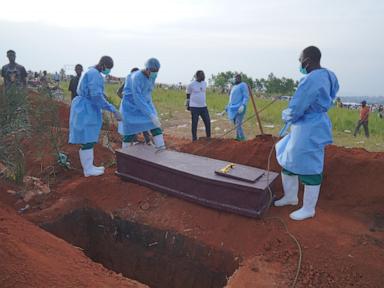
Epidemiological metrics from the Democratic Republic of Congo reveal an inflection point in global health security, with reported figures crossing 6,000 confirmed infections and 2,911 fatalities under the pressure of the Bundibugyo viral variant. This escalation outpaces historical velocity markers observed in prior Central African health emergencies, converting a localized pathogen transmission event into a structural crisis.
To deconstruct this trajectory, analysts must move past simple casualty counts and examine the mechanics of viral propagation, regional friction coefficients, and the failure modes of modern medical deployment logistics.
The Vector Mechanics of the Bundibugyo Strain
Unlike previous outbreaks dominated by the Zaire species—which historically triggered rapid, unmistakable clinical deterioration that simplified early identification—the current surge driven by the Bundibugyo variant presents diagnostic ambiguity. Initial symptoms manifest with lower baseline specificity, resembling endemic febrile illnesses such as malaria or typhoid.
This clinical overlap introduces a critical delay in the containment pipeline. The epidemiological reproduction number, or R0, multiplies unchecked when infected individuals remain mobile during the early infectious window.
The transmission velocity relies on three compounding variables:
- Diagnostic latency, which extends the duration an undetected carrier remains within community settings.
- Asymptomatic or mild initial presentations that evade standard community surveillance triggers.
- The absence of validated, widely distributed commercial vaccines or targeted monoclonal antibody therapeutics specifically certified for the Bundibugyo strain, neutralizing the primary pharmaceutical prophylaxis used in prior interventions.
Without a reliable biological circuit breaker, transmission chains expand outward from rural epicenters into densely populated transit corridors.
The Friction Coefficients of Regional Instability
Pathogen spread is not a random biological diffusion; it is dictated by human geography and sociopolitical friction. The eastern provinces of the Democratic Republic of Congo function as a high-density matrix of forced displacement, mineral extraction camps, and active armed conflict.
When state infrastructure is absent or contested, medical supply chains suffer from severe logistical degradation. Cold-chain storage requirements for biological products fail when electrical grids are unstable or targeted by local factions. Furthermore, civilian populations displaced by violence exhibit rational skepticism toward centralized state directives, frequently avoiding designated treatment units due to historical grievances or fear of isolation.
This institutional distrust creates a parallel feedback loop:
- Communities conceal symptomatic individuals to avoid forced quarantine or social stigmatization.
- Unreported mortality occurs outside clinical supervision, maximizing secondary transmission via traditional funerary practices.
- Rapid response teams attempting contact tracing face physical obstruction or security threats, blinding epidemiologists to real-time cluster formations.
Consequently, containment efforts are perpetually reactive, chasing transmission chains rather than preempting them.
The Economic and Operational Cost Function
Response optimization requires evaluating the resource allocation model governing international health interventions. Traditional deployments rely on heavy, centralized administrative structures that struggle to adapt to volatile security environments.
The marginal utility of deploying international personnel diminishes rapidly when local health workers are constrained by unpaid stipends, strike actions, and inadequate personal protective equipment. Human capital attrition within the affected zone reduces surveillance coverage, creating blind spots where transmission vectors multiply without record.
To alter this curve, resource distribution must shift from reactive hospitalization toward decentralized community-level triage and oral rehydration units managed by trusted local actors. Interventions that fail to account for local economic dependencies—such as forcing informal laborers into quarantine without food security guarantees—inevitably collapse under non-compliance.
Scale containment requires immediate transition from broad international oversight to agile, modular response units backed by localized supply chains. Funding mechanisms must bypass bureaucratic bottlenecks to ensure direct operational liquidity on the ground, stabilizing the workforce and securing critical access corridors before transmission velocity outstrips global intervention capacity.