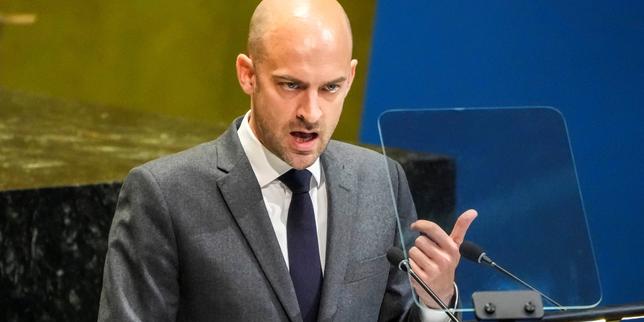
French Foreign Minister Jean-Noël Barrot publicly condemned what he termed an act of extremely grave intimidation against two French diplomats in Iran, marking a sharp escalation in the diplomatic standoff between Paris and Tehran. The incident targeted embassy personnel operating under standard diplomatic protections, exposing the expanding risks faced by Western officials remaining inside the country. Iranian security apparatuses have systematically tightened pressure on foreign missions, moving beyond the detention of private citizens toward direct harassment of credentialed diplomatic staff. This aggressive posture reflects a broader strategy by Iranian authorities to extract political concessions, reverse European sanctions, and counter intelligence operations across the Middle East.
Diplomatic immunity used to mean something in Tehran. That unwritten boundary has collapsed.
When security operatives aggressively intercepted two French diplomats, the action was not a rogue mistake by low-level agents. It was a calculated message sanctioned at high levels of the Iranian state security apparatus. For months, European embassies in Iran have reported heightened surveillance, aggressive tailing, and subtle physical threats targeting embassy personnel. The public declaration by Paris signals that behind-the-scenes diplomatic notes no longer suffice to keep foreign staff safe.
The Strategy Behind Direct Diplomatic Harassment
State-sanctioned intimidation of diplomats does not happen in a vacuum. Iranian intelligence agencies follow a structured protocol designed to create psychological pressure while maintaining technical plausible deniability. By harassing diplomats on the street or staging confrontational vehicle stops, Tehran tests the psychological boundaries of foreign diplomatic missions.
The objective is twofold. First, Iranian authorities aim to restrict the movement of foreign envoys, effectively blinding Western intelligence networks that rely on embassy personnel for ground-level reporting on internal dissent and military logistics. Second, Tehran uses aggressive tactics as a bargaining chip to counter Western diplomatic maneuvers in international forums.
European nations have progressively tightened economic sanctions, targeted Iranian drone export supply chains, and backed international resolutions criticizing Tehran's nuclear program. In response, Iranian intelligence services have shifted their focus. Private citizens and dual nationals were once the primary targets for hostage diplomacy. Now, accredited diplomats find themselves caught in the exact same crosshairs.
Hostage Diplomacy Moves to the Accredited Diplomatic Corps
For years, the Iranian regime relied on detaining foreign tourists, academics, and dual citizens under fabricated charges of espionage. This practice gave Tehran leverage during prisoner swaps and financial negotiations. French citizens Cécile Kohler and Jacques Paris, detained in Iran since May 2022, remain key examples of this strategy.
When the strategy of detaining private citizens encounters diminishing returns or triggers broader international isolation, the regime increases the stakes. Targeted harassment of serving diplomats represents an attempt to force immediate political concessions from foreign capitals.
The security protocol for foreign staff operating inside Tehran has changed drastically as a result. Embassies now operate under near-lockdown conditions. Simple movements across the capital require multi-vehicle escorts and real-time tracking from security operations centers in European capitals.
The physical risk to diplomats is real. Intelligence officers routinely stage vehicle collisions, force diplomatic vehicles off roads, or deploy aggressive plainclothes operatives to surround officials in public spaces. These encounters are filmed by Iranian operatives to manufacture pretext for formal complaints or potential expulsions.
The Friction Point Between Paris and Tehran
Relations between France and Iran have deteriorated across multiple operational fronts. Paris has consistently pressed Iran over its uranium enrichment levels, its supply of ballistic missiles to foreign actors, and its harsh crackdown on domestic protests. Tehran views France not merely as a critic, but as an active adversary coordinating European opposition to the Iranian state.
European diplomacy toward Iran has splintered into competing priorities. France, Germany, and the United Kingdom have attempted to balance strict nuclear oversight with open channels for crisis management. Yet, Iranian hardliners view any Western presence in Tehran as an existential threat to internal state security.
The French Ministry for Europe and Foreign Affairs has summoned Iranian diplomatic representatives in Paris to deliver formal protests. Diplomatic expulsions usually follow such summonses. When a host country aggressively targets foreign diplomats, the standard international response under the Vienna Convention on Diplomatic Relations involves tit-for-tat expulsions of intelligence officers operating under diplomatic cover abroad.
French intelligence services have long monitored Iranian operations on European soil. Past Iranian plots targeting dissidents in Western Europe led to quiet expulsions of Iranian embassy staff from major European capitals. The latest confrontation in Tehran accelerates this cycle of retaliatory action.
The Breakdown of the Vienna Convention Protections
The Vienna Convention of 1961 guarantees that the person of a diplomatic agent shall be inviolable, protecting envoys from any form of arrest or detention. Article 29 explicitly mandates that the receiving state shall treat diplomats with due respect and take all appropriate steps to prevent any attack on their person, freedom, or dignity.
Tehran has repeatedly tested the limits of this international treaty. From the 1979 storming of the American Embassy to the 2011 attack on the British Embassy compound, the Iranian state has used direct aggression against diplomatic personnel as a political tool.
The recent harassment of French diplomats demonstrates that the guarantees enshrined in the Vienna Convention are effectively suspended inside Iran. Security forces act with complete impunity, knowing that domestic courts will never hold them accountable for actions against foreign officials.
Foreign ministries across Europe now face a grim operational choice. They can pull non-essential diplomatic staff out of Iran, reducing their intelligence gathering capacity and diplomatic footprint to a minimum. Alternatively, they can keep embassies operational while accepting that their staff will endure continuous, high-risk physical threats.
Western Security Responses to Increasing Threats
The safety of diplomatic personnel in hostile environments requires constant adaptation. Western nations have overhauled their security doctrines in response to state-sponsored harassment in Iran and similar high-threat nations.
Embassy security teams no longer rely solely on host-nation protection. European intelligence agencies deploy specialized close protection teams to escort ambassadors and senior diplomats through high-risk zones.
Standard operating procedures now include strictly monitored travel corridors inside Iran. Diplomatic personnel are forbidden from traveling alone or using unencrypted communications devices. Mobile phones, vehicles, and living quarters are assumed to be compromised by state surveillance teams.
Counter-surveillance driving techniques have become mandatory training for foreign service officers assigned to high-risk postings. When Iranian operatives attempt to corner or intimidate diplomatic vehicles, drivers are trained to avoid stopping in isolated areas and instead head immediately toward neutral public spaces or back to embassy compounds.
The Broader Impact on Middle Eastern Stability
The deterioration of diplomatic channels in Tehran leaves very little buffer during regional military crises. When diplomatic channels close or become dangerous to operate, the risk of intelligence miscalculations rises exponentially.
Embassies serve as critical pressure valves during international confrontations. They allow backchannel communications, facilitate silent negotiations, and prevent minor security incidents from spiraling into direct military conflict. By systematically harassing French diplomats, Iran intentionally damages one of the few remaining diplomatic bridges to Western Europe.
This strategy creates severe domestic consequences for Iran as well. Economic isolation deepens when foreign governments issue severe travel warnings and recall diplomatic personnel. Western businesses completely abandon market opportunities, and international banking restrictions become permanent.
The Iranian regime appears willing to trade economic normalisation for absolute domestic security control and aggressive foreign policy positioning. Iranian leaders calculate that Western nations lack the political endurance for sustained confrontation, betting that European capitals will eventually seek quiet de-escalation rather than risk a total diplomatic rupture.
What the Diplomatic Rift Means for Detained Westerners
The immediate casualties of this diplomatic crisis are the foreign nationals currently imprisoned inside Iranian facilities. When diplomatic relations collapse into mutual harassment and formal expulsions, negotiations for the release of detainees stall completely.
Hostage negotiations require stable, high-trust diplomatic channels that operate far from public view. French negotiators rely on regular consular access to evaluate the health and safety of detained citizens like Cécile Kohler. When Iranian authorities target French diplomats, consular visits are routinely delayed, blocked, or canceled as a secondary form of pressure.
Families of Western detainees find themselves caught in the middle of these intelligence games. Every diplomatic spat between Paris and Tehran leads directly to harsher detention conditions for Western prisoners inside Evin Prison and other security facilities.
Iranian state security services use the physical condition and legal status of foreign prisoners as direct leverage against European foreign ministries. If European governments refuse to yield on sanctions or diplomatic policy, Iranian courts lengthen prison sentences or levy new, fabricated charges against Western hostages.
The Hard Reality Facing European Foreign Policy
Europe’s long-standing policy of constructive engagement with Iran is dead. For decades, European nations argued that maintaining trade, dialogue, and diplomatic concessions would moderate the Iranian regime’s behavior over time.
That theory has failed completely. Tehran’s willingness to directly target accredited diplomats proves that the regime prioritizes intelligence posture over international legitimacy. European governments now recognize that traditional diplomatic norms do not deter Iranian security agencies.
France and its European allies are left with limited options. They can impose harsher individual sanctions on Iranian intelligence commanders, expel registered Iranian diplomats from European capitals, and formally advise all European citizens to leave Iran immediately.
Reducing embassy operations in Tehran to a skeleton crew is the logical outcome. While this step severely limits ground intelligence and consular assistance, it removes the physical leverage that Iran holds over European foreign policy through the harassment of diplomatic personnel.
The aggressive confrontation faced by French diplomats in Tehran highlights the dangerous reality of modern statecraft in hostile territory. Diplomatic immunity provides zero protection when a host state decides to use street-level intimidation as a tool of foreign policy. European nations must now accept that operating inside Iran requires treating diplomatic missions as high-risk security deployments rather than standard foreign policy postings.