Recent military escalations across the Persian Gulf region demonstrate how localized kinetic friction in critical maritime chokepoints rapidly cascades into multi-state territorial confrontations. The operational sequence initiated by United States strikes on Iranian missile launchers stationed on Larak Island has triggered synchronized retaliatory vectors against foreign military installations in Jordan and the United Arab Emirates. Understanding this strategic loop requires analyzing the underlying security architecture, the mechanics of maritime interdiction, and the systemic vulnerabilities exploited during cross-border asymmetric responses.
The Catalyst Of Maritime Security Interdiction
The current crisis stems from operational friction within the Strait of Hormuz, a primary global trade corridor for hydrocarbons. United States Central Command forces executed precision kinetic strikes against two Iranian missile launchers on Larak Island. Intelligence assessments indicated that Islamic Revolutionary Guard Corps units were staging sea mines intended for deployment within international shipping lanes.
From a strategic standpoint, interdicting these assets represents a defensive measure to preserve the free flow of commercial transit. However, targeting sovereign island territory shifts the conflict model from passive deterrence to active suppression. The cost function for Tehran involves balancing the economic disruption of choked trade against the territorial sovereignty of its coastal infrastructure. When Washington eliminated the minelaying apparatus, the calculus dictated an immediate kinetic response to re-establish deterrence parity.
The Mechanics Of Asymmetric Retaliation
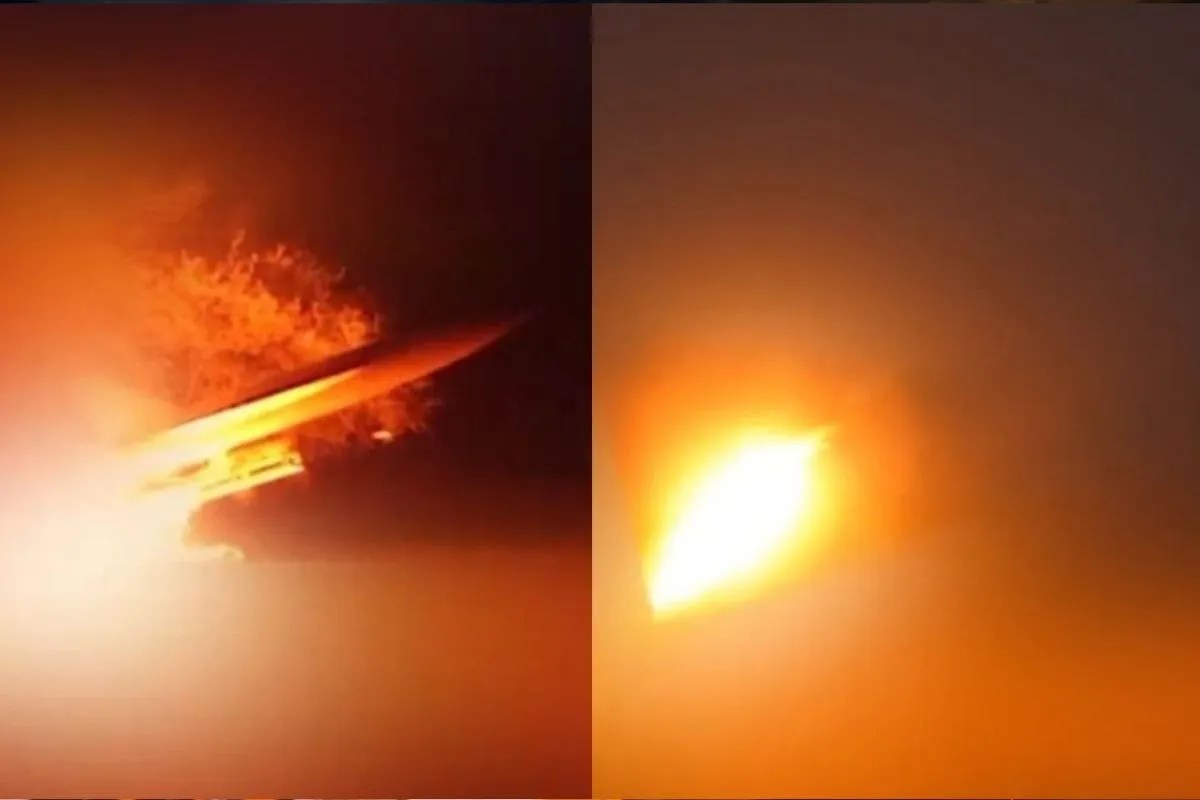
Tehran structured its reprisal through a distributed vector model, striking dual targets to maximize geopolitical signal-to-noise ratios. The operations targeted the King Hussein and Al-Azraq airbases in Jordan via ballistic systems, alongside a coordinated drone assault directed at the Al Minhad Air Base in the United Arab Emirates.
The selection of these nodes follows a specific logic of regional exposure:
- Logistical Interdependence: Facilities such as Al Minhad function as essential transport and logistics hubs supporting foreign military personnel and operational assets in the Gulf.
- Geographic Proximity: Host nations absorbing these strikes face immediate air-defense dilemmas, forcing local militaries to intercept inbound munitions over territorial waters or populated landmasses.
- Deterrence Signaling: By projecting force outside its borders, Tehran attempts to impose political and security costs on regional states hosting external military infrastructure.
The United Arab Emirates Ministry of Defence reported the successful interception of an unmanned aerial vehicle over territorial waters, while official statements contested the extent of base-level penetration. Meanwhile, Jordanian armed forces neutralized multiple incoming ballistic trajectories before they reached population centers. This dynamic highlights the operational burden placed on host-nation air defense grids, which must absorb multi-tier saturation attacks triggered by bilateral disputes between Washington and Tehran.
Economic Transmission Channels
Kinetic activity in the Hormuz corridor immediately propagates through global energy markets due to structural supply inelasticity. Following the Larak Island engagement and subsequent regional missile exchanges, benchmark crude indices registered immediate upward pressure. Brent crude futures advanced toward the upper eighties per barrel, while West Texas Intermediate reacted similarly as traders priced in potential shipping disruptions.
The transmission mechanism relies on three distinct risk premiums:
- Transit Insurance Risk: Higher perceived hazards for commercial tankers navigating the Persian Gulf increase underwriting costs.
- Physical Blockade Risk: The physical threat of sea mines or anti-ship missile deployment creates potential supply withholding bottlenecks.
- Escalation Escalation Risk: Markets must continuously re-price the probability of protracted regional war involving major oil infrastructure.
If pricing breaks through established technical resistance thresholds, macroeconomic inflationary pressures will follow, converting localized military friction into global economic drag.
Strategic Trajectory And Systemic Constraints
The interaction between United States naval enforcement and Iranian asymmetric force projection establishes a precarious equilibrium. Neither side desires a total war that permanently closes the Strait of Hormuz, yet both operate under doctrines that mandate a visible response to perceived escalatory steps.
Regional states caught in the middle face an acute dilemma: maintaining host-nation security agreements with Washington invites retaliatory vectors from Tehran, while failing to intercept inbound threats compromises domestic airspace sovereignty. The containment of this crisis depends on the threshold limits of future kinetic exchanges. As long as maritime interdiction efforts persist in the Hormuz corridor, auxiliary strikes against regional logistics hubs will remain the primary mechanism through which Iran signals its cost-imposition strategy.