Modern military engagement within contested border corridors relies less on continuous territorial occupation and more on dynamic zone clearance models. The recent directive issued by the Israel Defense Forces instructing residents of Arab Salim in southern Lebanon to vacate illustrates a systemic shift in tactical doctrine. Rather than maintaining static frontline positions, military planners utilize localized displacement directives as precision instruments to decouple adversary combatants from civilian infrastructure. This analytical deconstruction examines the underlying mechanics of forced displacement orders, the operational logistics of retaliatory strikes following asymmetric incursions, and the broader geopolitical friction points defining the southern Lebanon theater.
The Operational Trigger Mechanism
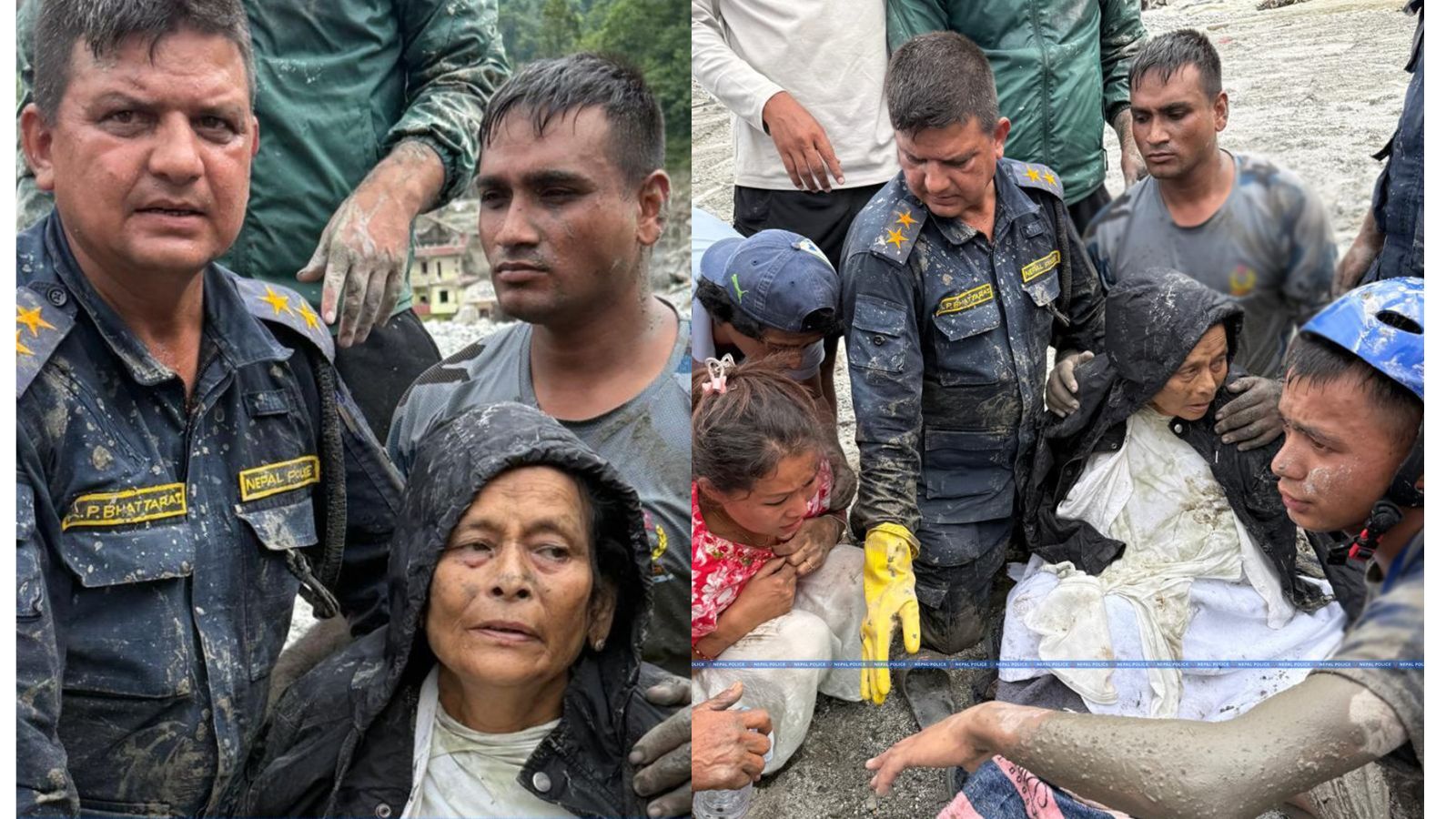
Every forced displacement order operates within a specific cause-and-effect chain. In the case of Arab Salim, the immediate catalyst was identified as a dual-drone launch by Hezbollah targeting forces stationed within a designated security zone. From an operational standpoint, asymmetric actors use unmanned aerial vehicles to test perimeter integrity, force resource reallocation, and exact psychological attrition. You might also find this connected article insightful: How Chandrika Shrestha Survived Eleven Days Trapped in Nepal Flood Debris.
The military response follows a predictable computational loop:
- Perimeter probe or vector attack via drone or projectile.
- Threat vector triangulation and identification of launch nodes within civilian-adjacent settlements.
- Pre-strike notification and displacement mandates designed to mitigate international legal liabilities while clearing the tactical workspace.
- Kinetic execution against targeted structures or suspected infrastructure.
When a drone vector originates near municipal boundaries like Arab Salim or Nabatieh al-Fawqa, the intervening terrain presents severe urban warfare challenges. Dense structures provide concealment for mobile launch platforms, rendering traditional intelligence, surveillance, and reconnaissance assets less effective without local ground validation. Consequently, evacuation mandates function as a binary filter, transforming a populated municipal zone into a cleared operational theater where any movement can be classified through a targeting lens. As discussed in recent reports by The Washington Post, the results are worth noting.
The Structural Mechanics of Security Zones
Establishing and maintaining security buffer zones requires continuous enforcement mechanisms. Military strategy in southern Lebanon has increasingly gravitated toward creating enforced exclusion parameters, often spanning multiple kilometers inward from the international boundary. These zones create a contested dead-space designed to intercept threats before they reach sovereign territory.
However, the geometric expansion of these zones introduces severe logistical friction. As exclusion boundaries stretch deeper into sovereign Lebanese territory, the population density of displaced persons increases exponentially. Municipalities adjacent to these corridors absorb massive demographic inflows, straining local municipal services, supply chains, and emergency response networks. The cost function of security zones is therefore measured not only in munitions expended or personnel deployed, but in the regional economic collapse and the permanent structural alteration of border communities.
The friction points within this security model are stark:
- Spatial compression forces civilians into increasingly narrow safe zones, amplifying humanitarian vulnerability.
- Intelligence lag allows mobile units to strike and relocate before kinetic air assets can establish target acquisition.
- Retaliatory cycles harden civilian populations against diplomatic resolution, hardening political opposition to any negotiated buffer arrangements.
Asymmetric Attrition and Tactical Recalibration
The strategic utility of localized evacuation orders extends beyond immediate force protection; it forms part of an ongoing war of attrition. Hezbollah maintains a dispersed network of underground infrastructure and launch sites throughout southern Lebanon. By systematically issuing displacement warnings and executing precision strikes against identified nodes, military planners attempt to systematically degrade this distributed architecture.
Yet, this dynamic reveals a fundamental strategic paradox. Each forced evacuation and subsequent air raid deepens the structural dependency of southern populations on external aid while solidifying the operational justification for continued asymmetric resistance. The tactical gains achieved by neutralizing a localized drone launch team are frequently offset by the strategic entrenchment of the adversary's narrative regarding territorial sovereignty and civilian displacement.
Effective analysis of this theater requires looking past the daily cadence of strikes and warnings. The true metric of success is not measured in single buildings destroyed or evacuation directives issued, but in the long-term sustainability of containment versus the inevitability of escalation escalation loops. As long as the underlying technological and tactical parity remains skewed toward asymmetric disruption, localized displacement orders will remain the primary kinetic tool of border management, carrying heavy long-term political and humanitarian externalities that standard strategic metrics fail to capture.