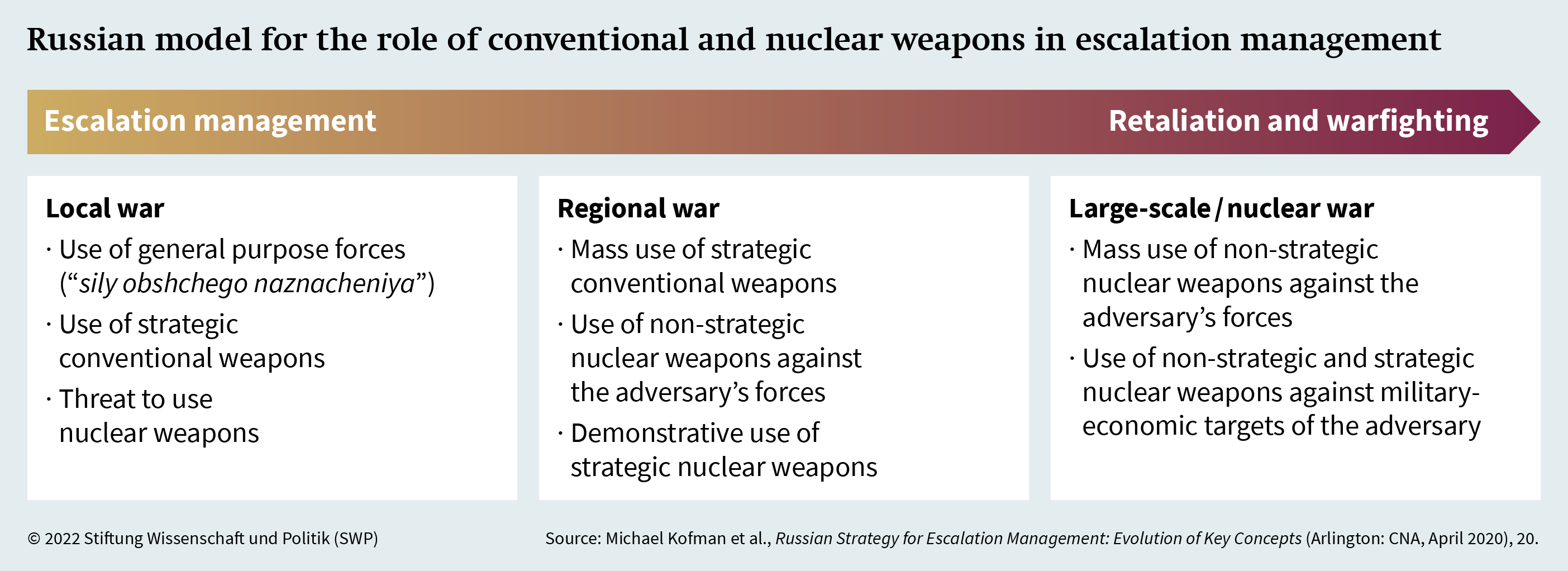
Recent Russian drone strikes targeting infrastructure near the Ukrainian border with Poland have fundamentally altered the calculus of deterrence along the alliance's eastern flank. When a strike destroyed a locomotive on the Kyiv Warsaw line just kilometers from sovereign NATO territory, the event shifted from a localized regional conflict metric to a structural systemic risk. The official declarations by alliance leadership vowing accelerated military provisions are not merely diplomatic posturing; they represent an operational reaction to a measurable shift in Kremlin escalation thresholds.
To understand why this proximity triggers an institutional response, one must analyze the security architecture of the alliance's eastern frontier. Poland functions as the primary logistical conduit for material aid entering Ukraine. Any kinetic event within striking distance of this corridor introduces friction into supply chains, increases insurance and transit risk premiums, and tests the credibility of collective defense commitments. The strategic problem facing alliance planners is not merely defending a fixed border, but managing the velocity of an escalation spiral where proximity increases the probability of miscalculation.
The operational response centers on three distinct mechanisms designed to absorb this shock.
The first mechanism is the accelerated execution of equipment delivery pipelines, bypassing traditional bureaucratic bottlenecks through centralized coordination hubs. By utilizing synchronized procurement frameworks, member states can replenish frontline requirements without depleting their domestic strategic reserves.
The second mechanism involves the institutionalization of forward-deployed logistics and training architectures. Stationing coordination personnel closer to the point of friction reduces response latency and ensures that material assistance matches real-time battlefield consumption rates rather than historical projections.
The third mechanism is the signaling of political cohesion. When a kinetic event occurs on the threshold of sovereign territory, the alliance faces a binary choice: absorb the provocation with rhetorical condemnation or alter the cost function for the aggressor by expanding the volume and technical sophistication of supplied systems. The public commitment by leadership to increase support confirms that the alliance has selected the latter, choosing to offset geographic proximity with qualitative superiority in materiel.
Yet, this strategy operates under severe constraints. Escalation management requires a delicate balance between deterrence and inadvertent provocation. Expanding the scope of military assistance increases the target profile of logistics networks inside transit nations while testing the limits of air defense saturation. Furthermore, political friction within frontline states regarding resource allocation and domestic security priorities creates vulnerabilities that external actors actively attempt to exploit through hybrid warfare, including cyber operations and infrastructure sabotage.
The long-term viability of this approach depends entirely on industrial capacity and supply chain resilience. As the conflict transitions into a war of attrition driven by technological adaptation, the ability to manufacture interceptors, heavy armor, and long-range guidance systems at scale becomes the ultimate determinant of strategic success.
The immediate imperative for alliance planners is to harden the logistics corridors against both kinetic spillover and hybrid disruption. The strategic play moving forward is to decouple supply chain security from local tactical fluctuations by establishing redundant transit routes and deploying integrated air defense shields that treat the entire eastern border as a single, indivisible zone of collective defense.
Fubu Toy review
This video discusses the geopolitical reactions and security alerts triggered by recent developments involving NATO and the eastern European border region.


