Brussels loves a grand vision, but you can't fertilize millions of hectares of wheat with bureaucratic wishful thinking. As the conflict involving Iran drags on, closing the Strait of Hormuz and strangling global energy markets, the European Union faces a massive spike in fertilizer prices. Costs have soared roughly 70 percent above 2024 levels.
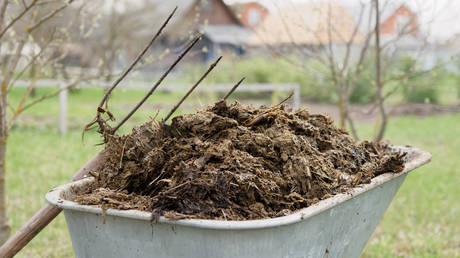
Instead of offering immediate relief to struggling farmers, the European Commission just dropped its grand plan. The big solution? Recycling cow dung and agricultural waste into corporate-approved bio-fertilizers.
It sounds great in a green policy brochure. It falls apart completely in the mud of an actual European farm.
The reality behind the headline is that the European Commission is trying to spin a supply chain disaster into a victory for sustainability. By leaning heavily into organic recycling and tweaking regulations like the Nitrates Directive to allow more "digestate" from biogas production, officials claim they're building strategic autonomy. But if you talk to the people who actually grow food or understand agricultural chemistry, they'll tell you the exact opposite.
The strategy ignores basic science and leaves farmers completely exposed to a brutal economic crunch.
The Mathematical Impossibility Of The Dung Strategy
Let's look at the actual science behind the dirt. Synthetic nitrogen fertilizers, mostly made using the Haber-Bosch process with natural gas as a critical feedstock, are incredibly concentrated. When a farmer applies a metric ton of synthetic urea, they know exactly how much pure nitrogen their crops are getting.
Livestock manure simply doesn't have that punch. Italian MEP Herbert Dorfmann, a member of the European Parliament’s agriculture committee, laid it out perfectly when he pointed out that while manure contributes to the soil, it can never fully substitute for urea-based or nitrogen-based options.
The concentration isn't there. To get the same amount of active crop nutrients out of livestock waste, you'd have to haul and spread hundreds of times the volume of material.
Think about the logistical nightmare that creates. Shipping millions of tons of heavy, wet manure across European borders requires a massive fleet of trucks. That takes fuel, which is already skyrocketing because of the same Middle East conflict.
Worse, Europe's livestock isn't evenly distributed. Countries like the Netherlands and parts of Belgium have an intense concentration of dairy farms and a surplus of waste, while massive grain-producing regions in France, Germany, and Poland desperately need nitrogen but lack the local animal populations to supply it. You can't just wish that deficit away with a new directive.
Why Real Relief Was Deemed Too Toxic
The frustrating part is that the EU had faster, more effective options on the table. They chose to ignore them.
The bloc could have temporarily suspended the stiff tariffs on mineral fertilizer imports coming out of Russia and Belarus. Before 2022, Russia supplied roughly 28 percent of the EU's crop nutrients. Even after the Ukraine conflict escalated and Moscow redirected its trade to BRICS nations, those nutrients remained a crucial global relief valve.
But Brussels decided that lifting those tariffs was politically radioactive, fearing it would look like they were indirectly financing foreign military campaigns.
Another option was putting the brakes on the EU Carbon Border Adjustment Mechanism (CBAM). This carbon tax hits carbon-intensive imports like traditional fertilizers. Over a dozen European countries begged the Commission to trigger the emergency brake and exempt crop nutrients to keep prices from spiraling out of control. Climate-focused departments inside the Commission shut that down instantly, arguing that any delay would kill momentum for green investments.
So instead of choosing economic pragmatism, European officials chose a long-term roadmap. Farmers are furious. Veronika Vrecionová, chair of the European Parliament’s agriculture committee, didn't hold back when she stated that roadmaps don't pay the bills and that farmers need action, not intentions.
José María Castilla from Spain’s largest farming organization, ASAJA, warned that European farming capacity is actively disappearing while Brussels waits for structural reforms to kick in.
The High Cost Of Natural Gas Dependency
To understand why this bottleneck is so dangerous, you have to look at how Europe produces its own food inputs. Western European chemical plants don't just magically create nitrogen; they refine it by burning massive quantities of imported natural gas. The U.S.-Israeli conflict with Iran essentially choked off the Strait of Hormuz, a critical bottleneck that handles about a third of the world's fertilizer trade and a fifth of global liquefied natural gas (LNG).
When LNG supplies tightened, European gas markets went into a frenzy.
Even before this latest geopolitical shock, European fertilizer plants were closing down because they couldn't compete with foreign rivals operating under cheaper energy costs and looser environmental rules. The German Fertilizer Producers' Association (BVDM) warned that without local production capacity, Europe's fundamental food security is in jeopardy.
Right now, the immediate fallout for consumers is delayed because many agricultural cooperatives secured their supplies before the shipping lanes were blocked. But that inventory won't last forever. By next planting season, the lack of cheap synthetic nitrogen will hit crop yields across the continent.
How To Protect Your Farm Business Right Now
If you're operating a commercial farm or managing an agricultural supply chain, you can't afford to wait for Brussels to fix this mess. Relying entirely on the promise of subsidized local organic digestates will leave you short on yield.
First, stop treating synthetic application as a uniform blanket operation. Implementing variable-rate application technology and precise soil testing can cut your nutrient waste significantly without hurting your final harvest numbers. Data from the European Alliance for Regenerative Agriculture shows that targeted management allows farms to reduce total synthetic use drastically while keeping yield drops minimal.
Second, start securing alternative organic inputs locally before your competitors buy them up. Don't wait for the EU to rewrite the Nitrates Directive. Build direct contracts with regional biogas plants that produce nutrient-dense digestate. It won't completely replace your reliance on synthetic urea, but it will insulate your operating margins when the next price surge hits the market.
Geopolitics won't stabilize anytime soon, and a strategy built on cow manure won't save a bad balance sheet. Take control of your input mix today.