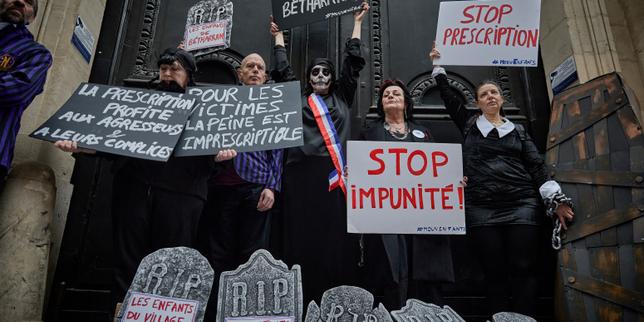
The clock shouldn't protect a rapist, but across most of Europe, it still does. For decades, survivors of sexual violence have hit a brick wall known as the statute of limitations. You finally find the strength to speak up, maybe decades after the trauma, only for a judge to tell you that you're too late.
The European Union just attempted to fix this patchwork of national laws. The European Parliament pushed hard for a massive change, arguing that when it comes to the sexual abuse of minors, time should never run out. But the final consensus from Brussels didn't go that far. While the EU is forcing member states to stretch their legal timelines, it outright rejected total imprescriptibilité—the legal term for making a crime permanently prosecutable. Expanding on this theme, you can also read: The Secret Washington Oil Deal Keeping Tehran Alive.
This compromise leaves a bitter taste for advocates, but it exposes a fundamental reality. Europe's legal systems are caught between the psychological reality of trauma and the ancient legal principle of a defendant's right to a timely trial.
The New European Legal Baseline
Right now, seeking justice for sexual violence in Europe is a geographical lottery. If you were abused as a child in Belgium, the statute of limitations is completely gone. If it happened in a neighboring country, the clock might expire before your 40th birthday. Analysts at NPR have also weighed in on this matter.
Recent research from advocacy groups like Child USA highlights the absurdity of these short windows. The data shows the average age for a survivor to fully process and disclose childhood sexual abuse is 52 years old. Under old rules in multiple EU nations, those survivors were legally locked out of court decades prior.
The new EU directives force a higher floor. Member states must now adjust their penal codes so that the statute of limitations for sexual offenses against minors lasts long enough for victims to act well into adulthood. The goal is to standardize the minimum amount of time a survivor has to heal, process, and file charges.
But stretching the timeline isn't the same as removing it. The European Commission and several powerful member states dug their heels in. They agreed that the clock should tick slower, but it must still eventually stop.
Why Imprescriptibilité Faced a Hard No
It's easy to view the EU's rejection of permanent prosecution as political cowardice. The reality is more complicated, rooted in a deep-seated philosophical clash within European legal traditions.
France, Germany, and several other continental legal systems view the statute of limitations not as a loophole for criminals, but as a safeguard for fair trials. Legally, the passage of time degrades evidence. Memories fade. Witnesses die. Physical records disappear. The counter-argument from legal purists is that prosecuting a 70-year-old for an alleged crime committed at age 20 risks turning the courtroom into a theater of unprovable assertions, jeopardizing the presumption of innocence.
There's also an institutional panic. European judiciaries are already swamped. Lawmakers worry that removing limitations entirely would unleash a wave of historic cases that the courts simply don't have the resources to handle effectively.
Advocates counter that digital footprints and institutional archives mean historic abuse can be proven reliably today in ways it couldn't fifty years ago. In cases involving institutional cover-ups—like those in churches or schools—the evidence often sits safely in a vault, untouched by time. Yet under the compromised EU framework, those institutions can still successfully use the calendar as a shield once the expanded deadline passes.
What This Means for Survivors on the Ground
If you're tracking how this affects real-world legal strategies, the immediate focus shifts to national implementation. EU directives aren't magic spells; member states have a multi-year window to rewrite their internal laws to match the new minimums.
For countries that already have progressive timelines, like France—which allows victims of childhood sexual violence to file charges up to 30 years after reaching adulthood (essentially until age 48)—the EU mandate won't change much. But for countries with shorter windows, the legal landscape is about to shift significantly.
If you are working with survivors or evaluating a historical case, you need to watch three specific factors over the next 24 months.
First, look at the precise age cutoff each country selects. The EU mandated an extension, but states can choose to go further. Activists are pushing for a uniform cutoff of at least age 53 to align with actual psychological data on trauma recovery.
Second, understand the rules around "delayed discovery" and traumatic amnesia. Some jurisdictions are starting to allow the legal clock to pause until a survivor psychologically recovers the memory of the abuse. Knowing whether a country's revised law includes this clause is often the difference between a case being dismissed or moving to trial.
Third, institutional accountability is the new battleground. Even if a criminal prosecution against an individual perpetrator is time-barred, civil lawsuits against the organizations that enabled them may operate under different timelines. Several European legal teams are shifting their focus from the penal code to civil liability, leveraging the new EU framework to argue that organizations failed in their duty of care.
The calendar still holds immense power in European courts. The EU just moved the goalposts further back, but the game still has a final whistle.