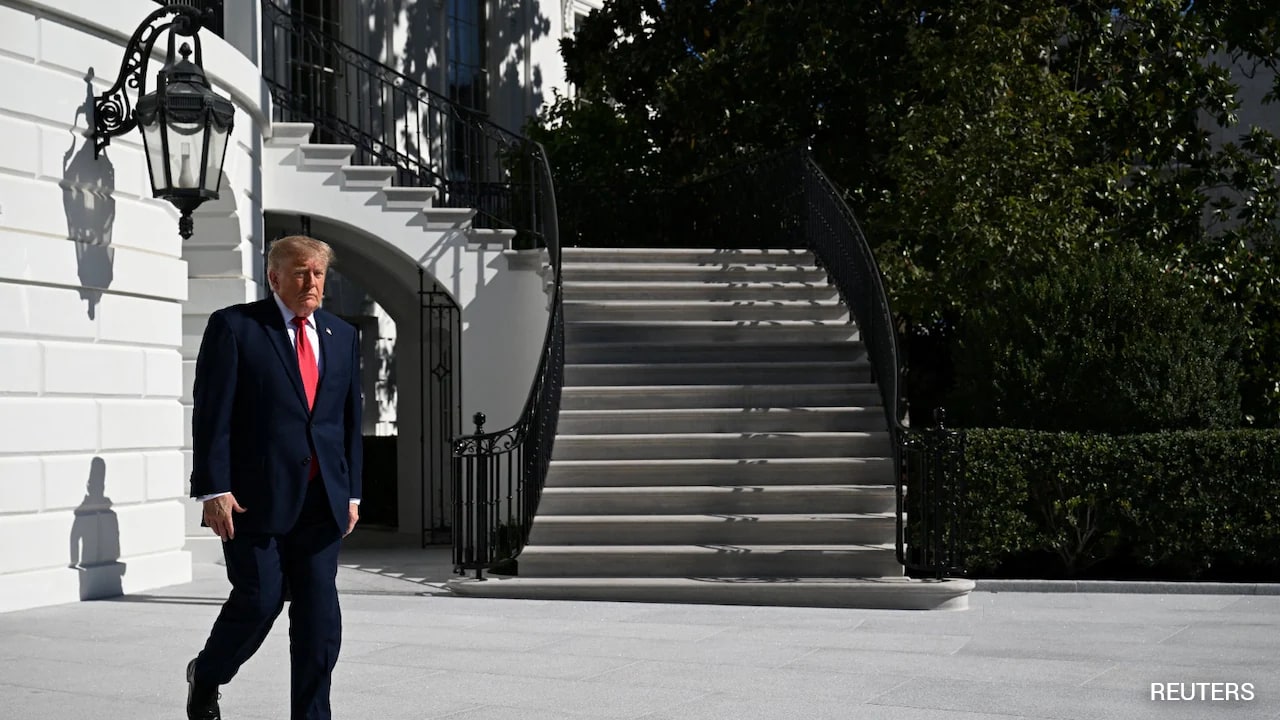
Public scrutiny of a political leader's physical stamina relies almost entirely on low-resolution visual heuristics rather than clinical diagnostics. When observers note that Donald Trump appears to struggle to keep an eye open during a rally, the resulting media cycle conflates transient physiological indicators with systemic medical pathology. Analyzing these moments requires separating environmental stressors and acute fatigue from chronic neurological or cardiovascular conditions, establishing a framework for evaluating executive endurance without succumbing to speculative diagnosis.
The Signal-to-Noise Problem in Political Health Observation
In high-visibility environments like campaign rallies or prolonged public appearances, observers attempt to extract medical intelligence from compressed video feeds. This creates an immediate signal-to-noise problem. The human eye and brain are evolutionarily primed to detect facial asymmetry, ptosis (drooping of the upper eyelid), and micro-expressions of exhaustion. However, visual observation from a distance lacks the baseline data required to distinguish between an acute, benign event and a systemic decline.
To evaluate public health signals accurately, analysts must categorize observable phenomena into three distinct tiers of causation:
- Environmental and Mechanical Factors: Stage lighting, glare, dry air, and camera angles routinely induce squinting or asymmetric blinking. High-intensity LED arrays used in modern arenas emit significant heat and luminance, triggering an involuntary photophobic reflex that mimics ocular fatigue.
- Acute Physiological Depletion: Sleep deprivation, circadian rhythm disruption from rapid time-zone transit, and dehydration directly impair neuromuscular control over the levator palpebrae superioris—the muscle responsible for elevating the upper eyelid.
- Chronic or Systemic Pathology: True clinical concern arises only when ocular changes are accompanied by persistent, non-fatigable symptoms such as dysarthria (slurred speech), unilateral limb weakness, or acute cognitive disorientation.
Treating a Tier 1 or Tier 2 event as proof of a Tier 3 condition represents a fundamental analytical failure. In operational risk assessment, single-point visual anomalies serve as triggers for monitoring, never as standalone proof of systemic failure.
The Mechanics of Ocular Fatigue and Ptosis
Understanding why an eyelid droops during a multi-hour public event requires examining the underlying neuromuscular mechanics. Eyelid elevation is controlled primarily by two muscles: the levator palpebrae superioris, innervated by the oculomotor nerve (cranial nerve III), and Müller's muscle, which is innervated by the sympathetic nervous system.
Müller's muscle is exceptionally sensitive to fluctuations in sympathetic tone—the body's baseline state of alertness and adrenaline. During periods of high stress or intense public performance, elevated catecholamines (adrenaline and noradrenaline) stimulate Müller's muscle, keeping the eyes wide open. When an individual experiences a sudden drop in sympathetic arousal, or when baseline fatigue overrides acute adrenaline spikes, Müller's muscle relaxes. The result is a subtle, often unilateral or asymmetric droop of the eyelid that becomes markedly more pronounced under the strain of prolonged speaking.
This mechanism explains why ocular drooping frequently appears late in an event rather than at the onset. As cognitive load accumulates—requiring continuous verbal retrieval, crowd reading, and physical standing—the central nervous system prioritizes core motor and verbal functions over fine facial muscle tone. The visual manifestation is an eye that appears heavy or partially closed, even when the individual remains cognitively engaged.
The Logistics of Campaign Endurance and Circadian Debt
Assessing the physical state of a 78-year-old executive requires accounting for the operational tempo of modern political campaigning. Unlike standard corporate or administrative roles, national campaigning imposes severe physiological loads that would degrade the performance of individuals decades younger.
The primary driver of visible fatigue in this context is cumulative sleep debt combined with circadian misalignment. Flying across multiple time zones, speaking late into the evening, and maintaining irregular meal and hydration schedules disrupt the suprachiasmatic nucleus—the brain's central circadian pacemaker. When circadian rhythms are misaligned, core body temperature and cortisol levels fail to peak during scheduled public appearances.
If a rally occurs during an individual's biological trough—typically mid-afternoon or late evening relative to their home time zone—the body initiates physiological sleep pressure. Adenosine accumulates in the basal forebrain, inhibiting wake-promoting neurons. The physical manifestations of high adenosine pressure include slowed blink rates, delayed pupillary light reflexes, and involuntary micro-sleeps or eyelid drooping. Observing these signs during a late-day rally reflects the predictable biological cost of schedule compression rather than an anomalous medical crisis.
Cognitive Load and the Illusion of Decline
Media narratives frequently link physical signs of tiredness directly to cognitive impairment. This linkage ignores how the brain allocates metabolic resources under sustained stress. Speaking extemporaneously for ninety minutes or more demands continuous activation of the prefrontal cortex, Broca's area, and working memory networks.
When physical fatigue sets in, individuals often adopt compensatory behavioral strategies to conserve energy:
- Reduced Physical Animation: Limiting gross motor gestures to preserve metabolic output for vocal projection.
- Vocal Pacing Adjustments: Slowing cadence or relying on rehearsed rhetorical cadences that require less executive processing than novel sentence construction.
- Sensory Gating: Narrowing visual focus or squinting to reduce visual sensory input, thereby freeing cognitive bandwidth for auditory and verbal processing.
To an untrained observer watching a muted clip or a still photograph, sensory gating and reduced motor animation look identical to lethargy or confusion. In reality, they are adaptive mechanisms used by experienced speakers to manage energy expenditure across long-duration events. Evaluating cognitive integrity requires analyzing speech syntax, thematic coherence, and real-time responsiveness to audience cues over the entire duration of an event, rather than isolating a five-second visual clip.
The Asymmetry of Political Medical Disclosure
The intensity of public reaction to minor physical cues is driven largely by an information vacuum. In the absence of standardized, independently verified medical reporting, markets and voters rely on heuristic guesswork. Modern political communications historically favor curated, selective health disclosures—often summarized in brief letters from personal physicians that emphasize general vitality while omitting granular biometric data.
This lack of transparency creates an asymmetric information environment:
- High Sensitivity to Anomalies: Because baseline health metrics (such as resting blood pressure, lipid panels, neurological exam results, and sleep averages) are unavailable, every visible deviation from peak performance is treated as a potential tail-risk event.
- Confirmation Bias in Media Framing: Opponents interpret fatigue as evidence of systemic unfitness, while supporters dismiss identical footage as lighting artifacts or stamina under grueling schedules. Neither position is anchored in clinical reality.
- Market and Institutional Distraction: Speculative health cycles divert analytical focus from verifiable policy positions, administrative track records, and institutional staffing structures—the actual determinants of executive governance.
Without standardized diagnostic benchmarks, public discourse remains trapped in a cycle of overreacting to low-grade visual noise while remaining blind to genuine, non-visible clinical risks such as silent cardiovascular disease or metabolic dysfunction.
Limitations of Remote Observational Analysis
Any framework designed to evaluate public figures from afar carries strict operational boundaries. Remote visual analysis cannot detect asymptomatic conditions, nor can it differentiate between benign pharmacologic side effects and underlying pathology. Common over-the-counter antihistamines, blood pressure medications, or sleep aids frequently induce mild ptosis, dry eyes, and transient drowsiness—effects indistinguishable on camera from neurological fatigue.
Analysts must also account for selection bias in digital media distribution. A two-hour rally generates thousands of frames of video. Algorithmic distribution networks disproportionately amplify the few seconds where an individual blinks mid-sentence, squints against a spotlight, or shifts weight, creating a distorted representation of the event's overall physical baseline. Treating curated social media clips as representative samples violates basic statistical sampling principles.
Protocol for Evaluating Executive Health Signals
To eliminate speculative noise when assessing reports of physical fatigue or health scares among political executives, apply a four-step verification filter before drawing operational conclusions:
- Establish Event Context: Cross-reference the timestamp of the visual anomaly against the duration of the event, ambient venue conditions, and the subject's travel schedule over the preceding 72 hours. Discount anomalies that occur exclusively at the tail end of multi-hour appearances or following cross-country transit.
- Audit Multi-Modal Consistency: Compare visual cues against audio and linguistic data from the exact same timestamp. If eyelid drooping or facial asymmetry occurs alongside intact vocal articulation, coherent syntax, and responsive crowd interaction, classify the event as localized muscular or environmental fatigue rather than a central nervous system event.
- Track Longitudinal Frequency: Measure whether the observed physical cue is an isolated incident or part of an accelerating trend across multiple, independent appearances under varied environmental conditions. Single-instance observations hold zero diagnostic weight; only persistent, progressive patterns warrant risk adjustment.
- Separate Individual Stamina from Institutional Capacity: In executive governance, individual physical endurance is only one variable. Weight the assessment toward the resilience, delegation structure, and operational competence of the surrounding administrative apparatus, which absorbs day-to-day execution loads regardless of a principal's acute fatigue levels.