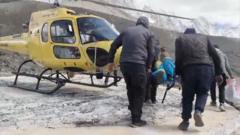
Surviving six days stranded near the death zone of Mount Everest isn't just a miracle. It's a brutal testament to human endurance and a harsh reminder of what happens when high-altitude climbs go wrong. When a mountain guide gets trapped in the world's most unforgiving environment, the clock doesn't just tick. It races against frostbite, brain swelling, and sheer exhaustion.
The successful rescue of a stranded guide after nearly a week in Everest's extreme environment has gripped the mountaineering world. Most people think these rescues are standard helicopter operations. They aren't. Above 6,000 meters, the air is so thin that helicopter rotors struggle to find purchase. Every second a pilot spends hovering to clip in a survivor is a direct gamble with death. This specific survival story highlights a shifting reality on the mountain where experienced guides, not just novice tourists, face escalating dangers.
Anatomy of an Everest Survival Miracle
Six days. That's how long the guide endured sub-zero temperatures, howling winds, and dwindling oxygen supplies. To put this in perspective, the human body cannot acclimatize to altitudes above 8,000 meters. Even below that, in the upper camps, extended stays degrade muscle tissue, cloud judgment, and cause fluid buildup in the lungs.
Rescuers had to wait out terrible weather before making their move. The rescue team, comprised of elite high-altitude Sherpas and specialized alpine pilots, utilized a long-line rescue technique. This involves dropping a cable from a stripped-down helicopter, hooking the climber, and whisking them away while dangling below the aircraft. It requires surgical precision. A single gust of wind can slam the helicopter into the rock face.
The guide survived because of a mix of elite physical conditioning and strict resource management. They stayed inside a battered tent, melted snow for hydration using minimal fuel, and fought off the overwhelming urge to sleep when hypothermia set in.
Why High Altitude Rescues Are Getting Harder
Commercialization has changed the mountain. More climbers mean crowded routes, which slows down response times during an emergency. If a storm rolls in while hundreds of people are choked up at the Hillary Step, rescue operations grind to a halt.
Climate change is also making the terrain unpredictable. Routes like the Khumbu Icefall are shifting faster than ever. Rockfalls are replacing solid ice lanes. The Himalayan Database, which tracks mountaineering statistics, notes a steady rise in non-weather-related accidents over the last decade.
- Air Density: Helicopters require dense air to generate lift. In the thin air of Everest, machines operate at their absolute limit.
- Weight Limits: Pilots must strip their aircraft of seats, insulation, and extra fuel just to fly at these heights. They can usually only lift one person at a time.
- Weather Windows: High winds can instantly destabilize a flight, meaning stranded climbers often have to wait days for a clear sky.
The Reality Behind the Heroism
We love a good rescue story. They make us feel like human grit can overcome any obstacle. But the climbing community views these events with deep anxiety. Every time a long-line rescue happens, multiple lives are put on the line to save one.
The financial cost is staggering, often running into tens of thousands of dollars, which is usually covered by specialized high-altitude insurance. But the human cost is higher. Sherpas and rescue pilots take immense risks. When things go wrong, the consequences are permanent.
If you are planning an alpine expedition or tracking these climbs, look closely at the safety protocols of your guiding agency. True safety isn't a helicopter backup plan. It's having the humility to turn around before the storm hits, recognizing that the mountain always holds the final veto.