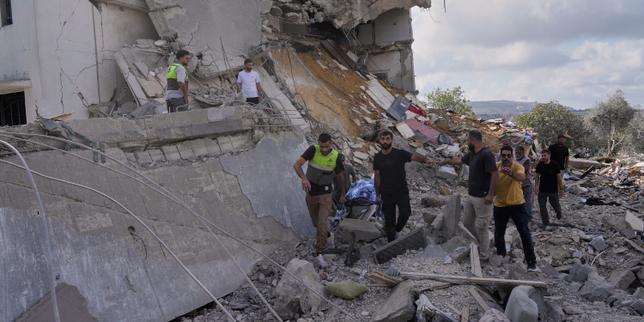
We mourn four dead in southern Lebanon today, act shocked by the sudden kinetic flash, and pretend the agreement holding it together was a real peace. It never was.
The standard media narrative screams about violated truces, broken promises, and the fragile nature of diplomacy in the Levant. That framing is lazy, comfortable, and entirely detached from how modern asymmetrical deterrence actually functions. Every headline wringing its hands over a strike despite the truce assumes a ceasefire is a destination. It is not. A ceasefire is merely a ceasefire line drawn in wet cement while both sides reload, rearm, and recalculate their next vector of escalation.
If you think a piece of paper brokered by exhausted foreign ministers stops artillery shells from trading hands, you do not understand state survival mechanics. You understand Hallmark cards.
Let us dismantle the comfortable fiction holding up modern geopolitical analysis.
The Myth of the Paper Shield
Every time a cessation of hostilities is signed in zones like the Litani River basin or the blue line, diplomats pop champagne and think they cured cancer. I have watched analysts blow millions of words and institutional capital treating these pauses as permanent architectural changes. They are not. They are tactical resting phases.
When a state actor or a heavily entrenched non-state militia agrees to halt fire, the incentive structure is rarely about peace. It is about logistics.
- The Ammo Deficit: High-intensity drone warfare and precision rocket volleys burn through stockpiles faster than industrial supply chains can replenish them. A truce gives procurement networks time to catch up.
- The Intelligence Reset: Combat burns intelligence assets. Ceasefires allow reconnaissance teams to map new sensor grids, rotate operatives, and buy off local informants.
- The Narrative Win: The side that respects the truce on paper—or makes the other side violate it first—wins the diplomatic information war for seventy-two critical hours.
When four people die in a targeted strike during an active truce, the knee-jerk reaction is to blame the actor who dropped the bomb. That misses the structural reality of the rules of engagement. In these gray-zone conflicts, a truce does not mean the cessation of hostilities; it means the rules of kinetic engagement shift from open warfare to deniable, low-signature attrition.
The Economics of Managed Escalation
Let us look at the mechanics of how these flashpoints operate without romanticizing them.
A border zone like southern Lebanon is a pressure cooker with a rusted safety valve. On one side, you have a conventional military machine bound by domestic political timelines and defense budget cycles. On the other, you have a decentralized force embedded in civilian infrastructure where civilian casualties are not anomalies; they are baked into the defensive topology.
When a strike occurs despite an ongoing truce, look at the timing, not the treaty. Who was moving hardware? Who was digging tunnels deeper into the bedrock? Who was positioning anti-tank guided missile teams within line-of-sight of a patrol route?
The side that pulls the trigger usually claims a preemptive response to an imminent threat. The side taking the casualties claims a violation of international law. Both statements can be technically true within their own closed loops of logic, which is precisely why traditional diplomacy keeps failing. You cannot solve a structural gridlock with moral outrage.
Imagine a scenario where a corporate board signs a non-compete clause with a rival, but both companies keep their legal teams aggressively probing for loopholes, poaching engineers through shell companies, and patenting competitor workarounds. Nobody calls the board meeting a failure when a lawsuit drops. They call it business. Geopolitics is just business conducted with high explosives.
Why the PAA Questions Are Entirely Backward
People ask the wrong questions when violence punctures a ceasefire.
They ask: How can we strengthen the monitoring mechanism?
The answer is: You cannot. More blue helmets with binoculars do not stop a shaped charge moving through a pickup truck bed at midnight.
They ask: Who broke the agreement first?
The answer is: It does not matter. In a state of protracted low-intensity conflict, the concept of "first" dissolves. Every action is a reaction to a perceived provocation that happened three months ago, which was a reaction to something else ten years prior.
The correct question is: What utility does this ceasefire serve for the side currently violating it?
If a strike happens, it means one side calculated that the cost of violating the optical illusion of peace was lower than the strategic cost of staying quiet while the enemy reinforced their positions. Until the fundamental cost-benefit ratio of violence changes, signing another treaty is just signing an advance invoice for the next funeral.
The Brutal Reality of Regional Deterrence
We have to admit the dark downside to my perspective: accepting that truces are temporary operational pauses means abandoning the comforting illusion that permanent peace is just one more round of negotiations away. It forces us to look at human conflict not as a disease to be cured, but as a chronic condition to be managed with tourniquets and calculated deterrence.
The heavy hitters in defense strategy—the people who actually write doctrine for intelligence agencies rather than op-eds for morning papers—do not look at ceasefires as peace. They look at them as math problems. They calculate throw-weights, interceptor inventories, and political tolerance thresholds.
When four people die in a border strike, the tragedy is real, but the surprise is manufactured. The architecture of the region was built for war, dressed up in the language of diplomacy, and funded by people who cannot bear to look the alternative in the eye.
Stop looking at the treaty. Look at the logistics.