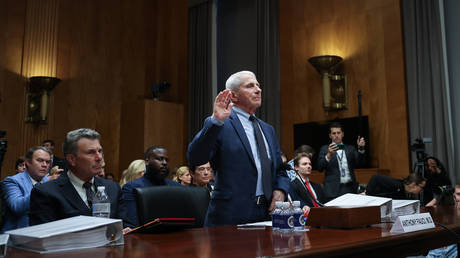
We spent millions of taxpayer dollars and hundreds of hours watching congressional inquisitions trying to catch a bureaucratic careerist in a perjury trap, and we missed the entire point.
The lazy consensus dominating media commentary is that these high-profile hearings were a quest for accountability over masks, social distancing, and lab origins. Was Dr. Anthony Fauci hiding documents? Did he massage definitions of gain-of-function research? Did the six-foot rule magically appear out of thin air without clinical trials? Meanwhile, you can read other events here: The Private Pages Behind the Public Storm.
Yes, yes, and absolutely. But obsessing over whether a bureaucrat lied to save his legacy is like yelling at the weather vane for predicting a storm. It fundamentally misunderstands how state power actually operates during a crisis.
The real scandal isn't what Fauci was hiding. The real scandal is that we expected a technocracy to handle an existential crisis through pure, unadulterated scientific truth instead of raw, institutional self-preservation. To understand the full picture, check out the detailed analysis by Mayo Clinic.
The Myth of Scientific Neutrality
Let us define terms immediately, because political theater loves muddying definitions. Science is an iterative process of doubt, falsification, and error correction. State bureaucracy is a self-perpetuating apparatus designed for risk mitigation, liability avoidance, and budget expansion.
When Congress drags a retired public health official into the spotlight to ask why guidelines shifted, they are performing a ritualistic pantomime. They pretend that public health policy is derived directly from pristine data. It never is.
I have watched corporate boards and institutional leadership groups panic under uncertainty, and the dynamic is always identical. When the stakes are total and the data is zero, nobody optimizes for truth. They optimize for defensibility.
Imagine a scenario where a top-tier infectious disease agency admits on day 14 of a global panic: "We have no idea how this transmits, masks are mostly theater for psychological comfort, and our social distancing number is an arbitrary guess based on 19th-century droplet dogma."
The system cannot utter those words. Panic would consume public order. So the apparatus manufactures certainty. It issues edicts that sound absolute because absolute edicts are easier to enforce than probabilistic nuance. Fauci wasn’t hiding a master plan; he was shielding an institutional posture that traded scientific honesty for compliance management.
Dismantling the Compliance Trap
The lazy narrative treats mandates and guidelines as malicious personal plots hatched in dark rooms. This is comforting because it personalizes a systemic failure. It lets us point at a face, slap a label on him, and yell at television cameras.
The truth is much darker and far more boring. The rules didn't fail because one man was arrogant. They failed because centralized bureaucratic machinery is fundamentally incapable of local adaptation.
When federal agencies handed down blanket edicts for masking children, closing parks, and shuttering small businesses while keeping mega-retailers open, they weren't following a data-driven roadmap. They were pulling levers that offered maximum administrative cover. If a governor locked everything down, they could not be accused of doing too little. The metric of success wasn't health outcomes; it was the elimination of liability.
Look at the fallout. We traded a temporary epidemiological risk for generational learning loss, economic distortion, and a shattered social contract. And when congressional committees cornered the architects of those policies, the defense defaulted to bureaucratic doublespeak. Semantics about research grants and finger-pointing over who actually invented the six-foot rule became the shield.
The Uncomfortable Downside of Institutional Skepticism
Being contrarian means owning the messy counter-arguments to your own stance. If we tear down the illusion of infallible public health guidance, we risk a total collapse of institutional trust. And trust, once burned to ash, is nearly impossible to rebuild.
When people realize that guidance was driven as much by political calculus and behavioral psychology as it was by randomized controlled trials, they swing violently toward total cynicism. That cynicism has real-world body counts. It breeds vaccine hesitancy for routine immunizations, turns school board meetings into civil war zones, and treats every future public health warning as a conspiracy.
Yet, protecting bad systems by lying to the public about their infallibility is a losing game. The public isn't stupid. They remember being told that outdoor gatherings were lethal while mass political protests were epidemiologically safe. They remember the shifting justifications for masks, boosters, and mandates. Pretending those contradictions never happened doesn't restore trust; it accelerates the rot.
Stop Asking for Confessions
If you are waiting for a congressional hearing to yield a tearful public confession from a health bureaucrat, you are wasting your time. Bureaucrats do not repent; they retire, write memoirs, and collect pensions.
The actionable takeaway from this entire mess is simple: decentralize your risk assessment forever.
Never outsource your critical thinking to an agency whose primary institutional incentive is covering its own administrative rear end. When the next novel threat emerges, expect institutional leaders to prioritize control over clarity, compliance over context, and self-preservation over truth.
Stop treating public health pronouncements down from Washington as sacred script. Treat them as political data points from an interested party. Look at the raw metrics, evaluate your local environment, weigh your personal risk profile, and make your own decisions.
The hearings are over. The transcripts are archived. The blame game will continue until the next crisis hits. The only protection you have against the next manufactured certainty is refusing to buy the last one.