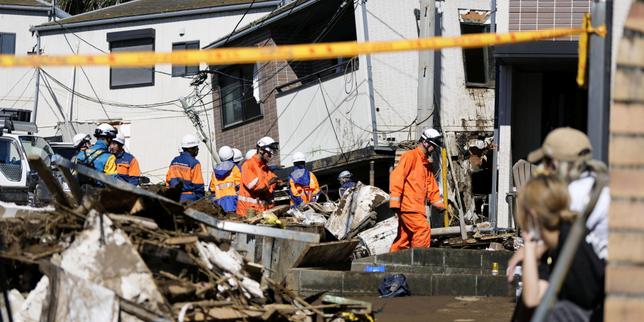
The headlines hit the wire with predictable, lazy panic. A storm rolls in, two people tragically lose their lives in the outer rings of the capital, and the global media machine spins up its favorite narrative: Tokyo is on the brink of climate collapse, completely unprepared for the raw fury of modern weather.
It is a comfortable script. It requires zero thought, zero historical context, and zero understanding of how the world's densest urban ecosystem actually functions. It treats a localized tragedy as proof of systemic failure.
I have watched foreign outlets butcher this narrative for a decade. They descend on Shinjuku with raincoats, stand dramatically in a puddle, and scream about catastrophe while trains continue running on schedules accurate to the second. They look at a tragic mortality statistic and weaponize it to sell clicks, completely ignoring the engineering marvel that just kept thirty-seven million people safe from a direct atmospheric punch.
Stop buying the panic. The real story of typhoons in Tokyo is not about vulnerability. It is about an astonishing, almost terrifying level of over-engineered resilience that the rest of the world refuses to study because it is too busy writing eulogies for a city that is functioning just fine.
The Myth of the Fragile Megacity
The lazy consensus goes like this: as extreme weather intensifies, concrete jungles like Tokyo become ticking time bombs. Rising sea levels, stalled tropical depressions, and torrential downpours are supposed to overwhelm the infrastructure, turning subway stations into subterranean rivers and high-rise districts into wind tunnels of doom.
The data says otherwise.
Look at what actually happened during Typhoon Dujuan and storms of its caliber. Two deaths is a heartbreaking human cost, but in a metropolitan area the size of many European nations, statistical mortality rates during severe weather events in Tokyo are microscopic compared to equivalent disasters in North America or Europe. When a hurricane hits a major Western city, the grid collapses for weeks, water systems fail, and billions in property vanish into flooded basements.
In Tokyo, the power stays on. The drainage systems swallow millions of gallons of water per second and redirect it into colossal subterranean cathedrals carved out of solid rock fifty meters beneath the asphalt.
Foreign journalists love to focus on the windblown umbrella as a symbol of chaos. They miss the G-Cans project—the Metropolitan Outer Area Discharge Canal—sitting quietly underneath Saitama, ready to absorb an entire river's worth of overflow before a single residential street floods. To call Tokyo vulnerable is to fundamentally misunderstand the difference between a tragic accident and a structural collapse.
Engineering Versus Emotional Journalism
Let us look at the mechanics that the mainstream reports gloss over.
When a storm approaches the Kanto plain, the Japanese Meteorological Agency does not just issue alerts; they execute a synchronized logistical ballet. Rail operators do not wait for tracks to flood; they implement controlled, phased suspensions hours in advance. Construction sites lock down every loose scaffold not because of government mandates, but because corporate liability and civil engineering standards treat safety as a non-negotiable baseline, not a PR exercise.
Compare this to the standard Western response to extreme weather, which relies heavily on post-disaster finger-pointing and insurance payouts. Tokyo operates on proactive redundancy.
Imagine a scenario where a Category 4 equivalent storm hits New York City versus Tokyo. In New York, subways flood because pumps dating back to the Roosevelt administration fail under salt water. In Tokyo, the infrastructure is treated as a living, continuously upgraded organism.
The misconception stems from a cultural bias in reporting. Western media views dramatic weather through an apocalyptic lens because their own infrastructure crumbles at the first sign of a heavy frost or a summer squall. When they see Tokyo bend slightly under a typhoon, they mistake controlled elasticity for fragility.
The Downside of Total Control
Let us be completely honest about the friction points here, because no system is flawless. There is a dark side to Tokyo's obsessive storm preparedness.
The hyper-regulated approach breeds a form of civic complacency. Because the government and municipal authorities handle crisis management with ruthless efficiency, the average citizen has largely outsourced personal risk assessment to the state. When an evacuation advisory is issued, compliance is high, but spontaneous local problem-solving is low. People wait for instructions because instructions have historically always been correct and timely.
Furthermore, the economic cost of this perpetual state of high alert is astronomical. Billions of yen are funneled into civil engineering projects that sit dry for three hundred and sixty days a year, just waiting for the handful of typhoons that track north. Critics argue this money could be spent elsewhere. But that argument crumbles the moment a major storm makes landfall and Tokyo avoids the multi-billion-dollar reconstruction bills that plague coastal cities globally.
The downside of perfection is that when something does slip through the cracks—when a freak gust or an isolated flash flood claims a life—the shockwaves are psychological rather than physical. The public reacts with disproportionate grief because they have been conditioned to expect absolute immunity from nature.
How to Read the Weather Coverage
If you want to understand how a city survives the climate pressures of the twenty-first century, stop reading mainstream storm dispatches. Look at the balance sheets of civil engineering firms, study the elevation maps of subway ventilation shafts, and examine the code compliance records of residential developers in Chiyoda and Minato.
The next time a headline screams about Tokyo paralyzed by a typhoon, check the actual transit schedules. Check the power grid status. You will likely find that while a few reporters are getting soaked for the cameras, the rest of the city is riding the Yamanote line home, grabbing a convenience store bento, and wondering why the foreign press makes such a massive deal out of a standard Tuesday rainstorm.
Nature does not negotiate with journalism. It tests concrete, steel, and planning. Tokyo passes the test every single time, and no amount of anxious commentary from across the Pacific is going to change the math.