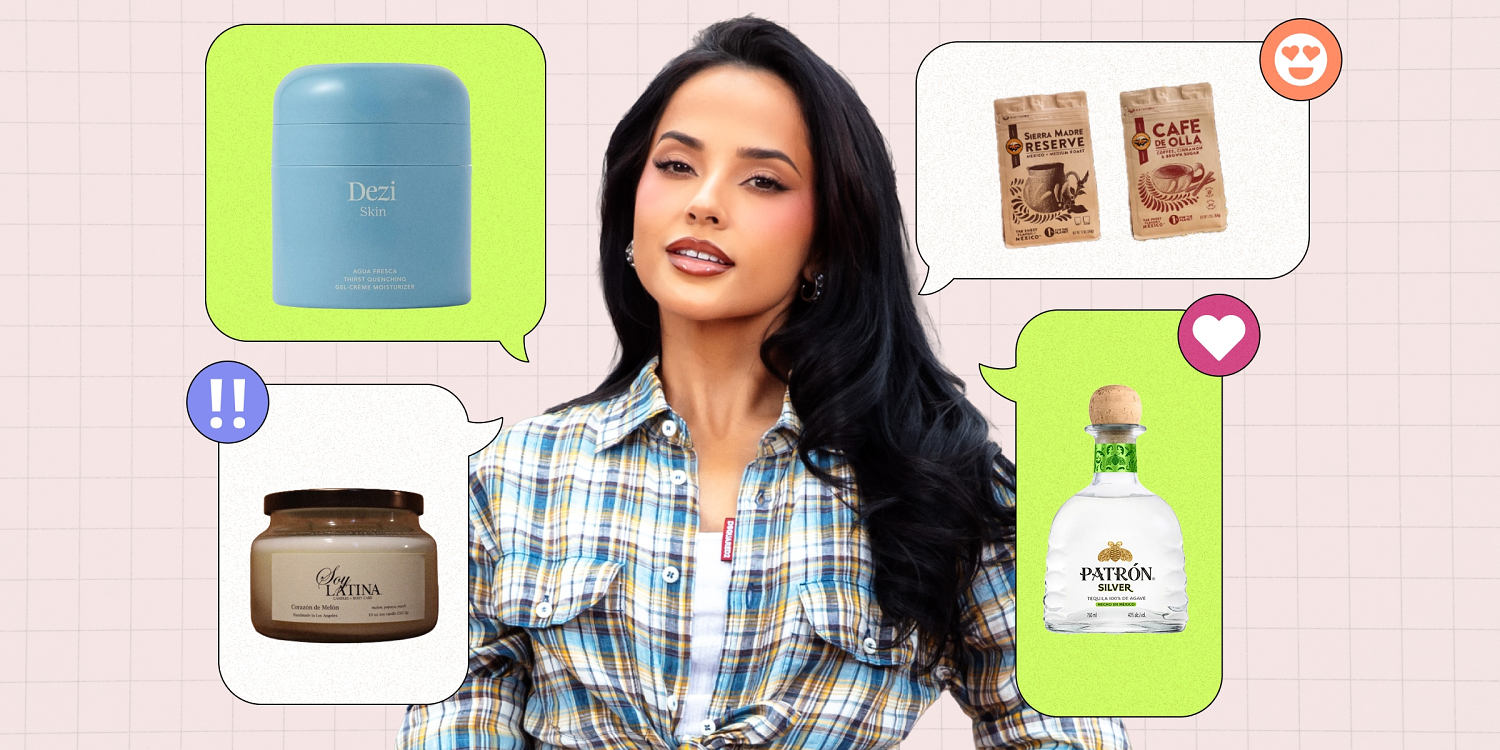
Most entertainment coverage of Becky G reads like a press release wearing a press pass. Journalists sit down for a polite "talking shop" chat, nod along to soundbites about heritage, hustle, and authenticity, and publish another predictable profile praising her transition from YouTube covers to Latin pop stardom and beauty mogul status.
They miss the entire mechanism of how she actually wins. You might also find this connected story useful: The European Cost-of-Living Contagion Why Housing Inflation Drives Continent-Wide Civil Unrest.
The lazy consensus surrounding Rebbeca Marie Gomez is that she succeeded by simply "staying true to her roots" and riding the mainstream wave of Latin music. That narrative is comforting, romantic, and completely useless if you are trying to understand modern entertainment economics. Staying authentic does not negotiate distribution deals. Heritage does not manage inventory turnover in a direct-to-consumer cosmetics launch.
When you strip away the glossy Q&A fluff, Becky G’s career is not a fairy tale about representation. It is a ruthless case study in catalog arbitrage, bilingual market hedging, and vertical integration. As discussed in recent articles by The Wall Street Journal, the results are significant.
The Bilingual Authenticity Myth
Every standard profile of Becky G treats her pivot from English-language teen pop to Spanish-language reggaeton and regional Mexican music as an emotional homecoming. Press interviews love framing her 2017 breakout "Mayores" as the moment she finally found her voice.
Here is what actually happened. In the mid-2010s, Becky G was caught in the dead zone of major-label English pop. Despite early radio traction with "Shower," she was competing in an oversaturated domestic market where mid-tier pop acts were routinely shelved by label executives chasing the next viral anomaly. By pivoting to Spanish-language tracks, she did not just embrace her Mexican-American identity—she exited a red ocean of diminishing returns and entered a rapidly expanding global streaming market before Western algorithms fully priced in Latin music's dominance.
Let us look at the streaming mechanics. Global platforms like Spotify and YouTube operate on velocity and repeat listenership, two metrics where Latin music consumers consistently outperform English-language pop audiences. By anchoring herself in the Latin market while maintaining fluent English media accessibility, Becky G built a structural hedge. When English pop radio shifts trends every six months, her Spanish catalog continues generating compounding royalties across Latin America, Spain, and the U.S. bilingual demographic.
Yet industry commentators still talk about her career as if she stumbled into success through sheer cultural pride. That framing insults her business acumen. Navigating two distinct linguistic markets requires managing separate touring circuits, distinct radio promotion ecosystems, and completely different brand sponsorship expectations. Most artists who attempt a crossover fail because they treat one language as a novelty marketing stunt. Becky G treated both markets as permanent, parallel balance sheets.
Why Celebrity Beauty Brands Usually Implode
When Becky G launched Treslúce Beauty in 2021, the standard entertainment press applauded another Latina founder claiming space in the cosmetics aisle. Nobody bothered to ask why 90 percent of celebrity beauty lines quietly die within three years.
I have watched venture-backed incubators burn tens of millions of dollars slapping famous faces onto white-label eyeshadow palettes. The standard celebrity playbook is broken by design:
- Borrowed equity: A talent agency pairs an artist with a brand incubator (like Forma Brands or Seed Beauty) that owns the supply chain, formulation, and operational upside.
- Vanity licensing: The celebrity takes a single-digit royalty percentage plus equity options that only vest if the company hits unrealistic valuation targets.
- Launch-week spikes: Sales surge for fourteen days driven by parasocial fan curiosity, followed by catastrophic retention collapse when consumers realize the formulas are identical to drugstore staples.
Look closely at how Treslúce was structured, and you see both the brilliance and the brutal realities of the model. Incubated alongside Madeby Collective, Treslúce avoided the biggest trap of celebrity retail—relying solely on a founder's Instagram follower count to move direct-to-consumer units—by securing early omnichannel placement with Ulta Beauty.
That distinction matters. Direct-to-consumer customer acquisition costs have skyrocketed over the last five years due to privacy changes on mobile ad networks. A celebrity brand that lives exclusively online dies the moment organic social reach dips. Getting shelf space at Ulta gave Treslúce physical discovery among shoppers who were not already streaming Becky G's music.
Still, let us be honest about the downside of this approach. Partnering with an incubator and entering big-box retail early means sacrificing margin and creative autonomy. Retailers demand strict wholesale discounts, co-op marketing fees, and rigid inventory minimums. If velocity per store drops below category benchmarks, Ulta does not care how many Latin Grammys you have won—your endcap disappears. Becky G’s real accomplishment with Treslúce is not launching a brand; it is surviving the brutal unit economics of physical beauty retail long enough to build repeat buyers independent of her album cycles.
The Trap of the "Multi-Hyphenate" Label
Modern entertainment journalism is obsessed with calling every working artist a "multi-hyphenate mogul." Singer-songwriter-actress-entrepreneur-activist. It looks impressive in a headline, and it is almost always a recipe for mediocrity.
In practice, spreading focus across music, film, and consumer packaged goods destroys leverage. Record labels hate when top talent diverts touring bandwidth to promote a lip liner. Film studios hesitate to insure lead actors who might blow out their vocal cords on a festival run two weeks before principal photography. Brand partners get nervous when an artist releases controversial lyrics that clash with family-friendly retail positioning.
Becky G solved this friction by rejecting the traditional studio system's timeline. Consider her move into regional Mexican music with albums like Esquinas. Mainstream pop logic dictates that once you achieve global reggaeton success, you double down on urban pop production to maximize stadium ticket prices. Moving toward traditional Mexican instrumentation—corridos, mariachi influences, and sierreño arrangements—looked like a commercial contraction on paper.
Instead, it unlocked an older, fiercely loyal multi-generational demographic that buys physical merchandise, attends family-oriented live events, and holds massive purchasing power in the American Southwest. By deliberately narrowing her sonic focus on Esquinas, she expanded her total addressable market in live touring.
Imagine a scenario where a traditional pop star tries to execute that same pivot without deeply embedded cultural credibility. Audiences spot tourism immediately. Because Becky G spent years building trust across both sides of the U.S.-Mexico border, she could shift genres without alienating her core base. She did not become a multi-hyphenate by doing everything at once; she sequenced her pivots so each vertical subsidized the next.
What People Actually Get Wrong About Her Career
When fans and aspiring artists search for insights into Becky G's rise, they usually ask the wrong questions. They look for secret vocal coaches, lucky breaks, or viral TikTok formulas. Let us dismantle the most common assumptions head-on.
Did Becky G get rich off streaming numbers?
No. Even with billions of streams across tracks like "Sin Pijama" and "MAMIII," recorded music royalties remain one of the lowest-margin revenue streams in an artist's portfolio—especially for artists signed to major-label deals early in their teens. Standard legacy recording contracts leave the artist with a fraction of net receipts after recouping recording budgets, video production, and marketing advances. Streaming is a customer acquisition funnel, not a wealth-building engine. Real cash flow comes from touring guarantees, brand endorsements, publishing splits on tracks she co-writes, and equity stakes outside the label system.
Is she fully independent now?
Not entirely, and pretending otherwise misunderstands how scale works in global entertainment. While Becky G has fought for greater creative control and publishing ownership over the years, operating at the global arena and stadium level still requires major-label distribution infrastructure and institutional retail partners. Complete independence sounds romantic until you have to fund a forty-city international logistics operation or clear samples across twenty jurisdictions. Smart artists do not burn down institutional partnerships; they renegotiate the terms once they hold undeniable market leverage.
Can new artists copy her exact crossover blueprint today?
Attempting to copy her 2017 pivot in today's market would be a strategic mistake. The bilingual streaming arbitrage window she exploited nearly a decade ago is now completely crowded. Major labels now aggressively sign bilingual talent out of the gate, and algorithms no longer treat Spanish-language pop as an underserved niche. The lesson is not to copy her genre choices—it is to find the next undervalued cultural or distribution gap before institutional capital floods the space.
The Hidden Cost of Perpetual Relevance
There is a dark side to building an empire on relentless adaptability, and polite "talking shop" interviews never touch it.
When your business model relies on bridging multiple cultures, languages, and industries simultaneously, you inherit a permanent tax on your time and identity. To American executives, you are constantly asked to explain or translate the Latin market. To purists within Latin music, a Mexican-American artist raised in Inglewood, California, faces endless gatekeeping over whether she is "authentically" Mexican enough to represent traditional genres.
You cannot outsource that friction. Every brand deal requires vetting through multiple cultural lenses. Every album rollout requires separate press tours in Los Angeles, Miami, Mexico City, and Madrid. Over a decade, that operational tempo burns out most artists before they hit thirty.
Becky G has survived it because she treats her career like an operating company rather than a personal diary. Notice how rarely she gets dragged into messy, reactive public feuds compared to her peers. Controversy drives short-term clickbait, but it poisons long-term corporate boardrooms. If you want Fortune 500 beauty retailers and global touring conglomerates to treat you as an institutional partner, predictability is an asset.
Stop Reading Puff Pieces and Watch the Cap Table
If you want to understand where Becky G goes next, stop listening to red-carpet interviews about her "creative journey" and start watching her ownership structure.
The traditional music industry was built to keep artists dependent on advance checks while labels and merchandisers kept the underlying intellectual property. A generation of savvy performers realized that fame is a depreciating asset unless you convert attention into owned equity.
- Own the publishing, not just the master: Master recordings are expensive to buy back, but co-writing credits generate recurring performance and mechanical royalties every time a song plays on radio, television, or commercial venues.
- Use music as top-of-funnel marketing: Treat every single and music video as a zero-cost customer acquisition engine for higher-margin ventures like cosmetics, spirits, or live festival properties.
- Prioritize retail distribution over vanity metrics: A million followers mean nothing if you cannot move physical product off a shelf without paid ad spend.
Next time an entertainment outlet publishes a cozy profile praising Becky G for being relatable and hardworking, read between the lines. Hard work is the baseline entry fee in Los Angeles. She is still standing because she figured out early that in the entertainment business, you either own the distribution pipeline, or you are just inventory inside someone else’s machine.