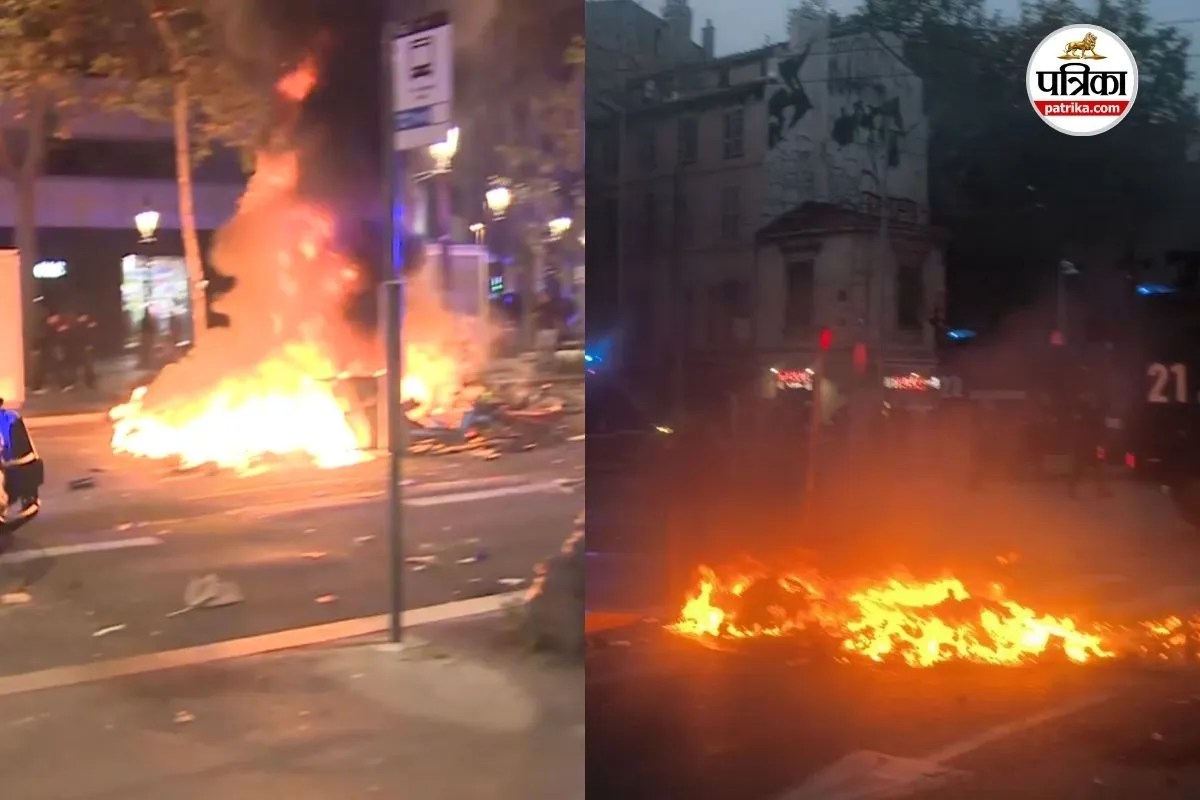
Tear gas in Paris. Water cannons in the streets. Scorched storefronts in Barcelona. Over a thousand arrests.
Every standard headline reads like a teleprompter script written by someone who has never stepped outside a press room. The lazy consensus is effortless to spot: when crowds burn things and police deploy crowd-control hardware, the story is framed as pure chaos. Unruly mobs. Lawless hooligans. A sudden breakdown of public order.
That framing is intellectual laziness dressed up as urgency.
When you watch street unrest in Western capitals through the lens of "law and order versus chaos," you miss the actual operating system running underneath the smoke. Riots rarely start as a blank-page rejection of rules. They erupt when long-simmering economic, housing, and institutional pressures hit a hard wall—and when political leaders treat structural friction as a policing problem.
The Lazy Consensus Around Street Unrest
Conventional coverage treats street clashes like weather. A storm blows in. Sirens wail. Shop windows shatter. Then, once the arrest count crosses four figures, commentators pivot to condemnations of violence and praise for containment.
There is a real, undeniable cost to that violence. Small shopkeepers lose inventory and insurance peace of mind. Commuters get stranded. Municipal budgets absorb overtime and repair bills. Pretending broken glass is harmless is reckless.
Yet treating the symptom as the entire diagnosis guarantees the next flare-up. In cities like Paris and Barcelona, street mobilization is rarely a random spasm. It sits atop decades of urban polarization: steep housing costs pushing working and middle-income residents outward, stagnant real wages in high-cost metros, strained public services, and deep distrust between neighborhoods and central authorities.
When a competitor headline reduces all of that to tear gas, water cannons, burned shops, and arrest totals, it turns complex political and economic tension into a spectacle. Spectacle gets clicks fast. It also leaves readers completely blind to why the match was struck in the first place.
Defining the Terms Before Arguing About the Streets
Precision matters here because sloppy language ruins analysis. A riot involves acute public disorder, property destruction, and clashes with security forces. A protest is organized collective expression aimed at policy, rights, or grievances. Policing is state enforcement of order and law.
People routinely mash those terms together until every march becomes a riot or every riot is treated as mere criminal mischief. Neither move holds up under scrutiny.
In major European cities, demonstrations often draw tens of thousands of peaceful participants alongside smaller, more confrontational factions—or escalate rapidly when policing tactics collide with angry crowds in tight urban corridors. Counting arrests tells you how many people were processed or detained in a given window. It does not tell you who initiated escalation, which grievances drove the turnout, or whether mass arrests cooled tensions or poured fuel on them.
I have watched organizations, campaigns, and institutions blow millions of dollars misreading public anger because they mistook loud headlines for complete intelligence. When executives or policymakers rely on surface-level shock metrics instead of mapping underlying pressure points, they design responses for the wrong war.
The Flawed Questions Everyone Keeps Asking
Search feeds around major clashes fill up with predictable questions. Most of them smuggle in bad premises.
"Why do protesters turn violent in cities like Paris and Barcelona?"
That question assumes a single, uniform crowd waking up one morning and choosing violence for its own sake. Reality is messier. Large demonstrations bring together unions, students, neighborhood groups, political factions, and opportunistic actors under a shared banner of frustration. Escalation often happens at friction points—barricades, charges, projectiles, arrests—where crowd dynamics and state force feed each other in real time. Asking why "protesters" act as one monolith erases the difference between a marcher holding a sign and someone setting a trash bin alight.
"Do water cannons and tear gas actually restore order?"
They clear a street. Sometimes they disperse a crowd quickly. Calling that "restoring order" confuses short-term physical clearance with long-term stability. Chemical irritants and pressurized water are blunt instruments. In dense neighborhoods, they can scatter demonstrators into side streets, injure bystanders, and harden resentment against authorities. Containment on a Tuesday evening is not conflict resolution by Friday.
"Are mass arrests a sign that authorities are winning?"
A four-figure arrest count looks decisive on a chyron. In practice, high arrest numbers often signal prolonged street friction rather than surgical control. Processing large numbers of detainees strains courts, triggers legal disputes over charges and procedures, and frequently becomes a rallying grievance of its own. High volume is not proof of strategic success.
What Heavy Hitters in Conflict and Urban Studies Actually Show
Serious researchers who study collective action and urban conflict—scholars like Charles Tilly on contentious politics, Sidney Tarrow on protest cycles, and Donatella della Porta on policing of protest—have spent decades documenting a basic pattern: street contention spikes when grievances collide with perceived political blockage and high-stakes confrontations.
They do not treat crowd behavior as irrational madness. They examine political opportunity, mobilization structures, and interaction dynamics between demonstrators and security forces. When institutions feel unresponsive to everyday pressures—cost of living, housing squeeze, labor conditions, perceived unfairness—streets become the bargaining table of last resort.
Thought Experiment: Imagine a scenario where a city raises transit and housing costs while cutting local services, ignores months of peaceful petitions, and then responds to street anger exclusively with heavier riot gear. Would you expect calm to hold for long, or would you expect a sharper collision next quarter?
The thought experiment is stark because the mechanism is straightforward. Force can interrupt a gathering. It cannot pay rent, fix broken trust, or answer an economic squeeze.
Where My Contrarian Take Can Backfire
Taking a contrarian stance against "law-and-order-first" narratives carries real risks, and pretending otherwise would be dishonest.
First, over-indexing on root causes can sound like excusing arson or looting. A shopkeeper whose storefront burns does not care about sociological nuance in the middle of the night. Property damage hurts real people, many of them working families and independent business owners with zero control over national policy.
Second, romanticizing street confrontation is just as foolish as flattening it into hooliganism. Unchecked escalation spirals quickly, puts civilians and police alike in danger, and often hands political opponents the exact images they want to justify harsher crackdowns.
Nuance requires holding two truths at once: violence against people and property is real and harmful, and treating symptoms with batons alone is a recipe for repeat explosions.
Practical Moves That Actually Work
If you are following these events to make business, travel, operations, or policy decisions, stop trading on outrage and start tracking real indicators.
- Separate crowd size from clash intensity: Look at who turned out and why, not just where smoke appeared. A massive march with pockets of confrontation means something very different from a small, isolated skirmish.
- Watch the follow-through after the cameras leave: Real shifts happen in court dockets, municipal budgets, policy concessions, and neighborhood trust weeks after the tear gas clears.
- Plan around logistics, not just headlines: For operations or travel in major European hubs, transit disruptions, curfews, and commercial closures matter far more than cable-news adjectives.
- Push back on lazy binaries: Whenever someone reduces a complex civic explosion to "good guys versus thugs," ask what structural pressure was building before the first siren sounded.
Stop letting breathless headlines do your thinking for you. Look at the pressure cooker before you stare at the steam.