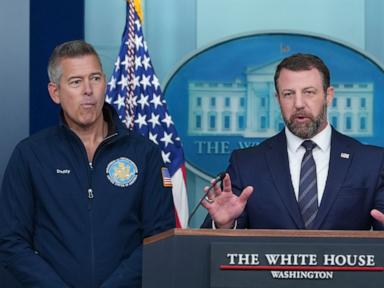
Public scrutiny of senior government officials utilizing state-operated aircraft during nationwide airspace disruptions exposes a fundamental misalignment between public accountability optics and operational aviation logistics. When a high-ranking official defends boarding a government plane to attend a college football game immediately following an aviation ground stop, the resulting controversy rarely hinges on the actual mechanics of federal flight regulations or marginal cost accounting. Instead, the backlash stems from a structural failure in how public-sector organizations communicate resource allocation, continuity-of-operations mandates, and security protocols during periods of widespread civilian inconvenience.
To evaluate the defensibility of government aviation use during airspace bottlenecks, analysts must separate political theater from administrative mechanics. Evaluating these incidents requires stripping away partisan rhetoric and examining three distinct operational dimensions: the statutory frameworks governing official air transport, the mechanics of Federal Aviation Administration (FAA) traffic management initiatives, and the economic principles of sunk versus marginal operating costs. For another look, see: this related article.
The Architecture of Government Air Transport Mandates
Public-sector executive aviation does not operate on the same discretionary model as corporate private jet travel. For certain cabinet-level officials, national security principals, and senior legislative leaders, the use of government-owned or leased aircraft is not an optional perk; it is a rigid operational requirement dictated by executive branch directives and security assessments.
The governing framework for federal executive branch aircraft use is primarily established by Office of Management and Budget (OMB) Circular A-126. This directive categorizes government travel into three distinct tiers: Further analysis on the subject has been provided by The Guardian.
- Mission-Required Travel: Flights necessary to execute official agency duties where commercial aviation cannot meet schedule, routing, or operational security requirements.
- Required-Use Travel: Mandated use of government aircraft for specific officials—typically the President, Vice President, and select cabinet members with continuous national security or law enforcement responsibilities—due to communications security and physical protection mandates.
- Other Official and Personal Travel: Non-mission travel that requires explicit authorization, rigorous justification, and strict reimbursement mechanisms when personal or political activities are involved.
When an official falls under a "required-use" designation—such as officials overseeing national security, defense, or federal law enforcement—they are frequently prohibited from flying commercially even when their destination involves a personal, political, or recreational event like a college football game. The rationale is rooted in Continuity of Operations (COOP) and Secure Communications Infrastructure. Commercial airliners lack Sensitive Compartmented Information Facilities (SCIFs), encrypted satellite communications, and immediate airborne rerouting capabilities required if a national crisis erupts mid-flight.
The friction occurs when a mixed-purpose itinerary—combining official business, public appearances, and personal attendance at a sporting event—collides with public perception. Under federal reimbursement rules, an official taking a required-use aircraft to a non-official event must reimburse the government at the equivalent rate of a full-fare commercial coach ticket (or first-class ticket, depending on specific agency ethics rules) for themselves and any non-official guests. While this satisfies the letter of administrative law, it leaves a massive gap between legal compliance and taxpayer perception, because the commercial ticket reimbursement represents a tiny fraction of the aircraft's actual hourly operating expense.
Mechanics of Airspace Ground Stops and Recovery Waves
The timing of a flight relative to an FAA ground stop introduces a second layer of technical complexity that standard news reporting routinely misinterprets. To understand how a government aircraft departs shortly after a ground stop, one must examine the mechanics of Air Traffic Control System Command Center (ATCSCC) traffic management initiatives.
A Ground Stop (GS) is a tactical traffic management procedure that requires aircraft meeting specific criteria to remain on the ground at their departure airports. Ground stops are triggered by severe convective weather, runway closures, air traffic control staffing shortages, system outages, or airspace saturation at a destination airport. Crucially, a ground stop is rarely a blanket, indefinite shutdown of the entire national airspace system; it is a targeted metering mechanism designed to prevent airborne holding patterns that exhaust fuel reserves.
When a ground stop is lifted, the recovery phase does not restore normal throughput instantaneously. Instead, the airspace enters a Ground Delay Program (GDP) or manages traffic via Expect Departure Clearance Times (EDCTs). During this recovery window, commercial airlines face severe cascading bottlenecks due to network interdependence:
- Crew Legality Limits: Commercial flight crews operate under strict FAA Part 117 duty-time regulations. A two-hour ground stop frequently causes pilots or flight attendants to "time out," rendering a fully fueled, mechanically sound airliner unable to depart until a reserve crew is sourced.
- Gate and Ramp Congestion: Commercial hubs rely on precise gate-turnaround windows. Inbound flights delayed by a ground stop cannot park if outbound flights are stuck at the gate, creating gridlock on the tarmac.
- Hub-and-Spoke Ripple Effects: A single delayed regional leg disrupts connecting passenger banks across multiple time zones, forcing airline operations centers to cancel flights proactively to reset their networks for the following day.
Government aircraft operating under military or specialized federal call signs (such as SAM, EXEC, or specific agency identifiers) operate outside the commercial hub-and-spoke model. They typically utilize Fixed-Base Operators (FBOs) or military airfields rather than congested commercial passenger terminals. Furthermore, their flight crews are dedicated to a single aircraft and mission profile, insulating them from the multi-leg crew-timing cascades that paralyze commercial carriers.
When an FAA ground stop expires, airspace capacity reopens in slots. Because a dedicated government aircraft is already fueled, crewed, and positioned on an uncongested ramp, it can file an Instrument Flight Rules (IFR) flight plan and accept an immediate departure slot the moment restrictions lift. To stranded commercial passengers sitting in terminal concourses watching departures board slowly, this operational agility appears as preferential treatment or rule-bending. In reality, it is the predictable output of point-to-point aviation logistics versus networked commercial airline operations.
The Cost Function of Public Aviation Assets
Defenses of official travel invariably trigger debates over taxpayer expense. Critics cite the total hourly operating cost of government jets—which can range from $3,000 to over $15,000 per flight hour depending on airframe size, fuel burn, and maintenance reserves—while defenders point to commercial reimbursement compliance and sunk training hours.
Applying managerial accounting principles reveals why both arguments miss the structural reality of public fleet economics. The true cost function of operating a government aircraft consists of three distinct cost pools:
- Sunk Capital and Fixed Overhead: Aircraft acquisition, hangar leases, hull insurance, and baseline administrative staffing costs are incurred regardless of whether the plane flies zero hours or five hundred hours in a fiscal year.
- Semi-Variable Training and Currency Costs: Military and federal agency pilots must log a mandatory minimum number of flight hours, night landings, and instrument approaches per quarter to maintain FAA and agency flight currency. If an aircraft does not fly an official mission, pilots must still fly empty "proficiency sorties" to remain certified.
- True Marginal Operating Costs: The incremental expenses directly triggered by a specific flight leg, primarily aviation fuel (Jet-A), consumable lubricants, landing/handling fees at civilian FBOs, and per-diem expenses for the flight crew.
When a senior official uses a government aircraft for a trip involving a college football game, the genuine economic burden to the taxpayer is the marginal cost of the diversion or specific flight leg, minus whatever commercial equivalent reimbursement the official pays back to the Treasury. However, this economic reality is politically indefensible when communicated poorly. Explaining the difference between sunk proficiency hours and marginal fuel burn to a taxpayer who just paid $600 for a canceled commercial ticket violates basic principles of crisis communication.
The Principal-Agent Problem in Public Optics
The core vulnerability in defending discretionary-looking government travel lies in the Principal-Agent Problem. In public administration, citizens (the principals) delegate authority and resources to elected or appointed officials (the agents). Because citizens cannot directly monitor every operational security briefing or statutory mandate, they rely on visible heuristics to judge whether their agents are acting in the public interest or extracting private perks.
Attending a high-profile sporting event is the ultimate high-visibility heuristic. Regardless of whether the official conducted official meetings in the host city prior to kickoff, or whether security protocols legally barred them from flying commercial, the visual anchor is the stadium.
When an official defends the trip by citing technical compliance—stating that ethics counsel approved the manifest, that commercial rates were reimbursed, or that the flight occurred after the ground stop officially ended—they are answering a legitimacy question with a compliance answer.
Compliance is binary: a flight either adheres to OMB Circular A-126 and agency ethics guidelines, or it violates them. Legitimacy is perceptual: it measures whether the public believes the spirit of public stewardship was upheld. A defense rooted purely in legalism confirms to skeptics that the official is leveraging institutional loopholes to insulate themselves from the friction experienced by ordinary citizens.
Tactical Framework for Auditing and Governing Executive Travel
For public-sector agencies, corporate boards, and oversight bodies managing executive aviation assets, preventing reputational degradation requires shifting from reactive compliance defenses to proactive governance architecture. Organizations that rely on specialized transport must implement four structural controls.
1. Strict Manifest Segmentation and Trip Purpose Tagging
Every flight leg must be logged with granular mission-purpose codes before wheels-up, separating official duties from ancillary personal or political attendance. Relying on broad "official outreach" classifications invites audit failure. If a trip combines a morning policy briefing with an afternoon sporting event, governance protocols should mandate a proportional allocation of marginal flight costs rather than relying on minimal commercial-ticket offset formulas.
2. Pre-Clearance Trigger Thresholds During National Disruptions
Aviation governance policies should incorporate dynamic operational triggers tied to National Airspace System (NAS) disruption levels. When FAA traffic management initiatives exceed a defined severity threshold—such as widespread ground stops affecting major commercial hubs—discretionary or mixed-purpose executive flights should automatically require secondary sign-off from an independent ethics or chief-of-staff review board. If a trip can be postponed without degrading statutory duties, delaying departure eliminates the asymmetric optics of flying over stranded constituents.
3. Proactive Transparency Ledgers
Waiting for Freedom of Information Act (FOIA) requests or investigative leaks to disclose passenger manifests and reimbursement receipts surrenders narrative control. High-visibility agencies should publish standardized, quarterly executive travel ledgers detailing flight dates, destinations, primary mission classifications, total marginal costs, and personal reimbursement amounts. Transparency converts an episodic scandal into routine administrative data.
4. Separation of Security Mandates from Itinerary Justification
Communications teams must never conflate how an official travels with why they traveled. If security protocols mandate a government aircraft, state that clearly as a non-negotiable operational baseline, then focus the justification entirely on the substantive public value of the official itinerary. Attempting to minimize the cost or downplay the convenience of the aircraft undermines institutional credibility.
Limitations of Governance Controls
Even the most rigorous aviation governance framework cannot eliminate friction between operational security and public perception. Three structural constraints limit the effectiveness of internal reforms:
- Classified Threat Profiles: Officials under heightened physical threat cannot publicly disclose the intelligence assessments dictating their transport modes. As a result, their defenses will always appear incomplete to outside observers who lack access to the underlying security briefings.
- The Mixed-Purpose Ambiguity: Senior public roles rarely feature clean boundaries between official duties and public appearances. Attending a major regional event often serves legitimate constituent-engagement or economic-development functions alongside personal enjoyment, making purely objective cost-allocation formulas impossible to standardize.
- Asymmetric Media Incentives: Nuanced explanations of FAA slot recovery mechanics or OMB Circular A-126 marginal cost accounting rarely survive the compression of headline-driven news cycles. Operational accuracy does not automatically neutralize political vulnerability.
Strategic Recommendation for Executive Aviation Governance
Organizations managing public or quasi-public executive aircraft must abandon reactive, compliance-based defenses during high-visibility travel controversies. When an official itinerary intersects with public infrastructure disruptions, institutional leadership should immediately decouple the security mandate from the discretionary event. Governance protocols must require that any mixed-purpose itinerary involving high-profile recreational or political events undergo a pre-flight Optics-to-Utility Audit whenever national airspace disruptions occur. If the official business component of the trip does not independently justify deploying a dedicated airframe during a period of acute civilian travel friction, the discretionary leg must be scrubbed or deferred prior to departure, regardless of whether legal counsel clears the reimbursement paperwork.