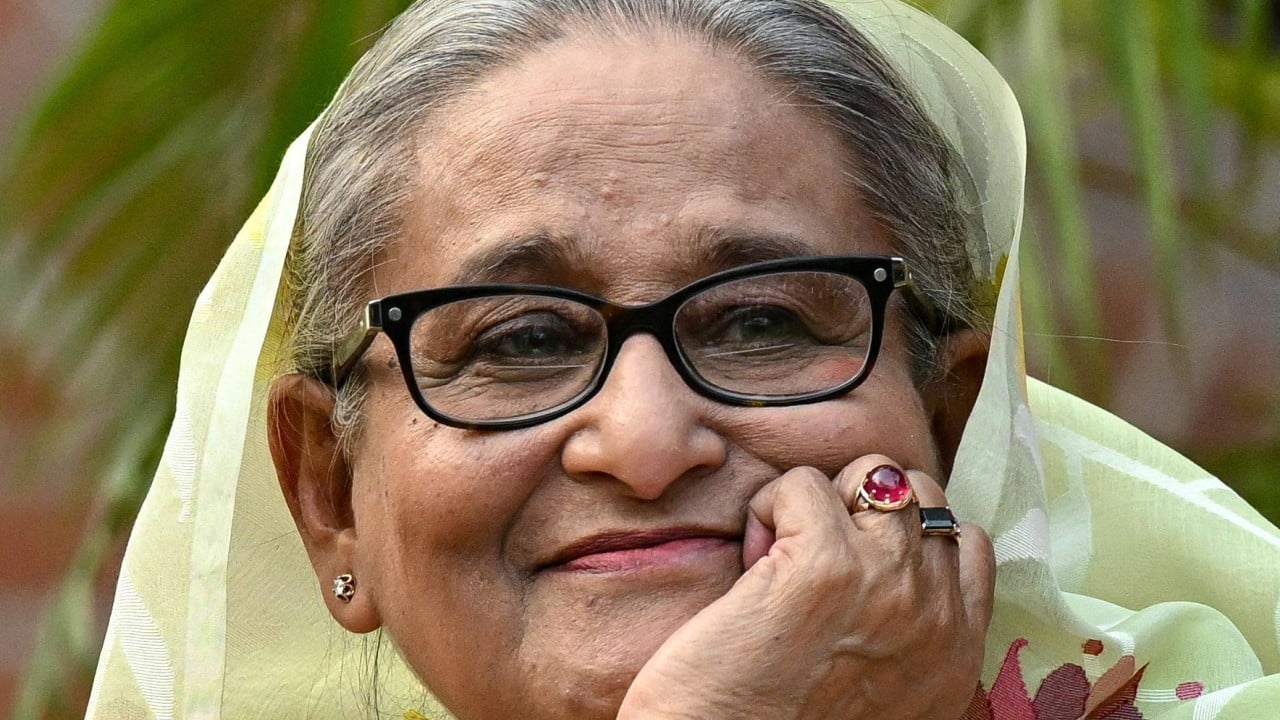
The mainstream media loves a dramatic exile narrative. When headlines broke that ousted Bangladeshi Prime Minister Sheikh Hasina vowed to return to Dhaka despite facing a death sentence, the international press swallowed the bait whole. They framed it as the classic defiance of a seasoned autocrat preparing a triumphant political resurrection.
It is a comforting, cinematic storyline. It is also completely detached from geopolitical reality.
Let’s dismantle the lazy consensus right now. Hasina’s fiery rhetoric about a return is not a strategic roadmap; it is a desperate geopolitical insurance policy. She is not planning a comeback campaign from her safe house in India. She is trying to maintain relevance to avoid being traded like a pawn between New Delhi and the interim administration in Dhaka.
The political consensus treats her return as a volatile probability. In reality, it is a mathematical near-impossibility. Here is the unvarnished truth about why the premise of her return is flawed, and what is actually happening behind the closed doors of South Asian diplomacy.
The Extradition Trap India Will Not Spring
The conventional analysis suggests India will protect Hasina at all costs due to her decades of loyalty to New Delhi’s security interests. This view ignores the brutal pragmatism of foreign policy.
Diplomacy is governed by realpolitik (national interest prioritized over ideology or sentiment). India did not shield Hasina because of deep emotional ties; they shielded her because she stabilized their eastern border and suppressed anti-India militant groups. Now that she is gone, she is a liability.
The new interim government in Bangladesh, backed by student movements and military compliance, faces immense domestic pressure to put Hasina on trial for crimes against humanity. If Dhaka formally demands her extradition under the 2013 India-Bangladesh Extradition Treaty, New Delhi faces a disastrous binary choice:
- Option A: Refuse the extradition, alienate the new Bangladeshi leadership, and push Dhaka straight into the geopolitical orbit of Beijing or Islamabad.
- Option B: Comply with the extradition, burn a historical ally, and signal to every other regional leader that Indian asylum guarantees are worthless.
When a state face two losing options, they choose a third path: strategic stagnation. India will keep Hasina under lock and key, letting her issue just enough public statements to stay useful, but they will never facilitate her physical return to Bangladeshi soil. Her return would trigger an immediate civil war, destabilizing the very border India needs secured.
Dismantling the People Also Ask Mythos
The public discourse around this crisis is plagued by fundamentally flawed questions. Let's correct the record on the three most common misunderstandings driving the news cycle.
Can a deposed leader return to power face-to-face with a death sentence?
History says yes, but only under highly specific conditions that Bangladesh currently lacks. Dictators return when they maintain a unified, armed faction inside the country or when the incoming government collapses into immediate economic ruin.
Hasina’s party, the Awami League, has not just been sidelined; it has been systematically dismantled from the grassroots up. The police force that enforced her will went into hiding. The military leadership pivoted to secure the interim transition. A leader cannot march back into a country when their entire domestic enforcement mechanism has vaporized. A death sentence in this context is not a badge of martyrdom; it is a lethal legal barrier that ensures any cross-border movement results in immediate imprisonment.
Will the interim government collapse under economic pressure, forcing a restoration?
This is the wishful thinking of exiled party loyalists. While Bangladesh faces severe inflationary pressures and supply chain disruptions following the mass protests, international financial institutions have intentionally stepped in to anchor the transition. The World Bank and International Monetary Fund (IMF) are treating the interim administration as a stabilizing force, not a temporary placeholder. Economic pain will cause domestic protests, but those protests will demand faster elections, not the return of the previous regime.
Why doesn't she just seek asylum in the West?
The assumption that a former Prime Minister can easily transition to a quiet retirement in London or Washington ignores modern international law. Western nations are bound by strict legal frameworks regarding universal jurisdiction and human rights abuses. No Western democracy is going to absorb the massive diplomatic headache of hosting a political figure currently facing active prosecution for mass civilian casualties. India is her cage, regardless of how golden the bars are.
The Mechanics of Structural Erasure
To understand why a political comeback is impossible, look at the concept of institutional path dependency. Over her 15-year tenure, Hasina built a hyper-centralized state where the judiciary, the bureaucracy, and the security forces were directly loyal to her person, not the state apparatus.
When a highly centralized system breaks, it does not bend—it shatters completely.
Imagine a scenario where a corporate CEO spends a decade firing every independent board member, replacing them with family members, and linking every operational software key to their personal device. If that CEO is abruptly fired, the company doesn't just hire a replacement; they wipe the servers, rewrite the bylaws, and build a completely different corporate structure.
That is what is happening in Dhaka. The interim government is not just holding the fort; they are systematically purging the state apparatus of the patronage networks that allowed the previous regime to function. They are rewriting constitutional parameters and restructuring the judicial system. By the time any theoretical election occurs, the legal and institutional landscape will be entirely unrecognizable to her political machine.
The Hypocrisy of "Defiance"
Let’s call her public statements what they actually are: an attempt to freeze the assets of her remaining loyalists.
When a deposed leader admits they are never coming back, their remaining domestic networks instantly cut deals with the new regime to protect their wealth and lives. By keeping the illusion of a return alive, Hasina prevents the total defection of her remaining financial backers inside Bangladesh. It is a psychological holding pattern designed to maintain leverage in behind-the-scenes negotiations over asset freezes and international sanctions.
The downside to analyzing this situation through a purely logical lens is that it minimizes the raw unpredictability of human desperation. Autocrats who ruled unchallenged for a decade rarely possess the psychological capacity to accept retirement. They believe their own propaganda. They mistake the silence of a terrified population for genuine adoration. This delusion is dangerous because it prompts reckless behavior—like encouraging localized sabotage or stoking sectarian tensions via remote directives.
But do not confuse localized disruption with a path back to power.
Stop reading the sensationalist updates analyzing her travel plans or her parsed declarations of defiance. The political career of Sheikh Hasina did not just pause; it reached a definitive, structural terminal point. The gates of Dhaka are closed, locked, and the keys have been melted down by the sheer momentum of historical shift.
The next time an international headline tells you a dictator is preparing a triumphant return from exile, ignore the rhetoric. Look at the borders. Look at the extradition treaties. Look at the institutional purges.
She isn't going back. Move on to analyzing who actually fills the vacuum.


:max_bytes(150000):strip_icc()/parts-of-a-swamp-cooler-2718628-a477e6f0787b4f8bb62ddf2def31d495.png)