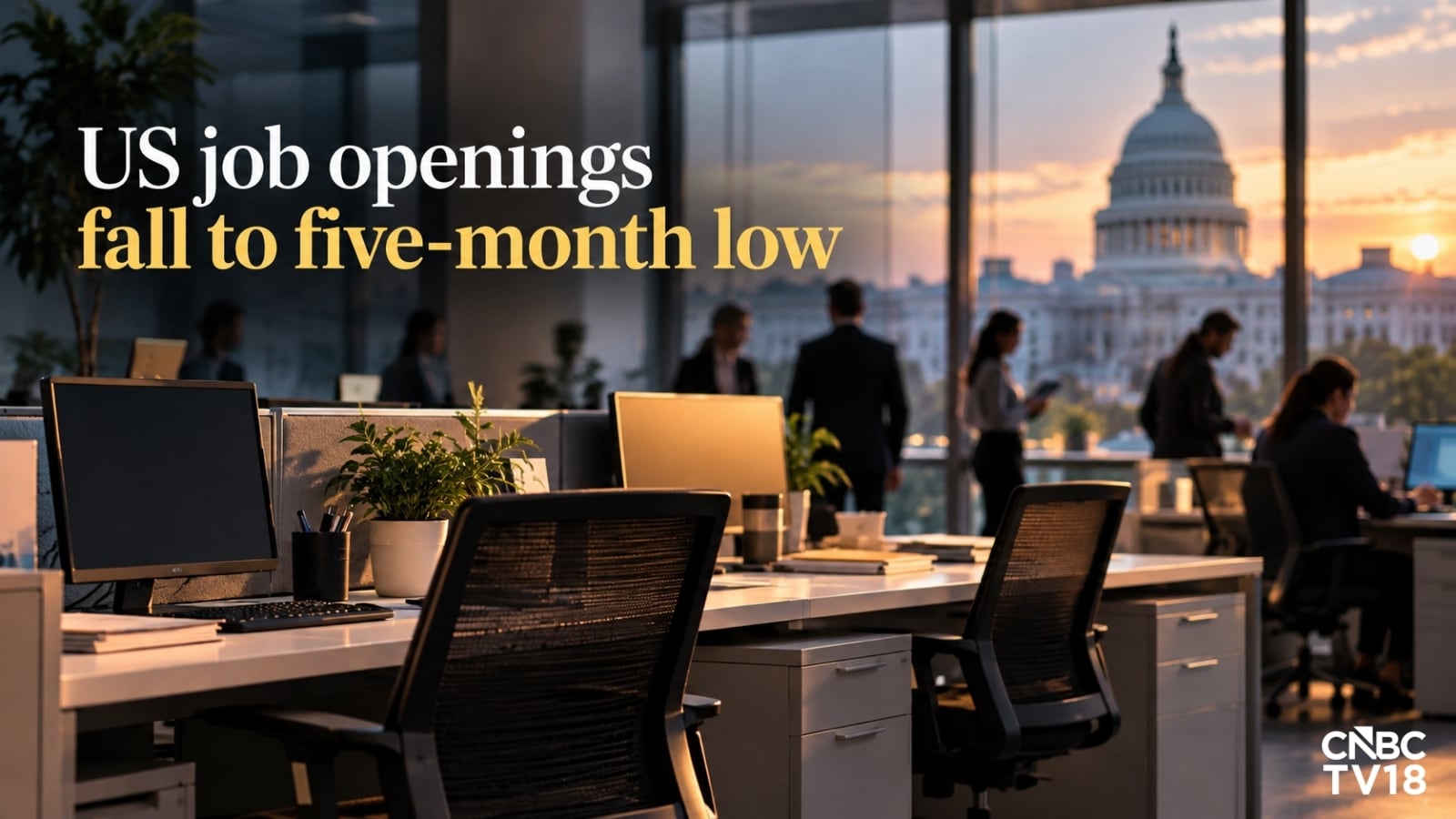
The American job market isn't crashing, but it is freezing in place. When fresh economic data reveals that US job openings dropped to a multi-month low while layoffs hover near historic lows, people panic. They shouldn't. What we're watching right now is a massive game of musical chairs where the music hasn't stopped, but nobody is allowed to change seats.
If you're trying to figure out whether to stay put or jump to a new company, the headlines about 7.1 million open positions miss the real point. Let's break down what's actually happening behind those Bureau of Labor Statistics numbers and what they mean for your career. For a more detailed analysis into similar topics, we suggest: this related article.
The Great Standoff Between Employers and Workers
Job openings sliding down to 7.1 million sounds scary on paper. It makes you think corporate America is slamming the brakes. But look closer at the companion metric: layoffs and discharges sitting low at roughly 1.6 million.
Companies aren't firing people en masse. Instead, employers are practicing extreme caution. They aren't expanding their headcount aggressively, but they are holding onto the talent they already have. For workers, this creates a bizarre double standard. If you already have a job, you're relatively safe. If you're out looking for a new gig, you're running into a brick wall of ghost jobs and drawn-out interview processes. For additional background on the matter, comprehensive coverage can also be found at Forbes.
Employers got burned during the post-pandemic hiring frenzy. They overh
Why the Drop in US Job Openings Changes Everything For Your Career
business
The hiring frenzy is cooling down. Job openings in the United States recently slid to a five-month low of 7.1 million, while layoffs dropped to a 17-month low. If you have been scrolling through LinkedIn lately, you probably feel like the ground is shifting beneath your feet. It is.
Most headlines look at these numbers and panic. They tell you a slowdown means disaster. They are wrong. What we are actually seeing is a massive correction in a labor market that ran way too hot for way too long. Employers aren't slashing staff en masse—layoffs are actually rare right now. Instead, they just stopped hiring at a frantic, reckless pace. They are holding steady with the teams they have.
If you are navigating this market right now, you need to understand what these shifts actually mean for your next move.
The Shift From Growth at All Costs to Holding Ground
For years, companies threw money at talent. You could quit on a Tuesday, ask for a thirty percent raise on a Wednesday, and have three competing offers by Friday. That era is over.
When job openings hover down near 7.1 million, the power dynamic shifts back across the table. Companies are careful now. They take three weeks to schedule a second interview instead of three hours. They scrutinize every resume for exact matches rather than taking bets on potential.
This doesn't mean you can't land a great role. It means your strategy has to change. Spraying your resume across job boards won't work anymore. You have to treat your career search like a targeted campaign.
Why Low Layoffs Matter More Than Low Openings
Everyone focuses on the 7.1 million openings number because big drops make loud headlines. But look closer at the other side of the equation. Layoffs hit a 17-month low.
Think about what that tells you. Employers are reluctant to let go of the people they already have. They spent a fortune trying to hire during the post-pandemic crunch. Now that they have stable teams, they are hoarding talent.
This creates a sticky labor market. People aren't leaving their jobs because they don't see a flood of shiny new offers outside. At the same time, companies aren't firing people because productivity is holding steady and replacing talent is expensive.
If you already have a job, you are sitting in a relatively safe bunker. If you are looking for one, you are playing in a pool with fewer total openings, but you are also competing against fewer desperate job seekers who just got handed a pink slip.
How to Navigate a Slow-Hiring Market
When the market tightens, standard advice falls apart. You cannot rely on automated application portals to save you. Here is what actually works when openings dry up.
First, lean into internal mobility. It sounds boring, but look at your current company. Since hiring managers outside are moving slowly, pitch a new project or a lateral move internally. You already have trust built up. You don't have to prove your cultural fit or spend two months clearing background checks.
Second, if you are looking outward, stop applying for generalized roles. Target companies that are actively growing despite the broader macro numbers. Every economic sector behaves differently. While tech or retail might pull back, specialized fields keep moving. Find the companies winning right now and go directly to them.
Third, fix your positioning. When openings drop, managers get risk-averse. They want plug-and-play solutions. If your resume reads like a general list of responsibilities, rewrite it to show exact business impact. Use numbers. Show how you saved time, generated revenue, or solved a painful operational bottleneck. Make it impossible for a risk-averse hiring manager to say no.
The cooling labor market isn't a crisis. It's a filter. It separates the applicants who rely on a booming economy from the professionals who know how to sell their direct value. Stop waiting for the market to heat back up. Adjust your tactics, tighten your pitch, and move forward.


